

Tag Archives: Senior Community

Civil Code Section 51.3.5. Intergenerational Housing Developments.

(a) The Legislature finds and declares that this section is essential to establish and preserve specially designed, accessible, intergenerational housing for senior citizens. There are senior citizens who need special living environments and services and benefit from intergenerational housing environments, and find that there is an inadequate supply of this type of housing in the state.

(b) An intergenerational housing development may be established to provide intergenerational housing consisting of units for senior citizens, caregivers, or transition age youths if all of the following conditions are satisfied:

(1)

(A) At least 80 percent of the occupied dwelling units are occupied by at least one senior citizen. This requirement shall commence when at least 25 percent of the units are occupied. A dwelling unit is occupied by at least one senior citizen if, on the date the exemption for housing designed for intergenerational housing is claimed, one of the following conditions is satisfied:

(i) At least one occupant of the dwelling unit is a senior citizen.

(ii) If the dwelling unit is temporarily vacant, at least one of the occupants immediately prior to the date on which the unit was temporarily vacated was a senior citizen.

(B) Up to 20 percent of the occupied dwelling units are occupied by at least one caregiver or transition age youth. A dwelling unit is occupied by at least one caregiver or transition age youth if, on the date the exemption for housing designed for intergenerational housing is claimed, one of the following conditions is satisfied:

(i) At least one occupant of the dwelling unit is a caregiver or transition age youth.

(ii) If the dwelling unit is temporarily vacant, at least one of the occupants immediately prior to the date on which the unit was temporarily vacant was a caregiver or transition age youth.

(2) The development is affordable to lower income households as defined in Section 50079.5 of the Health and Safety Code.

(3)

(A) If a unit that is identified for occupancy by a caregiver or transition age youth ceases to house a caregiver or transition age youth, the owner, board of directors, or other governing body may require, at their discretion, the household in that unit to cease residing in the development upon receipt of a minimum of six months written notice, for the sole purpose of ensuring that the unit may be made available to a qualifying caregiver or transition age youth. This action shall not constitute a violation of Section 51 or of Article 2 (commencing with Section 12955) of Chapter 6 of Part 2.8 of Division 3 of Title 2 of the Government Code (California Fair Employment and Housing Act).

(B) The housing facility or community shall not evict or terminate the lease of a family with children in order to comply with the requirement that at least 80 percent of the occupied units be occupied by at least one senior citizen. This provision does not otherwise alter or affect applicable protections for tenants.

(C) The covenants, conditions, and restrictions and other documents or written policy for the development shall set forth the limitations on occupancy, residency, or use consistent with this section.

(4) Housing established pursuant to this section shall comply with all applicable fair housing laws, including, but not limited to, the California Fair Employment and Housing Act (Part 2.8 (commencing with Section 12900) of Division 3 of Title 2 of the Government Code) and the Fair Housing Act (42 U.S.C. Sec. 3601).

(5) Notwithstanding any other law, any occupied dwelling units within an intergenerational housing development established pursuant to this section that are occupied by caregivers or transition age youth as described in subparagraph (B) of paragraph (1) shall not count toward the housing type goal for seniors under the qualified allocation plan adopted by the California Tax Credit Allocation Committee in accordance with Section 50199.14 of the Health and Safety Code.

(c) This section specifically creates a state policy supporting intergenerational housing for senior citizens, caregivers, and transition age youth, as described in Section 42(g)(9) of the Internal Revenue Code, and, further, permits developers in receipt of local or state funds or tax credits designated for affordable rental housing to restrict occupancy to senior citizens, caregivers, and transition age youth, including permitting developers in receipt of tax credits designated for affordable rental housing to retain the right to prioritize and restrict occupancy, so long as that housing does not violate any other applicable laws.

(d) For the purposes of this section, the following terms have the following meanings:

(1) “Caregiver” means a person responsible for meeting the daily care needs of a senior citizen, or a person hired to provide live-in, long-term, or terminal health care to a qualifying resident, or a family member of the qualifying resident providing that care. For purposes of this section, the care provided shall be substantial in nature and shall include either assistance with necessary daily activities or medical treatment, or both.

(2) “Senior citizen” or “resident” means a person 55 years of age or older.

(3) “Transition age youth” means a person who is 18 to 24 years of age, inclusive, and who is either of the following:

(A) A current or former foster youth who has been adjudged a ward or dependent of the juvenile court pursuant to Section 300, 601, or 602 of the Welfare and Institutions Code.

(B) A homeless youth or former homeless youth, who has met the McKinney-Vento Homeless Assistance Act of 1987 definition of “homeless children and youths,” as that term is defined in Section 11434a of Title 42 of the United States Code.
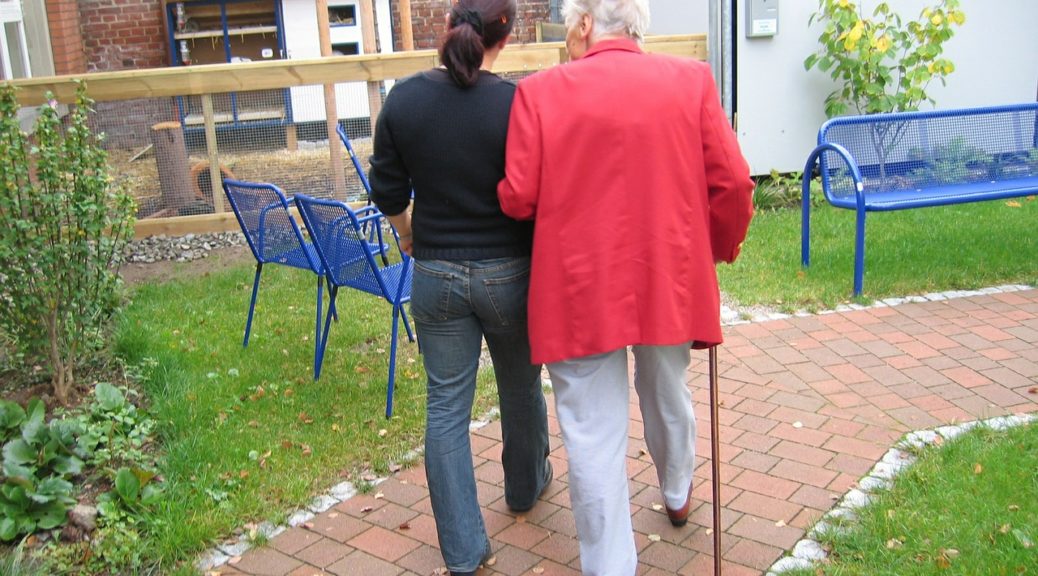
SB-591 (Becker) Senior citizens: intergenerational housing developments.

Would permit the establishment of an intergenerational housing development if at least 80 percent of the occupied dwelling units are occupied by at least one senior citizenand up to 20 percent of the occupied dwelling units are occupied by at least one caregiver or transition age youth.

Current Status: Chaptered

FindHOALaw Quick Summary:

Existing law requires the covenants, conditions, and restrictions or other documents or written policy of a senior citizen housing development to set forth the limitations on occupancy, residency, or use on the basis of age. Existing law requires that the limitations on age require, at a minimum, that the persons commencing any occupancy of a dwelling unit include a senior citizen who intends to reside in the unit as their primary residence on a permanent basis. Existing law defines “senior citizen housing development” for these purposes as a residential development for senior citizens that has at least 35 dwelling units. Existing law defines “qualifying resident” or “senior citizen” to mean a person 62 years of age or older, or 55 years of age or older in a senior citizen housing development.
The bill would add Civil Code Section 51.3.5 to permit the establishment of an intergenerational housing development if (1) at least 80 percent of the occupied dwelling units are occupied by at least one senior citizen, as specified, and up to 20 percent of the occupied dwelling units are occupied by at least one caregiver or transition age youth, as defined, and (2) the development is an affordable rental housing development, as defined, and has received an allocation of low-income housing tax credits from the California Tax Credit Allocation Committee.
This bill would prohibit a housing facility or community from evicting or terminating the lease of a family with children in order to comply with the requirement that at least 80 percent of the occupied units be occupied by at least one senior citizen.

**UPDATE:  SB 591 was signed by the Governor on September 28, 2021.  Its changes to the law take effect January 1, 2022.

View more info on SB 591
from the California Legislature's website

Caregivers within Senior Communities

Civil Code Section 51.3 (and Section 51.11 for communities within Riverside County) provides senior communities located within California the authority to implement and enforce age-restrictions for their residents. (See “Senior Communities.”) Those restrictions must include a requirement that each unit be occupied by at least one “qualifying resident”—meaning a person 62 years of age or older, or 55 years of age or older depending on the category of the senior community. (Civ. Code §§ 51.3(b)(1), 51.11(b)(1).) However, Civil Code Sections 51.3 and 51.11 also allow for other categories of persons whom do not meet the standard of a “qualifying resident” to also reside in a unit with a qualifying resident. (Civ. Code §§ 51.3(c), 51.11(c).) One of those categories includes “permitted health care residents” (i.e., caregivers).

“Permitted Health Care Resident” Defined
A “permitted health care resident” is defined as a person hired to provide live-in, long term, or terminal health care to a qualifying resident, or a family member of the qualifying resident providing that care. (Civ. Code §§ 51.3(b)(7), 51.11(b)(7).) The care provided by a permitted health care resident must be “substantial in nature,” and also must provide either medical treatment or “assistance with necessary daily activities,” or both. (Civ. Code §§ 51.3(b)(7), 51.11(b)(7).) Notably, neither Section 51.3 nor 51.11 set forth any restrictions on the age of permitted health care residents.

Continuation of Occupancy in the Absence of Qualifying Resident
When a qualifying resident temporarily vacates a unit, the qualifying resident’s permitted health care resident has limited rights to continue his/her occupancy, residency or use of the unit if both of the following are applicable:

  • The qualifying resident’s absence was due to hospitalization or other necessary treatment, and the qualifying resident expects to return to the unit within ninety (90) days from the day the absence began; (Civ. Code §§ 51.3(b)(7)(A), 51.11(b)(7)(A)) and
  • The absent qualifying resident (or his/her agent) submits a written request to the association’s board of directors stating that the qualifying resident desires that the permitted health care resident be allowed to remain in order to be present in the unit when the qualifying resident returns. (Civ. Code §§ 51.3(b)(7)(B), 51.11(b)(7)(B).)

Discretionary Extension of Time
In addition to the foregoing, upon a written request from the qualifying resident (or his/her agent), the board has the discretion to allow a permitted health care resident to remain in the unit for any additional ninety (90) days from the day when the qualifying resident’s absence began, but only if it “appears that the [qualifying resident] will return within a period of time not to exceed an additional 90 days.” (Civ. Code §§ 51.3(b)(7), 51.11(b)(7).)

Compensation of Caregivers
The rights of a permitted health care resident to occupy the unit extends to periods of time when the permitted health care resident is providing care to a qualifying resident “for compensation.” Compensation does not solely include monetary payment, but may also include “provisions of lodging and food in exchange for care.” (Civ. Code § 51.3(j).)

Civil Code Section 51.11. Senior Citizen Housing Developments; Riverside County.

(a) The Legislature finds and declares that this section is essential to establish and preserve housing for senior citizens. There are senior citizens who need special living environments, and find that there is an inadequate supply of this type of housing in the state.

(b) For the purposes of this section, the following definitions apply:

(1) “Qualifying resident” or “senior citizen” means a person 62 years of age or older, or 55 years of age or older in a senior citizen housing development.

(2) “Qualified permanent resident” means a person who meets both of the following requirements:

(A) Was residing with the qualifying resident or senior citizen prior to the death, hospitalization, or other prolonged absence of, or the dissolution of marriage with, the qualifying resident or senior citizen.

(B) Was 45 years of age or older, or was a spouse, cohabitant, or person providing primary physical or economic support to the qualifying resident or senior citizen.

(3) “Qualified permanent resident” also means a disabled person or person with a disabling illness or injury who is a child or grandchild of the senior citizen or a qualified permanent resident as defined in paragraph (2) who needs to live with the senior citizen or qualified permanent resident because of the disabling condition, illness, or injury. For purposes of this section, “disabled” means a person who has a disability as defined in subdivision (b) of Section 54. A “disabling injury or illness” means an illness or injury which results in a condition meeting the definition of disability set forth in subdivision (b) of Section 54.

(A) For any person who is a qualified permanent resident under paragraph (3) whose disabling condition ends, the owner, board of directors, or other governing body may require the formerly disabled resident to cease residing in the development upon receipt of six months’ written notice; provided, however, that the owner, board of directors, or other governing body may allow the person to remain a resident for up to one year, after the disabling condition ends.

(B) The owner, board of directors, or other governing body of the senior citizen housing development may take action to prohibit or terminate occupancy by a person who is a qualified permanent resident under paragraph (3) if the owner, board of directors, or other governing body finds, based on credible and objective evidence, that the person is likely to pose a significant threat to the health or safety of others that cannot be ameliorated by means of a reasonable accommodation; provided, however, that action to prohibit or terminate the occupancy may be taken only after doing both of the following:

(i) Providing reasonable notice to and an opportunity to be heard for the disabled person whose occupancy is being challenged, and reasonable notice to the coresident parent or grandparent of that person.

(ii) Giving due consideration to the relevant, credible, and objective information provided in that hearing. The evidence shall be taken and held in a confidential manner, pursuant to a closed session, by the owner, board of directors, or other governing body in order to preserve the privacy of the affected persons.

The affected persons shall be entitled to have present at the hearing an attorney or any other person authorized by them to speak on their behalf or to assist them in the matter.

(4) “Senior citizen housing development” means a residential development developed with more than 20 units as a senior community by its developer and zoned as a senior community by a local governmental entity, or characterized as a senior community in its governing documents, as these are defined in Section 4150, or qualified as a senior community under the federal Fair Housing Amendments Act of 1988, as amended. Any senior citizen housing development which is required to obtain a public report under Section 11010 of the Business and Professions Code and which submits its application for a public report after July 1, 2001, shall be required to have been issued a public report as a senior citizen housing development under Section 11010.05 of the Business and Professions Code.

(5) “Dwelling unit” or “housing” means any residential accommodation other than a mobilehome.

(6) “Cohabitant” refers to persons who live together as husband and wife, or persons who are domestic partners within the meaning of Section 297 of the Family Code.

(7) “Permitted health care resident” means a person hired to provide live-in, long-term, or terminal health care to a qualifying resident, or a family member of the qualifying resident providing that care. For the purposes of this section, the care provided by a permitted health care resident must be substantial in nature and must provide either assistance with necessary daily activities or medical treatment, or both.

A permitted health care resident shall be entitled to continue his or her occupancy, residency, or use of the dwelling unit as a permitted resident in the absence of the senior citizen from the dwelling unit only if both of the following are applicable:

(A) The senior citizen became absent from the dwelling due to hospitalization or other necessary medical treatment and expects to return to his or her residence within 90 days from the date the absence began.

(B) The absent senior citizen or an authorized person acting for the senior citizen submits a written request to the owner, board of directors, or governing board stating that the senior citizen desires that the permitted health care resident be allowed to remain in order to be present when the senior citizen returns to reside in the development.

Upon written request by the senior citizen or an authorized person acting for the senior citizen, the owner, board of directors, or governing board shall have the discretion to allow a permitted health care resident to remain for a time period longer than 90 days from the date that the senior citizen’s absence began, if it appears that the senior citizen will return within a period of time not to exceed an additional 90 days.

(c) The covenants, conditions, and restrictions and other documents or written policy shall set forth the limitations on occupancy, residency, or use on the basis of age. Any limitation shall not be more exclusive than to require that one person in residence in each dwelling unit may be required to be a senior citizen and that each other resident in the same dwelling unit may be required to be a qualified permanent resident, a permitted health care resident, or a person under 55 years of age whose occupancy is permitted under subdivision (g) of this section or subdivision (b) of Section 51.12. That limitation may be less exclusive, but shall at least require that the persons commencing any occupancy of a dwelling unit include a senior citizen who intends to reside in the unit as his or her primary residence on a permanent basis. The application of the rules set forth in this subdivision regarding limitations on occupancy may result in less than all of the dwellings being actually occupied by a senior citizen.

(d) The covenants, conditions, and restrictions or other documents or written policy shall permit temporary residency, as a guest of a senior citizen or qualified permanent resident, by a person of less than 55 years of age for periods of time, not more than 60 days in any year, that are specified in the covenants, conditions, and restrictions or other documents or written policy.

(e) Upon the death or dissolution of marriage, or upon hospitalization, or other prolonged absence of the qualifying resident, any qualified permanent resident shall be entitled to continue his or her occupancy, residency, or use of the dwelling unit as a permitted resident. This subdivision shall not apply to a permitted health care resident.

(f) The covenants, conditions, and restrictions or other documents or written policies applicable to any condominium, stock cooperative, limited-equity housing cooperative, planned development, or multiple-family residential property that contained age restrictions on January 1, 1984, shall be enforceable only to the extent permitted by this section, notwithstanding lower age restrictions contained in those documents or policies.

(g) Any person who has the right to reside in, occupy, or use the housing or an unimproved lot subject to this section on or after January 1, 1985, shall not be deprived of the right to continue that residency, occupancy, or use as the result of the enactment of this section by Chapter 1147 of the Statutes of 1996.

(h) A housing development may qualify as a senior citizen housing development under this section even though, as of January 1, 1997, it does not meet the definition of a senior citizen housing development specified in subdivision (b), if the development complies with that definition for every unit that becomes occupied after January 1, 1997, and if the development was once within that definition, and then became noncompliant with the definition as the result of any one of the following:

(1) The development was ordered by a court or a local, state, or federal enforcement agency to allow persons other than qualifying residents, qualified permanent residents, or permitted health care residents to reside in the development.

(2) The development received a notice of a pending or proposed action in, or by, a court, or a local, state, or federal enforcement agency, which action could have resulted in the development being ordered by a court or a state or federal enforcement agency to allow persons other than qualifying residents, qualified permanent residents, or permitted health care residents to reside in the development.

(3) The development agreed to allow persons other than qualifying residents, qualified permanent residents, or permitted health care residents to reside in the development by entering into a stipulation, conciliation agreement, or settlement agreement with a local, state, or federal enforcement agency or with a private party who had filed, or indicated an intent to file, a complaint against the development with a local, state, or federal enforcement agency, or file an action in a court.

(4) The development allowed persons other than qualifying residents, qualified permanent residents, or permitted health care residents to reside in the development on the advice of counsel in order to prevent the possibility of an action being filed by a private party or by a local, state, or federal enforcement agency.

(i) The covenants, conditions, and restrictions or other documents or written policy of the senior citizen housing development shall permit the occupancy of a dwelling unit by a permitted health care resident during any period that the person is actually providing live-in, long-term, or hospice health care to a qualifying resident for compensation.

(j) This section shall only apply to the County of Riverside.

Senior Communities

Senior communities (aka “active adult” communities) engage in a form of discrimination through the imposition of age restrictions for their communities. The legal authority for senior communities to do so is provided under both federal and state statutes.

Federal Statutes: FFHA & HOPA
The Federal Fair Housing Act prohibits discrimination in the sale, rental and financing of residential of dwellings based upon familial status. Its provisions generally bar restrictions in an association’s governing documents (i.e., its CC&Rs) that serve to exclude children from the association’s development. In 1988 Congress created an exemption to the provisions barring discrimination on the basis of familial status for those housing developments that qualified as housing for persons age 55 and older (senior communities). This exemption was then refined through the Housing for Older Persons Act of 1995 (HOPA). HOPA is administered through by Department of Housing and Urban Development (HUD).

Qualification Requirements
To qualify as a senior community, a housing development or homeowners association must satisfy the following requirements:

  • At least eighty percent (80%) of the occupied properties must have at least one occupant that is 55 years of age or older;
  • The association must publish and adhere to policies that demonstrate its intent to operate as a senior community for persons 55 years of age or older; and
  • The association must comply with age-verification procedures to ensure compliance with the age requirements.

Prior Failure to Comply with Age-Verification Requirements
If an association has consistently maintained the required 80% threshold but has previously failed to comply with HOPA’s age-verification requirements, that in itself will not disqualify the association from being afforded HOPA’s protections. (Balvage v. Ryderwood Improvement Services Assn. (9th Cir. 2011) 642 F.3d  765.)

California Statutes: Unruh & Civil Code § 51.3
California has provided protections against discrimination through the Unruh Civil Rights Act found at Civil Code Section 51. An exemption for senior citizen developments similar to that provided under HOPA is codified at Civil Code Section 51.3. Section 51.3 generally requires that an association’s CC&Rs set forth the limitations on age, where such limitations require that:

  • Each unit must be occupied by at least one (1) “senior citizen” or “qualifying resident,” and
  • Each other resident within a unit must be either a “qualified permanent resident,” a “permitted health care resident,” or another person whose occupancy is permitted under Civil Code Section 51.4(b). (Civ. Code § 51.3(c).)

“Senior Citizen” and “Qualifying Resident” Defined
Civil Code Section 51.3 defines a “qualifying resident” or “senior citizen” as a person 62 years of age or older, or 55 years of age or older depending on the category of the senior community. (Civ. Code § 51.3(b)(1).)

“Qualified Permanent Resident” Defined
Civil Code Section 51.3 defines  a “qualified permanent resident” as a person who meets both of the following requirements:

  • Was residing with the qualifying resident prior to the qualifying resident’s death, hospitalization or other prolonged absence, or prior to the dissolution of marriage with the qualifying resident; (Civ. Code § 51.3(b)(2)(A)) and
  • Was 45 years of age or older, or was a spouse, cohabitant or person providing primary physical or economic support to the qualifying resident. (Civ. Code § 51.4(b)(2)(B).)

A qualified permanent resident also includes a disabled person who is a child or grandchild of the qualifying resident or a qualified permanent resident who needs to live with the qualifying resident or qualified permanent resident because of the disabled person’s disability. (Civ. Code § 51.3(b)(3).)

“Permitted Health Care Resident” Defined
Civil Code Section 51.3 defines a “permitted health care resident” as a person hired to provide “substantial” live-in, long term, or terminal health care to a qualifying resident (i.e., a caregiver), or a family member of the qualifying resident providing that care. (Civ. Code § 51.3(b)(7).) Section 51.3 also provides some limited rights for permitted health care residents to continue residing in the unit in the absence of the qualifying resident. (Civ. Code § 51.3(b)(7); See also “Caregivers within Senior Communities.”)

Senior Communities within Riverside County: Civil Code § 51.11
The provisions of Civil Code Section 51.3 are essentially mirrored in Civil Code Section 51.11. Section 51.11 is applicable only to senior communities located within Riverside County. (Civ. Code § 51.11(j).)

Enforcement
Once a senior community has been established, its age restrictions are legally enforceable. (Huntington Landmark v. Ross (1989) 213 Cal.App.3d 1012.)

Civil Code Section 51.3. Senior Citizen Housing Developments.

(a) The Legislature finds and declares that this section is essential to establish and preserve specially designed accessible housing for senior citizens. There are senior citizens who need special living environments and services, and find that there is an inadequate supply of this type of housing in the state.

(b) For the purposes of this section, the following definitions apply:

(1) “Qualifying resident” or “senior citizen” means a person 62 years of age or older, or 55 years of age or older in a senior citizen housing development.

(2) “Qualified permanent resident” means a person who meets both of the following requirements:

(A) Was residing with the qualifying resident or senior citizen prior to the death, hospitalization, or other prolonged absence of, or the dissolution of marriage with, the qualifying resident or senior citizen.

(B) Was 45 years of age or older, or was a spouse, cohabitant, or person providing primary physical or economic support to the qualifying resident or senior citizen.

(3) “Qualified permanent resident” also means a disabled person or person with a disabling illness or injury who is a child or grandchild of the senior citizen or a qualified permanent resident as defined in paragraph (2) who needs to live with the senior citizen or qualified permanent resident because of the disabling condition, illness, or injury. For purposes of this section, “disabled” means a person who has a disability as defined in subdivision (b) of Section 54. A “disabling injury or illness” means an illness or injury which results in a condition meeting the definition of disability set forth in subdivision (b) of Section 54.

(A) For any person who is a qualified permanent resident under this paragraph whose disabling condition ends, the owner, board of directors, or other governing body may require the formerly disabled resident to cease residing in the development upon receipt of six months’ written notice; provided, however, that the owner, board of directors, or other governing body may allow the person to remain a resident for up to one year after the disabling condition ends.

(B) The owner, board of directors, or other governing body of the senior citizen housing development may take action to prohibit or terminate occupancy by a person who is a qualified permanent resident under this paragraph if the owner, board of directors, or other governing body finds, based on credible and objective evidence, that the person is likely to pose a significant threat to the health or safety of others that cannot be ameliorated by means of a reasonable accommodation; provided, however, that the action to prohibit or terminate the occupancy may be taken only after doing both of the following:

(i) Providing reasonable notice to and an opportunity to be heard for the disabled person whose occupancy is being challenged, and reasonable notice to the coresident parent or grandparent of that person.

(ii) Giving due consideration to the relevant, credible, and objective information provided in the hearing. The evidence shall be taken and held in a confidential manner, pursuant to a closed session, by the owner, board of directors, or other governing body in order to preserve the privacy of the affected persons.

The affected persons shall be entitled to have present at the hearing an attorney or any other person authorized by them to speak on their behalf or to assist them in the matter.

(4) “Senior citizen housing development” means a residential development developed, substantially rehabilitated, or substantially renovated for, senior citizens that has at least 35 dwelling units. Any senior citizen housing development which is required to obtain a public report under Section 11010 of the Business and Professions Code and which submits its application for a public report after July 1, 2001, shall be required to have been issued a public report as a senior citizen housing development under Section 11010.05 of the Business and Professions Code. No housing development constructed prior to January 1, 1985, shall fail to qualify as a senior citizen housing development because it was not originally developed or put to use for occupancy by senior citizens.

(5) “Dwelling unit” or “housing” means any residential accommodation other than a mobilehome.

(6) “Cohabitant” refers to persons who live together as husband and wife, or persons who are domestic partners within the meaning of Section 297 of the Family Code.

(7) “Permitted health care resident” means a person hired to provide live-in, long-term, or terminal health care to a qualifying resident, or a family member of the qualifying resident providing that care. For the purposes of this section, the care provided by a permitted health care resident must be substantial in nature and must provide either assistance with necessary daily activities or medical treatment, or both. A permitted health care resident shall be entitled to continue his or her occupancy, residency, or use of the dwelling unit as a permitted resident in the absence of the senior citizen from the dwelling unit only if both of the following are applicable:

(A) The senior citizen became absent from the dwelling due to hospitalization or other necessary medical treatment and expects to return to his or her residence within 90 days from the date the absence began.

(B) The absent senior citizen or an authorized person acting for the senior citizen submits a written request to the owner, board of directors, or governing board stating that the senior citizen desires that the permitted health care resident be allowed to remain in order to be present when the senior citizen returns to reside in the development.

Upon written request by the senior citizen or an authorized person acting for the senior citizen, the owner, board of directors, or governing board shall have the discretion to allow a permitted health care resident to remain for a time period longer than 90 days from the date that the senior citizen’s absence began, if it appears that the senior citizen will return within a period of time not to exceed an additional 90 days.

(c) The covenants, conditions, and restrictions and other documents or written policy shall set forth the limitations on occupancy, residency, or use on the basis of age. Any such limitation shall not be more exclusive than to require that one person in residence in each dwelling unit may be required to be a senior citizen and that each other resident in the same dwelling unit may be required to be a qualified permanent resident, a permitted health care resident, or a person under 55 years of age whose occupancy is permitted under subdivision (h) of this section or under subdivision (b) of Section 51.4. That limitation may be less exclusive, but shall at least require that the persons commencing any occupancy of a dwelling unit include a senior citizen who intends to reside in the unit as his or her primary residence on a permanent basis. The application of the rules set forth in this subdivision regarding limitations on occupancy may result in less than all of the dwellings being actually occupied by a senior citizen.

(d) The covenants, conditions, and restrictions or other documents or written policy shall permit temporary residency, as a guest of a senior citizen or qualified permanent resident, by a person of less than 55 years of age for periods of time, not less than 60 days in any year, that are specified in the covenants, conditions, and restrictions or other documents or written policy.

(e) Upon the death or dissolution of marriage, or upon hospitalization, or other prolonged absence of the qualifying resident, any qualified permanent resident shall be entitled to continue his or her occupancy, residency, or use of the dwelling unit as a permitted resident. This subdivision shall not apply to a permitted health care resident.

(f) The condominium, stock cooperative, limited-equity housing cooperative, planned development, or multiple-family residential rental property shall have been developed for, and initially been put to use as, housing for senior citizens, or shall have been substantially rehabilitated or renovated for, and immediately afterward put to use as, housing for senior citizens, as provided in this section; provided, however, that no housing development constructed prior to January 1, 1985, shall fail to qualify as a senior citizen housing development because it was not originally developed for or originally put to use for occupancy by senior citizens.

(g) The covenants, conditions, and restrictions or other documents or written policies applicable to any condominium, stock cooperative, limited-equity housing cooperative, planned development, or multiple- family residential property that contained age restrictions on January 1, 1984, shall be enforceable only to the extent permitted by this section, notwithstanding lower age restrictions contained in those documents or policies.

(h) Any person who has the right to reside in, occupy, or use the housing or an unimproved lot subject to this section on January 1, 1985, shall not be deprived of the right to continue that residency, occupancy, or use as the result of the enactment of this section.

(i) The covenants, conditions, and restrictions or other documents or written policy of the senior citizen housing development shall permit the occupancy of a dwelling unit by a permitted health care resident during any period that the person is actually providing live-in, long-term, or hospice health care to a qualifying resident for compensation. For purposes of this subdivision, the term “for compensation” shall include provisions of lodging and food in exchange for care.

(j) Notwithstanding any other provision of this section, this section shall not apply to the County of Riverside.