Would provide clean up language to 2018’s AB 2912 (Irwin) regarding association finances.
Current Status: Chaptered
FindHOALaw Quick Summary:
Existing law requires a managing agent, at the written request of the board of directors, to deposit funds the managing agent receives on behalf of the association into a bank, savings association, or credit union in the state if specified requirements are met.
This bill would amend Civil Code Section 5380 to require the bank, savings association, or credit union to be insured by the Federal Deposit Insurance Corporation, National Credit Union Administration Insurance Fund, or the Securities Investor Protection Corporation.
Existing law prohibits transfers of greater than $10,000 or 5% of an association’s total combined reserve and operating account deposits, whichever is lower, without written approval from the board.
This bill would amend Civil Code Sections 5380 and 5502 to instead prohibit transfers of $10,000 or greater without prior written approval from the board.
Existing law requires the association to maintain fidelity bond coverage for its directors, officers, and employees, and requires the fidelity bond coverage to also include computer fraud and funds transfer fraud and, if the association uses a managing agent or management company, coverage for dishonest acts by that person or entity and its employees.
This bill would amend Civil Code Section 5806 to specifically require the association to maintain crime insurance, employee dishonesty coverage, and fidelity bond coverage, or their equivalent, for the association and the association’s managing agent or management company and would require the protection against computer and funds transfer fraud to be in an equal amount.
**UPDATE: AB 1101 was signed by the Governor on September 23, 2021. Its changes to the law take effect January 1, 2022.
Would allow for board term limits and would require that persons assisting Inspector(s) of Elections satisfy the criteria of an independent third party.
Current Status: Chaptered
FindHOALaw Quick Summary:
Existing law provides for nomination by acclamation in an election of members of the board of directors of the association if certain conditions are satisfied, including that the association permits all candidates to run if nominated. However, an association is authorized to disqualify a person from nomination under certain circumstances, including if the person has been a member of the association for less than one year.
This bill would amend Civil Code Section 5100 to include among the permissible reasons for disqualifying a person from nomination if the person has served the maximum number of terms or sequential terms allowed by the association.
Existing law requires an association to adopt operating rules for appointing one or 3 independent third parties as inspectors of elections and that allow the inspectors to appoint and oversee additional persons to verify signatures and to count and tabulate votes, provided that the persons are independent third parties. Existing law specifies criteria for who an independent third party may be.
This bill would amend Civil Code Section 5105 to require the additional persons to be appointed and overseen by the inspectors of election to also satisfy the criteria of who may be an independent third party.
**UPDATE: SB 432 was signed by the Governor on October 7, 2021. Its changes to the law take effect January 1, 2022.
Would require an association to provide individual delivery by email. Would also require an association of at least 50 units to maintain a website to provide general information to the membership.
Current Status: Chaptered
FindHOALaw Quick Summary:
The Davis-Stirling Common Interest Development Act, requires an association to deliver documents to members of a common interest development, if those documents are required to be delivered by individual delivery or notice, by either first-class mail, postage prepaid, registered or certified mail, express mail, or overnight delivery by an express service carrier or by email, facsimile, or other electronic means, if the recipient has consented, in writing or by email, to receive documents by that electronic means.
This bill would amend Civil Code Section 4041 to instead require, on and after January 1, 2023, an association to deliver those documents by email unless the member has not provided a valid email address to the association or has revoked consent to receiving documents by email, in which case the association would be required to deliver the documents by traditional mail, as described above. The bill would require an association to deliver those documents either by email or traditional mail, at its discretion, if 2/3 of the members approve. The bill would require an association to annually notify each member that by providing an email address to the association, the member agrees that communication between the member and the association shall be conducted by email.
The bill would also amend Civil Code Section 4040 to require an association to make a good faith effort to obtain an email address for each member on or before June 1, 2022.
The act also requires an association to provide, by specified means, documents to members that are required to be delivered by general delivery or notice.
This bill would add Civil Code Section 4801 to require an association that manages a common interest development of at least 50 separate interests to maintain an internet website to provide general information to members and would amend Civil Code Section 4045 to authorize an association to satisfy the general delivery requirement described above by posting the document on that internet website. The bill would exempt an association from the requirement to maintain an internet website if 2/3 of the members approve.
**UPDATE: SB 392 was signed by the Governor on October 7, 2021. Its changes to the law take effect January 1, 2022.
Would allow for teleconference board meeting in cases of federal, state or local emergencies.
Current Status: Chaptered
FindHOALaw Quick Summary:
The Davis-Stirling Common Interest Development Act defines a board meeting as a congregation, as provided, or a teleconference, as provided. Existing law requires, among other things, a board meeting held by teleconference to identify at least one physical location so that members of the association may attend, except as provided.
This bill would amend Civil Code Section 4090 and add Civil Code Section 5450 to establish alternative teleconferencing procedures for a board meeting or a meeting of the members if the common interest development is in an area affected by a federal, state, or local emergency.
This bill would declare that it is to take effect immediately as an urgency statute.
**UPDATE: SB 391 was signed by the Governor on September 23, 2021. Its changes to the law take effect immediately.
Would allow for acclamation in association elections.
Current Status: Chaptered
FindHOALaw Quick Summary:
The Davis-Stirling Common Interest Development Act governs the formation and operation of common interest developments and generally provides for the election and removal of directors of the board by secret ballot. Existing law provides for director nominees to be considered elected by acclamation if the number of director nominees is not more than the number of vacancies to be elected, the association includes 6,000 or more units, the association provides individual notice of the election at least 30 days before the close of the nominations, and the association permits all candidates to run if nominated, except as specified.
This bill would amend Civil Code 5100 to delete the requirement that the association includes 6,000 or more units.
**UPDATE: AB 502 was signed by the Governor on October 5, 2021. Its changes to the law take effect January 1, 2022.
Would raise the maximum fines by a city or county for short-term rentals and provides a definition for “short-term rental.”
Current Status: Chaptered
FindHOALaw Quick Summary:
Existing law authorizes the legislative body of a city or a county to make, by ordinance, any violation of an ordinance subject to an administrative fine or penalty and limits the maximum fine or penalty amounts for infractions, to $100 for the first violation, $200 for a 2nd violation of the same ordinance within one year of the first violation, and $500 for each additional violation of the same ordinance within one year of the first violation. Existing law also sets specific monetary limits on the fines that may be imposed by city or county authorities for any violation of local building and safety codes that is an infraction, as prescribed. Existing law requires a city or county levying fines pursuant to these provisions to establish a process for granting a hardship waiver in certain cases.
This bill would amend Government Code 25132 to raise the maximum fines for violation of an ordinance relating to a residential short-term rental, as defined, that is an infraction and poses a threat to health or safety, to $1,500 for a first violation, $3,000 for a 2nd violation of the same ordinance within one year, and $5,000 for each additional violation of the same ordinance within one year of the first violation.
**UPDATE: SB 60 was signed by the Governor on September 24, 2021. Its changes to the law take effect immediately.
Would allow for urban lot-splitting to create affordable and low-income housing units.
Current Status: Chaptered
FindHOALaw Quick Summary:
The Subdivision Map Act vests the authority to regulate and control the design and improvement of subdivisions in the legislative body of a local agency and sets forth procedures governing the local agency’s processing, approval, conditional approval or disapproval, and filing of tentative, final, and parcel maps, and the modification of those maps. Under the Subdivision Map Act, an approved or conditionally approved tentative map expires 24 months after its approval or conditional approval or after any additional period of time as prescribed by local ordinance, not to exceed an additional 12 months, except as provided.
This bill would add Government Code 66411.7 to require a city or county to ministerially approve a parcel map or tentative and final map for an urban lot split that meets certain requirements, including, but not limited to, that the urban lot split would not require the demolition or alteration of housing that is subject to a recorded covenant, ordinance, or law that restricts rents to levels affordable to persons and families of moderate, low, or very low income, that the parcel is located within a residential zone, and that the parcel is not located within a historic district, is not included on the State Historic Resources Inventory, or is not within a site that is legally designated or listed as a city or county landmark or historic property or district.
The bill would set forth what a local agency can and cannot require in approving an urban lot split, including, but not limited to, authorizing a city or county to impose objective zoning standards, objective subdivision standards, and objective design standards, as defined, unless those standards would have the effect of physically precluding the construction of 2 units on either of the resulting parcels, prohibiting the imposition of setback requirements under certain circumstances, and setting maximum setback requirements under all other circumstances.
**UPDATE: SB 9 was signed by the Governor on September 16, 2021. Its changes to the law take effect January 1, 2022.
Would allow for lot-splitting to create affordable and low-income housing units.
Current Status: Chaptered
FindHOALaw Quick Summary:
The Planning and Zoning Law authorizes a local agency to provide, by ordinance, for the creation of accessory dwelling units in single-family and multifamily residential zones and requires a local agency that has not adopted an ordinance to ministerially approve an application for an accessory dwelling unit, and sets forth required ordinance standards, including that the ordinance prohibit the sale or conveyance of the accessory dwelling unit separately from the primary residence.
This bill would amend Government Code 65852.2 and 65852.26 to require each local agency to, by ordinance, allow an accessory dwelling unit to be sold or conveyed separately from the primary residence to a qualified buyer if certain conditions are met. The bill would remove the requirements that the property be held pursuant to a recorded tenancy in common agreement and that the agreement allocate to each qualified buyer an undivided, unequal interest in the property. The bill would instead require the property be held pursuant to a recorded contract that includes specified provisions.
**UPDATE: AB 345 was signed by the Governor on September 28, 2021. Its changes to the law take effect January 1, 2022.
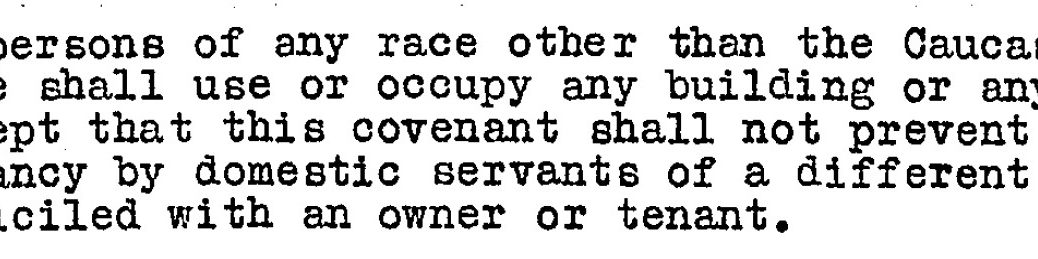
(a) An owner of a separate interest in a common interest development shall not be subject to a provision in a governing document or an amendment to a governing document that prohibits, has the effect of prohibiting, or unreasonably restricts the rental or leasing of any of the separate interests, accessory dwelling units, or junior accessory dwelling units in that common interest development to a renter, lessee, or tenant.
(b) A common interest development shall not adopt or enforce a provision in a governing document or amendment to a governing document that restricts the rental or lease of separate interests within a common interest to less than 25 percent of the separate interests. Nothing in this subdivision prohibits a common interest development from adopting or enforcing a provision authorizing a higher percentage of separate interests to be rented or leased.
(c) This section does not prohibit a common interest development from adopting and enforcing a provision in a governing document that prohibits transient or short-term rental of a separate property interest for a period of 30 days or less.
(d) For purposes of this section, an accessory dwelling unit or junior accessory dwelling unit shall not be construed as a separate interest.
(e) For purposes of this section, a separate interest shall not be counted as occupied by a renter if the separate interest, or the accessory dwelling unit or junior accessory dwelling unit of the separate interest, is occupied by the owner.
(f) A common interest development shall comply with the prohibition on rental restrictions specified in this section on and after January 1, 2021, regardless of whether the common interest development has revised their governing documents to comply with this section. Notwithstanding any other provision of law or provision of the governing documents, the board, without approval of the members, shall amend any declaration or other governing document no later than July 1, 2022, that includes a restrictive covenant prohibited by this section by either deleting or restating the restrictive covenant to be compliant with this section, and shall restate the declaration or other governing document without the restrictive covenant but with no other change to the declaration or governing document. A board shall provide general notice pursuant to Section 4045 of the amendment at least 28 days before approving the amendment. The notice shall include the text of the amendment and a description of the purpose and effect of the amendment. The decision on the amendment shall be made at a board meeting, after consideration of any comments made by association members.
(g) A common interest development that willfully violates this section shall be liable to the applicant or other party for actual damages, and shall pay a civil penalty to the applicant or other party in an amount not to exceed one thousand dollars ($1,000).
(h) In accordance with Section 4740, this section does not change the right of an owner of a separate interest who acquired title to their separate interest before the effective date of this section to rent or lease their property.
“Reasonable Accommodation” Defined HOAs are required to make “reasonable accommodations” in their rules and policies as necessary to afford a disabled person the ability to use and enjoy their their dwelling. A “reasonable accommodation” has been held to mean “a moderate adjustment to a challenged [HOA] policy, not a fundamental change in the policy.” (See Davis v. Echo Valley Condominium Assn. (2019) 945 F.3d 483, 490). In a situation where a disabled individual’s requested change to an HOA’s policy would serve as a “fundamental alteration” to the policy, or would otherwise intrude on the rights of third parties, the requested change may not necessarily constitute a “reasonable accommodation” which the HOA is required to make:
“[The Plaintiff’s] proposed smoking ban amounts to a ‘fundamental alteration’ of the Association’s smoking policy…No one would describe a change from a smoking-permitted policy to a smoking-prohibited policy as an ‘accommodation’ in the policy. It is more rewrite than adjustment…Not only that, [the Plaintiff’s] proposal would intrude on the rights of third parties. Neighbors who smoke may well have bought their condos because of the Association’s policy permitting smoking. So, unlike the blind applicant asking to keep a seeing eye dog in an apartment building that bans pets, [the Plaintiff] is like the person with allergies seeking to expel all dogs from a building that allows pets. Here…a third party’s “rights [do] not have to be sacrificed on the altar of reasonable accommodation.” (Davis, at 492 (internal citations omitted).)
Verification of a Claimed Disability
When a disabled person makes a request for reasonable accommodation and the person’s disability is obvious, an HOA cannot request additional information to verify the existence of the claimed disability. When the disability is not obvious, an HOA can request information verifying:
That the person is disabled;
That there is a need for the requested accommodation; and
Information verifying the relationship between the claimed disability and the requested accommodation.
An “Interactive Process” When a request for reasonable accommodation is made, the HOA must engage in an “interactive process” with the person making the request. The interactive process serves to clarify what the individual needs, and to implement the appropriate accommodation.