
All posts by Steve Tinnelly

Woodridge Escondido Property Owners Association v. Nielson

(2005) 130 Cal.App.4th 559

[Architectural Control] A HOA’s architectural committee does not have the authority to approve an improvement which is in violation of the CC&Rs.

Joseph J. Rego for Defendant and Appellant.
Feist, Vetter, Knauf and Loy, Alan H. Burson and Lisa Frazee Morgosh for Plaintiff and Respondent. [561]

OPINION


NARES, ACTING P. J.-

This case involves a dispute between a homeowners association and a homeowner regarding the construction of a wooden deck over an easement. Plaintiff Woodridge Escondido Property Owners Association (association) managed a planned residential development known as Woodridge in Escondido. Defendant Paul Nielsen owned a home in Woodridge and had a side yard easement over the adjoining property of his [562] neighbor, Virginia Kendall. The declaration of covenants, conditions and restrictions (CC&R’s) expressly prohibited the installation of “any permanent fn. 1 Nielsen refused the offer. The association brought this action for injunctive and declaratory relief against him, seeking an order requiring him to remove the encroaching portion of the deck. The association also recorded a notice of pendency of action (lis pendens). fn. 2 structure other than irrigation systems” on the easement. (Italics added.) After he received permission from Woodridge’s architectural committee, Nielsen constructed a wooden deck that encroached upon the easement. The association’s board of directors later found that the architectural committee had erroneously approved the construction of the deck, ordered Nielsen to remove the portion of the deck that encroached upon the easement, and offered to pay for the removal cost.

The court granted the association’s motion for summary judgment and its motion for attorney fees. After the court issued an order granting Nielsen’s motion to expunge the lis pendens, the association petitioned for writ relief (Woodridge Escondido Property Owners Assn. v. Superior Court/Nielsen (Apr. 26, 2004, D043860) [nonpub. opn.]). This court granted the petition and issued a peremptory writ directing the court to vacate that order and enter an order denying Nielsen’s motion.

Nielsen appeals the summary judgment and the order granting the association’s motion for attorney fees. Nielsen also purports to appeal from the order granting his motion to expunge the lis pendens, and he requests “review” of this court’s writ decision. For reasons we shall explain, we affirm the summary judgment and award of attorney fees in favor of the association and conclude that we have no authority to either reach the merits of Nielsen’s purported appeal of the expungement order or review this court’s final writ decision.

FACTUAL AND PROCEDURAL BACKGROUND fn. 3

The homes in the Woodridge Escondido development (development) are a type known as “zero lot line.” One exterior side wall of each home is built on one of the side yard property lines of the lot on which the home is located [563] (the lot on which the home is located is sometimes referred to as the dominant tenement). Each lot has a five-foot easement over the side yard of the adjacent lot that belongs in fee to the owner of that neighboring lot (which is sometimes referred to as the servient tenement).

A. CC&R’s

Article IV (Architectural Control) of the subject CC&R’s requires written approval of all “structure[s] or improvement[s]” to be built or installed on any lot in the development, and provides:

“No building, fence, wall, patio, patio cover or other structure or improvement . . . shall be commenced, erected, placed, installed or altered upon any Lot until the location and the complete plans and specifications . . . have been submitted to and approved in writing as to . . . location to surrounding structures . . . by the Board, or by the architectural committee composed of at least three . . . and not more than [five] representatives from the membership of the Association appointed by and serving at the pleasure of the Board. All or any number of the members of the architectural committee may be members of the Board. In the event no architectural committee is named, the Board shall serve as the architectural committee. . . .” (Italics added.)

Article X, section 1, which pertains to the enforcement of the CC&R’s, declares that a violation of the CC&R’s is a nuisance for which the association and “any owner” may seek a remedy:

“The Association and any owner shall have the right to enforce, by any proceedings at law or in equity, all restrictions, conditions, covenants and reservations now or hereafter imposed by the provisions of [these CC&R’s]. . . . The result of every act or omission whereby any covenant contained in [these CC&R’s] is violated in whole or in part is hereby declared to be a nuisance, and every remedy against nuisance, either public or private, shall be applicable against every such act or omission. . . .” (Italics added.)

Article X, section 8(c), which is of central importance in this appeal, limits use of side yard easements in the development and prohibits the owners of dominant tenements from installing “any permanent structure other than irrigation systems” on appurtenant side yard easements.

Article X, section 9 (Litigation) of the CC&R’s contains an attorney fees provision that authorizes the prevailing party in litigation commenced by the association or any homeowner to recover costs of suit and reasonable attorney fees. [564]

B. Nielsen’s Lot and Deed Restrictions

Nielsen owns lot 64 in the development. Lot 64 is subject to the CC&R’s and is located at 2234 Hilton Head Glen in the City of Escondido. The deed transferring title of the property to Nielsen (deed) described the “easement appurtenant to lot 64 on, over and across that portion of” the neighboring lot (lot 63) and, like article X, section 8(c) of the CC&R’s, prohibited Nielsen from using the easement for the installation of “any permanent structure other than irrigation systems”:

“The owner of Lot 64 may use the easement granted herein for access, recreation and landscaping (including irrigation systems) purposes only and shall not use the easement in violation of any law or for the installation or maintenance of any permanent structure, other than irrigation systems. . . .” (Italics added.)

C. Nielsen’s Deck and Hot Tub fn. 4

Nielsen built a 17- by 21-foot deck with a full-size hot tub that extended into the five-feet-wide side yard easement over the adjacent side yard of the neighboring lot (lot 63) owned by Virginia Kendall. fn. 5 Two members of the architectural committee had approved Nielsen’s architectural approval request form pertaining to the deck.

The association’s board of directors later found that the architectural committee had erroneously approved the construction of the deck, decided that the deck should be removed, and offered to pay Nielsen for the removal cost. fn. 6

D. Association’s Complaint and Lis Pendens

In April 2003 the association filed a complaint for injunctive and declaratory relief against Nielsen to enforce the CC&R’s and the provisions of the [565] deed pertaining to the easement. In the prayer of the complaint, the association sought a declaration of the parties’ rights and obligations under the CC&R’s, and an order requiring Nielsen to remove the portion of the deck that was encroaching on the subject easement. The association also recorded and served on Nielsen a notice of pendency of action (lis pendens).

E. Association’s Motion for Summary Judgment and Nielsen’s Motion To Expunge Lis Pendens

The association filed a motion for summary judgment. Nielsen filed a motion to expunge the lis pendens. After hearing argument, the court issued an order granting summary judgment for the association. The court found “no triable issue as to whether [Nielsen] violated the CC&Rs by constructing a permanent structure on the easement.” (Italics added.) The court also found as a matter of law that “the deck constitute[d] a permanent structure within the meaning of the CC&Rs.” (Italics added.) Furthermore, the court found that to the extent Nielsen raised the relative hardship doctrine in opposing summary judgment, “no evidence has been submitted in support of the application of this doctrine.”

The court also issued an order granting Nielsen’s motion to expunge the lis pendens. In expunging the lis pendens, the court confirmed its earlier tentative ruling that provided in part:

“The court finds that the [association’s] complaint failed to state a real property claim as defined in [Code of Civil Procedure fn. 7 ] section 405.4.[ fn. 8 ] Although the complaint alleges that [Nielsen’s] deck encroaches upon an easement, the court finds that the complaint does not affect possession of real property since a judgment in favor of [the association] will merely require removal of personal property, to wit, the deck.” (Italics added.)

F. This Court’s Writ Directing the Court To Vacate Its Order Expunging the Lis Penden (D043860), and the Supreme Court’s Rejection of Nielsen’s Petition for Review

The association filed a writ petition in this court (case No. D043860) challenging the expungement of the lis pendens on the grounds that the definition of “real property claim” in section 405.4 (see fn. 8, ante) included [566] “the use of an easement identified in the pleading” and that in the summary judgment proceeding the association had established the probable validity of its claim against Nielsen.

In an unpublished opinion filed in April 2004 (Woodridge Escondido Property Owners Assn. v. Nielsen, supra, D043860), this court concluded that the association was entitled to writ relief because it had asserted a “real property claim” against Nielsen within the meaning of section 405.4 by filing a complaint for declaratory and injunctive relief alleging that Nielsen violated the CC&R’s by constructing a deck in the restricted area of the side yard easement. This court reasoned that “[w]hether or not the deck [was] labeled personal property, a fixture or anything else, the association’s claim against Nielsen [was] for his use (misuse) of the side yard easement.” This court ordered the issuance of a writ directing the court to vacate its order granting the expungement, enter a new order denying Nielsen’s motion to expunge the lis pendens, and entertain any motion for reasonable attorney fees and costs the association might bring pursuant to section 405.38. In July 2004, the superior court issued an order vacating the order granting Nielsen motion to expunge the lis pendens and entered a new order denying that motion.

G. Attorney Fees Award, Judgment, and Appeal

As the prevailing party on its action to enforce the CC&R’s, the association brought a motion for attorney fees, which Nielsen opposed. The court issued an order (the attorney fees order) granting the motion and awarding reasonable attorney fees to the association in the amount of $9,672.35. The award did not include attorney fees incurred by the association in the writ petition proceeding in this court (case No. D043860, discussed, ante).

On March 25, 2004, the court entered judgment in favor of the association. Nielsen’s timely appeal from the judgment and attorney fees order followed.

DISCUSSION

A. Summary Judgment

We first address Nielsen’s appeal of the summary judgment entered in favor of the association.

  1. Background and Nielsen’s contentions

In granting summary judgment in favor of the association, the court found no triable issue of material fact as to whether Nielsen violated the CC&R’s by constructing a permanent structure on the side yard easement on Kendall’s [567] property. The court also found that the deck was a permanent structure within the meaning of the CC&R’s as a matter of law and that, to the extent Nielsen raised the relative hardship doctrine (discussed, post) in opposing summary judgment, he had submitted no evidence in support of the application of that doctrine.

Nielsen does not dispute that his deck extended over the side yard easement on Kendall’s property. He contends the summary judgment should be reversed because (1) there is no evidence to show the deck was a permanent structure within the meaning of the CC&R’s; (2) there are triable issues of material fact whether the deck was a permanent structure in violation of article X, section 8(c) of the CC&R’s, and whether the hot tub motor caused any vibration in Kendall’s house; (3) there are also triable issues of material fact as to whether he was required to seek approval by a three-member panel of the architectural committee, whether “the Board [sic][ fn. 9 ] erroneously approved [his] request [to build the deck],” whether his architectural approval request form was erroneously approved by the architectural committee, and whether that form was incomplete; (4) the association “act[ed] in an arbitrary manner by directing [him] to remove the deck extending over the easement, soon after his application was approved”; (5) the association’s claim that Nielsen’s hot tub caused a nuisance on Kendall’s property is based on insufficient evidence; (6) the relative hardship doctrine should be applied because there is nothing to show that the association, in bringing this action for injunctive and declaratory relief “based on a breach of the CC&Rs and the deck and hot tub causing a nuisance to [Kendall’s] residence,” has been irreparably damaged; and (7) the association denied Nielsen’s right to a hearing before the board of directors approved a motion requesting him to remove the portion of the deck that extended over the easement.

  1. Standard of review

[1] On an appeal from a grant of summary judgment, we independently examine the record to determine whether triable issues of material fact exist. (Saelzler v. Advanced Group 400 (2001) 25 Cal.4th 763, 767 (Saelzler).) “In performing our de novo review, we must [568] view the evidence in a light favorable to plaintiff as the losing party [citation], liberally construing [his] evidentiary submission while strictly scrutinizing [the prevailing party’s] own showing, and resolving any evidentiary doubts or ambiguities in [favor of the losing party].” (Id. at p. 768.)

[2] “[T]he party moving for summary judgment [(here the association)] bears the burden of persuasion that there is no triable issue of material fact and that [it] is entitled to judgment as a matter of law.” (Aguilar v. Atlantic Richfield Co. (2001) 25 Cal.4th 826, 850 (Aguilar), fn. omitted.) “[A] plaintiff bears the burden of persuasion that ‘each element of’ the ’cause of action’ in question has been ‘proved,’ and hence that ‘there is no defense’ thereto. ([] § 437c, subd. (o)(1).)” (Aguilar, supra, 25 Cal.4th at p. 850.)

If the moving plaintiff meets its initial burden of production to make a prima facie showing of the nonexistence of any triable issue of material fact, the burden shifts to the defendant (here Nielsen) “to make a prima facie showing of the existence of a triable issue of material fact.” (Aguilarsupra, 25 Cal.4th at p. 850.) “There is a triable issue of material fact if, and only if, the evidence would allow a reasonable trier of fact to find the underlying fact in favor of the party opposing the motion in accordance with the applicable standard of proof.” (Ibid., fn. omitted.)

  1. Analysis

[3] The key factual issue in this case is whether Nielsen’s deck, which encroached upon the side yard easement on Kendall’s property, violated the provisions of article X, section 8(c) of the CC&R’s because it was a permanent structure prohibited by those provisions. For reasons we now discuss, we conclude the association met its initial burden of production to demonstrate that the deck was a permanent structure, and thus met its burden to make a prima facie showing of the nonexistence of any triable issue of material fact.

In support of its summary judgment motion, the association presented to the court a copy of the CC&R’s. The plain language of article X, section 8(c) of the CC&R’s limits use of the side yard easements in the development, including Nielsen’s easement on Kendall’s property over which he built his deck, and it prohibits the owners of dominant tenements (including Nielsen) from installing “any permanent structure other than irrigation systems” on the appurtenant side yard easements. That section provides:

“Each side yard easement may be used by the Owner(s) of the Dominant Tenement to which [569] it is appurtenant for access, landscaping (including irrigation systems) and recreational purposes only. The Owner(s) of the Dominant Tenement shall not use the appurtenant side yard easement in violation of any law or for the installation or maintenance of any permanent structure other than irrigation systems. . . .” (Italics added.)

The association also submitted authenticated photocopies of color photographs showing the location and construction details of the deck that abutted the house of Nielsen’s neighbor, Kendall (the owner of the servient tenement), as well as a declaration by Kendall, who described the deck as “a wooden deck structure [constructed] over the easement on my property which abuts my house and completely covers the drainage culvert established by the builder.” Kendall also stated in her declaration that “the legs of the deck are buried into the ground and it is attached to his house.”

[4] Nielsen challenges Kendall’s declaration, claiming that it “is nothing more than hearsay because she was not a party to the action against [him].” This claim is unavailing. Section 437c, subdivision (b)(5) provides that evidentiary objections not made at the hearing on a summary judgment motion “shall be deemed waived.” Here, Nielsen asserted his hearsay objection to Kendall’s declaration in his written response to the association’s separate statement of undisputed material facts. However, a mere objection is insufficient. To preserve an evidentiary objection for appellate review, the objecting party must also obtain a ruling on the objection from the trial court. (Sharon P. v. Arman, Ltd. (1999) 21 Cal.4th 1181, 1186, fn. 1 [evidentiary objections deemed waived because “the record contain[ed] no rulings on those objections”], disapproved on another point in Aguilar v. Atlantic Richfield Co., supra, 25 Cal.4th at p. 853, fn. 19.) Here, Nielsen has failed to show that the court ruled on his hearsay objection to Kendall’s declaration, and our review of the record discloses no such ruling. Accordingly, we deem Nielsen’s evidentiary objection waived and view Kendall’s declaration as having been admitted in evidence as part of the record for purposes of this appeal. (Sharon P. v. Arman, Ltd., supra, at p. 1186, fn.1.)

We reject Nielsen’s contention that there is “no evidence to demonstrate the deck [was] a permanent fixture.” Neither the CC&R’s nor Nielsen’s grant deed fn. 10 define the term “permanent fixture.” The Oxford English Dictionary [570] Online (OED Online), however, defines “permanent” as “[c]ontinuing or designed to continue indefinitely without change; abiding, lasting, enduring; persistent.” fn. 11

Here, the association’s photographic evidence and Kendall’s declaration establish that because Nielsen’s deck was attached to his house and its supporting legs or posts were buried in the ground, it was “designed to continue indefinitely without change” and was constructed to last or endure. Nielsen’s contention that the deck was not permanent because it could be (and has been) removed, is unavailing. As already noted, article X, section 8(c) of the CC&R’s prohibits the owner of a dominant tenement (in this case, Nielsen) from constructing any permanent structure “other than irrigation systems” over an appurtenant side yard easement. The plain language of that section shows that for purposes of enforcing the CC&R’s, “permanent” and “removable” are not mutually exclusive terms. Although irrigation pipes and fixtures, like a deck, can be removed from an easement, they (like a deck) are designed to continue indefinitely without change, and thus are no less “permanent” than a deck. Article X, section 8(c) of the CC&R’s, however, like Nielsen’s grant deed, provides an exception permitting the construction of such permanent irrigation systems on appurtenant side yard easements.

We thus conclude that the association met its burden of producing evidence showing that the deck was permanent within the meaning of article X, section 8(c) of the CC&R’s. Accordingly, we also conclude that the association met its burden of showing that Nielsen’s deck was a prohibited permanent structure that encroached upon the appurtenant side yard easement on Kendall’s property in violation of that section of the CC&R’s.

Because the association met its burden of producing evidence showing that Nielsen’s construction of the deck on the easement on Kendall’s property was a violation of the CC&R’s, we further conclude it also met its burden of producing evidence showing that the encroaching portion of the deck was a nuisance within the meaning of article X, section 1 of the CC&R’s, which provides in part that “[t]he result of every act or omission whereby any covenant contained in [these CC&R’s] is violated in whole or in part is hereby declared to be a nuisance” (italics added), and “every remedy against nuisance, either public or private, shall be applicable against every such act or omission. . . .” (Italics added.) That section also expressly authorizes the [571] association to enforce the CC&R’s “by any proceedings at law or in equity.” In sum, the association met its initial burden of producing evidence showing prima facie entitlement to the injunctive and declaratory relief for which it prayed in its complaint against Nielsen. fn. 12

Because the association met its initial burden of production to make a prima facie showing of the nonexistence of any triable issue of material fact, the burden shifted to Nielsen to make a prima facie showing of the existence of such an issue. (Aguilarsupra, 25 Cal.4th at p. 850.) In support of his written opposition to the summary judgment motion, Nielsen submitted his own declaration, which he cited several times in his written response to the association’s separate statement of undisputed material facts. In its order granting the summary judgment motion, however, the court found that Nielsen’s declaration failed to comply with section 2015.5, fn. 13 and ruled that it was inadmissible. fn. 14 On appeal, Nielsen does not contend the court erred in excluding his declaration.

Because Nielsen’s excluded declaration was the purported evidence that he offered to show the existence of a triable issue of material fact, we conclude [572] that he failed to meet his burden “to make a prima facie showing of the existence of a triable issue of material fact.” (Aguilarsupra, 25 Cal.4th at p. 850.)

Nielsen’s contention that the association acted in an arbitrary manner by directing him to remove the encroaching portion of the deck soon after its construction was approved is unavailing because it is not supported by evidence, and because the undisputed facts show that the association, its board of directors, and its architectural committee had no authority to approve the construction of any permanent structure other than an irrigation system on the subject easement in violation of the express prohibitory provisions of article X, section 8(c) of the CC&R’s (discussed, ante).

Nielsen’s reliance on Deane Gardenhome Assn. v. Denktas (1993) 13 Cal.App.4th 1394 (Denktas) is misplaced. There, a homeowners association brought an action for injunctive relief and damages against two homeowners, alleging they had painted their house in violation of the association’s CC&R’s, which required the homeowners to obtain approval of the association’s architectural review committee before painting the exterior of the house and restricted the color choices to those the association approved. (Id. at pp. 1395-1396.) The homeowners hired a painter to paint their house green and pink, and the painter took paint samples to the association’s president to obtain his approval. The president approved the green paint color, but told the painter to “tone down” the pink color. (Id. at p. 1396.) When the painter returned with a different shade of pink, the president approved that color. (Ibid.) The trial court entered judgment in favor of the homeowner defendants, but denied their request for attorney fees. (Ibid.) The Court of Appeal reversed the order denying the homeowners’ request for attorney fees, reasoning that they were entitled to an award of reasonable attorney fees under the fees provision of the CC&R’s because they had successfully defended the suit that the homeowners association had brought against them, and thus they were the prevailing parties. (Id. at pp. 1398, 1399.)

Denktas is factually distinguishable in that the restrictive covenants in that case did not prohibit that which the president of the homeowners’ association approved: the [573] color of the paint that the homeowner defendants had used to paint the exterior of their house. (See Denktas, supra, 13 Cal.App.4th at p. 1396.) The restrictive covenants required the homeowners to obtain approval of the color they chose, and they obtained that approval. (Ibid.) Here, in contrast, the CC&R’s expressly prohibited that which the board of directors found the architectural committee had erroneously approved: the construction of a “permanent structure other than irrigation systems” (Nielsen’s deck) over the appurtenant side yard easement on Kendall’s property.

We reject Nielsen’s contention that the relative hardship doctrine (see Hirshfield v. Schwartz (2001) 91 Cal.App.4th 749, 754 (Hirshfield)) fn. 15 it has suffered an irreparable injury. Nielsen cites Field-Escandon v. DeMann (1988) 204 Cal.App.3d 228, 238, which held that a trial court has discretion to deny a mandatory injunction to remove an encroachment, and in exercising that discretion the court should balance or weigh the relative hardships. Nielsen also relies on Christensen, supra, 114 Cal.App.2d 554, and Hirshfield, supra, 91 Cal.App.4th 749, which he asserts are on point. should be applied because (he asserts) there is nothing to show that the association, in bringing this action for injunctive and declaratory relief “based on a breach of the CC&Rs and the deck and hot tub causing a nuisance to [Kendall’s] residence,” has been irreparably damaged. Nielsen is claiming that the association is not entitled to summary judgment because proof of irreparable injury is an element of a claim for injunctive relief and here the association is only suing on behalf of Nielsen’s neighbor, Kendall, and thus cannot show that

Nielsen, however, incongruously maintains that because he has removed the encroaching portion of the deck, “[t]he allegation regarding the removal of a portion of the deck that encroaches over the easement is no longer an issue.” Nielsen thus appears to concede that application of the relative hardship doctrine is a moot issue because the association’s claim for a mandatory injunction is now moot.

Assuming that the issue of the applicability of the relative hardship doctrine is not moot with respect to the association’s remaining claim for declaratory relief, Nielsen has presented no evidence with respect to the relative hardships that he claims should be balanced in this matter. As already discussed, Nielsen’s evidence primarily consisted of his own declaration (see fn. 14, ante), which the court, in a ruling Nielsen does not challenge, found [574] inadmissible. Even if Nielsen’s brief declaration were admissible, it contains no evidence regarding the relative hardships that he claims should be weighed.

The Christensen and Hirshfield cases, upon which Nielsen relies, are distinguishable in that neither case involved an action by a homeowners association authorized to remove an easement encroachment that violated the express provisions of applicable restrictive covenants. In Christensen, which involved a dispute between owners of adjoining parcels of real property in Santa Cruz, the plaintiff sought a mandatory injunction to compel removal of a cement abutment that the defendants had mistakenly constructed on the plaintiff’s land. (Christensen, supra, “114 Cal.App.2d at p. 555.) In Hirshfield, which involved a dispute between owners of adjoining parcels of real property in Bel-Air, the defendants’ cement block wall encroached upon the plaintiffs’ land. (Hirshfield, supra, “114 Cal.App.2d at p. 756.) As already noted, none of the plaintiffs in those cases was a homeowners association charged with the responsibility of enforcing valid restrictive covenants, and in neither case did the encroachment constitute a violation of such covenants.

[5] Also unavailing is Nielsen’s contention that the summary judgment should be reversed because the association denied him a hearing before the board of directors approved a motion requesting him to remove the portion of the deck that extended over the easement. Ordinarily, issues not raised in the trial court proceedings are waived. (Eisenberg et al., Cal. Practice Guide: Civil Appeals and Writs (The Rutter Group 2004) ¶ 1:44, p. 1-9 (rev. #1, 2002).) Here, a review of both Nielsen’s written opposition to the summary judgment motion and the reporter’s transcript of the oral argument on that motion shows that Nielsen did not raise this contention in the trial court, and thus he has waived this point. Were it necessary to reach the merits of this contention, we would conclude the record shows that Nielsen was present at the board of directors meeting at which the board approved the motion to direct him to remove the encroaching portion of his deck and that he participated in the proceedings and had an opportunity to be heard. Specifically, the board of directors’ October 15, 2002 minutes indicate that Nielsen was the president of the association at the time of the meeting, and the minutes referred to item No. 2230-34 HH on the agenda as “Problem re deck at 2234 abutting home at 2230, Nielsen and Kendall.” Those minutes also state:

“Paul [Nielsen] shared items in a title report which he felt were apropos. Mrs. Kendall stated her case, including not having access to the side of her home, noise from spa heater and what she called ‘illegality’ of a [575] permanent structure in the area she owned (servient tenement). She stated if she decided to sell, the buyer would not be able to get clear title. She also pointed out she was not advised of project in advance and had no opportunity to state her objections on the [architectural approval request form]. At this point Paul excused himself so that the Board could vote.” fn. 16

In sum, the record shows that Nielsen failed to meet his burden of presenting evidence establishing the existence of a triable issue of material fact, and the association met its burden of persuasion that there is no triable issue of material fact and that it is entitled to judgment as a matter of law. Accordingly, we affirm the summary judgment.

B. Attorney Fees Order

Nielsen also appeals the attorney fees order that awarded reasonable attorney fees in the amount of $9,672.35 to the association as the prevailing party in this matter. The record shows that the award was based on article X, section 9, of the CC&R’s, which provides in part that “[i]n the event the Association . . . shall commence litigation to enforce any of the Covenants, Conditions or Restrictions contained in [the CC&R’s], the prevailing party in such litigation shall be entitled to costs of suit and such sum for attorney’s fees as the Court may deem reasonable.” (Italics added.)

[6] “The most fundamental rule of appellate review is that an appealed judgment or order is presumed to be correct.” (Eisenberg et al., Cal. Practice Guide: Civil Appeals and Writs, supra, ¶ 8:15, pp. 8-4 to 8-5 (rev. #1, 2004), italics omitted.) [7] As the appellant, Nielsen has the burden of presenting “argument and legal authority on each point raised on appeal.” (Id., ¶ 8:17.1, p. 8-5 (rev. #1, 2004).)

Although his appellant’s opening brief raises the issue of whether the association was entitled to an award of attorney fees in this matter, Nielsen fails to present any argument or legal authority regarding this issue in either that brief or his appellant’s reply brief. Accordingly, we presume the award of attorney fees was proper. As the prevailing party in the summary judgment proceeding, the association is entitled to recover reasonable attorney fees it has incurred both in the trial court proceedings and on appeal. [576]

C. Expungement Order and This Court’s Writ Decision

Last, Nielsen’s appellant’s opening brief states that he is also appealing from the court’s order granting his motion to expunge the lis pendens recorded by the association, and that he is requesting review of this court’s April 2004 decision in the writ petition proceeding (D043860) to issue a peremptory writ directing the court to vacate its expungement order and enter a new order denying Nielsen’s motion to expunge. fn. 17 Nielsen claims that the trial court properly expunged the lis pendens because the association failed to state a “real property claim” within the meaning of section 405.4 (the provisions of which are set forth in fn. 8, ante).

  1. Background

In granting Nielsen’s motion to expunge the lis pendens, the court found that although the association’s complaint alleged that Nielsen’s deck encroached upon an easement, the complaint failed to state a “real property claim” as defined in section 405.4 because it “[did] not affect possession of real property since a judgment in favor of [the association] will merely require removal of personal property, to wit, the deck.” (2AA 210, 320)! The association challenged the expungement by filing in this court a writ petition (case No. D043860), arguing that the definition of “real property claim” in section 405.4 included “the use of an easement identified in the pleading.”

In Woodridge Escondido Property Owners Assn. v. Superior Court/Nielsen, supra, D043860, this court concluded that the association was entitled to writ relief because it had asserted a real property claim against Nielsen within the meaning of section 405.4 by filing a complaint for declaratory and injunctive relief alleging that Nielsen violated the CC&R’s by constructing a deck in the restricted area of the side yard easement. This court explained that “[w]hether or not the deck [was] labeled personal property, a fixture or anything else, the association’s claim against Nielsen [was] for his use (misuse) of the side yard [577] easement.” Noting that Nielsen still had time to appeal the summary judgment, we also stated that “a lis pendens may remain on record while the appeal is pending. [Citation.]” Citing California Rules of Court, fn. 18 rule 24(b)(3), fn. 19 the opinion also stated that “the opinion is made final immediately as to this court.”

Nielsen sought to challenge this court’s writ decision by filing a petition for review with the California Supreme Court. In June 2004 the high court sent a letter to Nielsen’s counsel stating that it had considered Nielsen’s petition for review, but “ha[d] directed that the petition for review be returned unfiled.” We issued the remittitur on June 28, 2004.

  1. Analysis

[8] Under section 405.39, fn. 20 an order granting or denying a motion to expunge a lis pendens is not an appealable order. (See also Eisenberg et al., Cal. Practice Guide: Civil Appeals and Writs, supra, ¶ 2:259.2, p. 2-111 (rev. #1, 2001).) Thus, this court has no authority to review on appeal either the court’s initial order granting Nielsen’s motion to expunge the lis pendens (an order in Nielsen’s favor) or its subsequent order denying that motion following this court’s issuance of the peremptory writ and the remittitur.

This court also has no authority to review our writ decision in case No. D043860. As already noted, the opinion stated that it was “final immediately as to this court.” Nielsen challenged the decision by attempting to file a petition for review with the Supreme Court, which considered it and then returned it to him unfiled. Because the writ decision is final as to this court, we have no power to review it. (See also rule 24(b)(1) [“[e]xcept as otherwise provided in this rule, a Court of Appeal decision . . . is final in that court 30 days after filing”].) In sum, we affirm the summary judgment and award of attorney fees in favor of the association and conclude that we have no authority to either reach the merits of Nielsen’s purported appeal of an expungement order, or review this court’s final writ decision. [578]

DISPOSITION

We affirm the judgment and the attorney fees order. The association shall recover its costs and attorney fees on appeal. The cause is remanded to the trial court for a determination of the amount of reasonable attorney fees and costs on appeal the association shall recover from Nielsen under the provisions of article X, section 9, of the CC&R’s.

Haller, J., and O’Rourke, J., concurred.


FN 1. According to the parties on appeal, the portion of the deck that encroached upon the easement has been removed.

FN 2. “‘A lis pendens is a recorded document giving constructive notice that an action has been filed affecting title to or right to possession of the real property described in the notice.’ [Citation.]” (Kirkeby v. Superior Court 33 Cal.4th 642, 647.) (2004)

FN 3. The following background is based primarily on the facts that the parties acknowledge are undisputed, and this court’s prior opinion in this matter (Woodridge Escondido Property Owners Assn. v. Nielsen, supra,post. D043860), discussed,

FN 4. Nielsen asserts on appeal that he “recently removed the portion of the deck that extend[ed] over the [five-foot] easement,” and thus “[t]he allegation regarding the removal of a portion of the deck that encroach[ed] over the easement is no longer an issue.”

FN 5. Kendall, who is not a party to this appeal, states in her declaration supporting the association’s summary judgment motion that Nielsen’s deck was built “over the easement on [her] property,” and it “abut[ted] [her] house.” In his written opposition to that motion, Nielsen did not dispute that he constructed the deck over the side yard easement on Kendall’s property, but he disputed that the deck was a “permanent structure” and that it abutted Kendall’s house.

FN 6. As shown by its October 15, 2002 minutes, the board made the following determination: “That [homeowner] Nielsen remove the 5[-foot] encroachment on property owned by Kendall at 2230 [Hilton Head Glen], with Association to pay for the cost of removal, due to fact the Architectural Committee erred in giving approval. Work to be completed in 60 days. Board felt allowing encroachment would set a very harmful precedent.”

FN 7. All further statutory references are to the Code of Civil Procedure unless otherwise specified.

FN 8. Section 405.4 defines the term “real property claim” as “the cause or causes of action in a pleading which would, if meritorious, affect (a) title to, or the right to possession of, specific real property or (b) the use of an easement identified in the pleading, other than an easement obtained pursuant to statute by any regulated public utility.” (Italics added.)

FN 9. The record shows that the architectural committee, not the board of directors, approved Nielsen’s request to build the deck, and the board of directors later overruled that approval and directed Nielsen to remove the encroaching portion of the deck. In support of his contention that the board of directors approved the deck, Nielsen relies on article IV of the CC&R’s, which provides in part that “[i]n the event no architectural committee is named, the Board shall serve as the architectural committee.” (Italics added.) Nielsen fails to cite any evidence in the record showing that no architectural committee was named in this matter.

FN 10. The grant deed, like article X, section 8(c) of the CC&R’s, prohibited Nielsen from using the appurtenant side yard easement on Kendall’s property for the installation of “any permanent structure, other than irrigation systems.”

FN 11. OED Online (2d. ed. 1989) < (as of Apr. 2005).

FN 12. Noting that he recently removed the portion of the deck that encroached upon the easement on Kendall’s property, Nielsen asserts that “[t]he [association’s] allegation regarding the removal of a portion of the deck that encroache[d] over the easement is no longer an issue.” The association agrees, and states that “[i]t is apparently the issue of declaratory relief concerning the rights and duties of the parties [that Nielsen] is now appealing.”

FN 13. Section 2015.5 provides: “Whenever, under any law of this state or under any rule, regulation, order or requirement made pursuant to the law of this state, any matter is required or permitted to be supported, evidenced, established, or proved by the sworn statement, declaration, verification, certificate, oath, or affidavit, in writing of the person making the same (other than a deposition, or an oath of office, or an oath required to be taken before a specified official other than a notary public), such matter may with like force and effect be supported, evidenced, established or proved by the unsworn statement, declaration, verification, or certificate, in writing of such person which recites that it is certified or declared by him or her to be true under penalty of perjury, is subscribed by him or her, and (1), if executed within this state, states the date and place of execution, or (2), if executed at any place, within or without this state, states the date of execution and that it is so certified or declared under the laws of the State of California. . . .”

FN 14. Nielsen’s brief declaration stated: “I [NIELSEN] AM THE DEFENDANT IN THE ABOVE REFERENCED MATTER, AND DECLARE UNDER PENALTY OF PERJURY AS FOLLOWS: [¶] 1. I first became aware of the Lis Pendens on my property about two weeks ago when I attempted to secure a refinance through ‘World Savings.’ I wanted to place my financial affairs in order, especially since I am still recouping from the loss of my wife in April 2003. [¶] 2. As far as the deck is concerned this is not a permanent structure, and completely detachable. [¶] 3. I obtained approval of the Architectural Committee of the Association before the deck was built. [¶] 4. The deck does not interfere with my neighbor’s use, and in fact improved the value of our property as there was nothing but rock and dirt in the area the deck occupies. [¶] 5. My neighbor was aware at all times that I wanted to build this deck, and never once complained to me until this suit was filed about eight months ago. [¶] 6. The City of Escondido inspected the deck and stated no permit was required for the deck.” (Italics added.) Nielsen and his counsel signed and dated the declaration.

FN 15. The Hirshfield court explained that “[t]he doctrine we refer to as ‘relative hardship’ is the equitable balancing required by Christensen [v. Tucker (1952) 114 Cal.App.2d 554 (Christensen)] and related decisions. The case law and commentaries use various other labels, such as ‘”balancing of equities”‘ [citation], ‘balancing conveniences’ [citation], and ‘comparative injury’ [citation]. For consistency, we will call it the ‘relative hardship doctrine.'” (Hirshfield, supra, 91 Cal.App.4th at p. 754, fn. 1.)

FN 16. In light of the foregoing, we need not address Nielsen’s remaining contentions.

FN 17. In his appellant’s opening brief, Nielsen states: “There are three (3) specific trial court rulings [Nielsen] is seeking review on appeal. Because the court of appeal reversed a trial court ruling to expunge lis pendens on April 26, 2004, [Nielsen] is requesting the court review that decision and ask[s] the court to take judicial notice of [case No. D043860]. . . . The first order was entered on January 8, 2004, regarding [Nielsen’s] motion to expunge. . . .” (Italics added.) Nielsen also asserts that our “decision to reverse the trial court’s ruling . . . in Case No. D043860 . . . should also be reviewed.”

The record shows that the “first order” to which Nielsen refers is the superior court’s January 8, 2004 order granting his motion to expunge the lis pendens. The record also shows that on July 15, 2004, after we issued the remittitur in case No. D043860 on June 28 of that year, the trial court complied with the writ by entering an order that vacated its order granting Nielsen’s motion to expunge the lis pendens, and denied that motion. We thus presume that Nielsen is purporting to challenge the trial court’s post-remittitur order denying his motion to expunge, rather than the vacated order granting that motion.

FN 18. All further rule references are to the California Rules of Court.

FN 19. Rule 24(b)(3) provides in part: “If necessary to . . . promote the interests of justice, a Court of Appeal may order early finality in that the court of a decision granting a petition for a writ within its original jurisdiction . . . . The decision may provide for finality in that court on filing or within a stated period of less than 30 days.” (Italics added.)

FN 20. Section 405.39 provides: “No order or other action of the court under this chapter shall be appealable. Any party aggrieved by an order made on a motion under this chapter may petition the proper reviewing court to review the order by writ of mandate. The petition for writ of mandate shall be filed and served within 20 days of service of written notice of the order by the court or any party. The court which issued the order may, within the initial 20-day period, extend the initial 20-day period for one additional period not to exceed 10 days. A copy of the petition for writ of mandate shall be delivered to the clerk of the court which issued the order with a request that it be placed in the court file.” (Italics added.)


Peak Investments v. South Peak Homeowners Association, Inc.

(2006) 140 Cal.App.4th 1363

[CC&R Amendments; Court Petition] Proposed HOA CC&R amendments must be approved by at least a simple majority of the total votes in a HOA before a trial court may reduce the approval requirement set in the CC&Rs.

Borton, Petrini & Conron, Matthew J. Trostler, Casandra P. Cushman, Hickey & Petchul, and Dirk Petchul for Appellant.
Garrison & McInnis, Gregory M. Garrison, Amelia A. McDermott, and Andrew R. Chivinski for Respondent.

OPINION

SILLS, P. J.-

South Peak Homeowners Association (the Association) appeals from the trial court’s order granting a homeowner’s petition to reduce the percentage of homeowner votes needed to approve an amendment to the declaration of covenants, conditions, and restrictions (CC&Rs). The Association claims the trial court improperly reduced the percentage to less than a simple majority of the homeowner votes. We find the Davis-Stirling Common Interest Development Act (Civ. Code, § 1350 et seq.) requires that a proposed amendment to the CC&Rs be approved by at least a simple majority of the total votes in the homeowners association before the trial court can reduce the percentage of votes set by the CC&Rs. Accordingly, we reverse.

FACTS

Peak Investments and Norman and Rita Lesman (the Lesmans) own lot 43 in South Peak, a planned community of custom homes in Laguna Niguel comprising 63 lots. The Association is governed by CC&Rs recorded in April 1984. In 1986, the Association amended the CC&Rs to change the building heights for each lot (CC&Rs, section 6.7.1) and the setback provisions for each lot (CC&Rs, section 6.7.2). These changes were reflected on Exhibit 1 to the amendment, entitled “Height and Setback Limitations,” which listed on a chart each lot number, its maximum height, its minimum setback from front lot line, its minimum setback from side lot lines, and its minimum setback from rear lot lines. The setback limit for lot 43’s side lot lines was listed as “20-7,” meaning the limit was 20 feet total minimum setback distance for both sides of the lot and 7 feet minimum setback distance for each side of the lot. The second page of Exhibit 1 started with listing lot 31; all the lots from lot 31 through 55 had sideline setbacks of 25-7 except lot 43.

The CC&Rs were amended again in 1990 to modify the building height limitations by removing the 35 foot cap (CC&Rs, section 6.7.1). The amended section refers to Attachment 2, which appears to be a retyped version of Exhibit 1 to the 1986 amendment. The only difference in the two is the minimum sideline setback for lot 43; that number was changed from 20-7 to 25-7.

The Lesmans purchased lot 43 in June 2001 and apparently wanted to build a larger structure than the 20-7 setback allowed. They contacted the lawyer who prepared the 1990 amendment, Edward Coss, who wrote to the Association’s Board of Directors in May 2002, opining that the change in the sideline setback on lot 43 was “an inadvertent typographical error.” Coss explained, “I can find no record or other communication to support the change in the side lot lines; in fact, the purpose of Amendment Number Three [1366] was limited to building height alterations.” Coss enclosed a proposed amendment to the CC&Rs to correct the error for the Association’s approval.

For whatever reason, the Board declined to effect the execution of the amendment. In July 2004, the Lesmans proposed an amendment to change the setback for their lot. In accordance with the bylaws, they caused a special meeting of the homeowners to be called to vote on the proposed amendment. The homeowners received a copy of the proposed amendment, which explained the requested change from 25-7 to 20-7; they also received a ballot allowing them to approve or disapprove the amendment or abstain from voting. The ballot noted, “[A]t least 25 percent (25%) of the voting power of the membership (16/63) must be present in person or by proxy in order to achieve a quorum. The written approval of at least 2/3rds of the Members (42 of 63) must be received for the proposed amendment to be approved.”

The meeting was held on July 29, 2004, with seventeen homeowners physically present. Thirty-two ballots were cast: Twenty-one voted in favor of the amendment, and eleven voted against it. Because an amendment to the CC&Rs requires the votes of two-thirds of the lot owners (CC&Rs, section 14.2), the proposed amendment failed.

The Lesmans petitioned the superior court to reduce the percentage necessary to amend the CC&Rs because the CC&Rs required a “supermajority” to amend and not enough members attended the special meeting, and to confirm the amendment as validly approved. (Civ. Code, § 1356.) The trial court granted the petition, finding that more than 50 percent of the voters voted in favor of the amendment, as required by the statute. “”[I]t seems to me . . . that this is what [section] 1356 was meant to apply to, the situation where you can’t get enough people interested to be there to provide for super majority. [¶] It isn’t like enough people came and voted against it. There just isn’t [sic] that many votes. . . . [T]he only question here is whether 50 percent of the voters voted in favor of the amendment. It appears to me they did, 21 out of 32 or 33.” The court also found the amendment was reasonable, another statutory requirement. The Association appeals from the order granting the petition.

DISCUSSION

[1] Civil Code section 1356, part of the Davis-Stirling Common Interest Development Act (the Act), provides that a homeowners’ association, or any member, may petition the superior court for a reduction in the percentage of affirmative votes required to amend the CC&Rs if they require approval by “owners having more than 50 percent of the votes in the association . . . .” [1367] (Civ. Code, § 1356, subd. (a).) fn. 1 The court may, but need not, grant the petition if it finds all of the following: Notice was properly given; the balloting was properly conducted; reasonable efforts were made to permit eligible members to vote; “[o]wners having more than 50 percent of the votes, in a single class voting structure, voted in favor of the amendment”; and “the amendment is reasonable.” (Civ. Code, § 1356, subd. (c)(1)-(5).)

On appeal, the Association contends the trial court erred in making an affirmative finding that more than 50 percent of the owners voted in favor of the amendment. It argues the statute requires an affirmative vote by more than 50 percent of all owners, whether or not they attended the meeting (i.e., 32 out of 63), while the trial court mistakenly construed the requirement to be merely more than 50 percent of the owners who attended the meeting (i.e., 17 out of 32).

[2] In construing a statute, we must ascertain the intent of the Legislature. The first step in the process is to look at the plain meaning of the words used. (Villa de las Palmas Homeowners Assoc. (2004) 33 Cal.4th 73, 82.) “If there is no ambiguity in the language of the statute, ‘then the Legislature is presumed to have meant what it said.'” (Smith v. Rae-Venter Law Group (2002) 29 Cal.4th 345, 358.)

The phrase in question here is “owners having more than 50 percent of the votes,” appearing in section 1356, subdivision (c)(4). The phrase is unqualified by language indicating “the votes” are those cast at a meeting; in the absence of such qualification, it must mean total votes in the Association.

Our interpretation is buttressed by language in other sections of the Act that carefully define votes cast at a meeting. For example, section 1355.5 allows the board of directors of an association to adopt an amendment to the governing documents deleting “any provision which is unequivocally designed and intended, or which by its nature can only have been designed or intended, to facilitate the developer in completing the construction or marketing of the development.” (§ 1355.5, subd. (a).) However, the board may not adopt such an amendment “without the approval of the owners, casting a majority of the votes at a meeting or election of the association constituting a quorum . . . . For the purposes of this section, “quorum” means more than 50 percent of the owners who own no more than two separate interests in the development.” (§ 1355.5, subd. (d).) Likewise, a rule change by the board of directors of an association may be reversed “by the affirmative vote of a majority of the votes represented and voting at a duly held meeting at which [1368] a quorum is present (which affirmative votes also constitute a majority of the required quorum) . . . .” (§ 1357.140, subd. (c).) And absent statutory notice (§ 1365), the board of directors of an association cannot levy assessment increases without the “approval of owners, constituting a quorum, casting a majority of the votes at a meeting or election of the association . . . .” (§ 1366, subds. (a) & (b).)

If a declaration fails to include provisions permitting its amendment, the Act provides that it may be amended after, inter alia, “the approval of owners representing more than 50 percent . . . of the separate interests in the common interest development has been given . . . .” (§ 1355, subd. (b).) Thus, it appears the Legislature made a conscious decision to provide that a bare majority of all the members would be the minimum required to amend the declaration. The comments to the Restatement of Property explain, “The declaration for a common-interest community functions like a constitution for the community. Like a constitution, the declaration should not be subject to change upon temporary impulse. Unlike rules, which can be adopted with a simple majority of votes cast, amendments require at least a majority of all votes that could be cast, and many types of amendment require substantially more.” (Rest.3d, Property, Servitudes (2000) § 6.10, com. a.)

The Restatement includes a section entitled “Judicial Power to Excuse Compliance with Requirements of the Governing Documents.” The section provides that “[a] court may excuse compliance with any of the following provisions in a governing document if it finds that the provision unreasonably interferes with the community’s ability to manage the common property, administer the servitude regime, or carry out any other function set forth in the declaration, and that compliance is not necessary to protect the legitimate interests of the members or lenders holding security interests: [¶] (4) a provision requiring approval of more than two-thirds of the voting power to adopt an amendment . . . .” (Rest.3d, Property, Servitudes, supra, § 6.12.) The section’s notes state, “The rule that quorum and supermajority requirements may be waived if necessary to permit adoption of amendments necessary to continued existence and proper functioning of the association is based on California Civil Code §§ 1356 and 1357, although it differs in some particulars.” (Id., reporter’s notes.) Notably, the Restatement section does not require the court to make threshold findings before it can exercise its discretion, as does section 1356.

There is no case law directly on point. The closest is Blue Lagoon Community Assoc. v. Mitchell (1997) 55 Cal.App.4th 472, in which this court held that a proceeding pursuant to section 1356 was not “adversarial” so as to entitle the party successfully opposing the petition to attorney fees as the prevailing party in an action to enforce the governing [1369] documents of a common interest development. (§ 1354, subd. (c).) In so holding, this court commented: “[T]he purpose of Civil Code section 1356 is to give a property owners’ association the ability to amend its governing documents when, because of voter apathy or other reasons, important amendments cannot be approved by the normal procedures authorized by the declaration. [Citation.] In essence, it provides the association with a safety valve for those situations where the need for a supermajority vote would hamstring the association.” (Id. at p. 477.)

[3] It appears the legislative intent is to require at least a simple majority of all members of an association to amend the CC&Rs. Accordingly, the trial court erred in finding that the affirmative votes of 21 out of 63 owners met the statutory prerequisite that owners having more than 50 percent of the vote voted in favor of the amendment. Because we reach this conclusion, we need not discuss the Association’s contention that the amendment was not reasonable. We observe, however, that it appears the Lesmans may be merely attempting to correct a scrivener’s error. Nothing in this opinion shall be construed to hamper their ongoing efforts in that regard.

DISPOSITION

The order granting the petition is reversed. In the interest of justice, each party shall bear its own costs.

Rylaarsdam, J., and Fybel, J., concurred.


FN 1. All statutory references are to the Civil Code

SB 944 (Committee on Transportation and Housing). Housing Omnibus.

The Housing Omnibus bill provides annual “clean up” legislation to make mostly non-substantive changes to the law.

Current Status: Chaptered

FindHOALaw Quick Summary:

Under existing law, an amendment to the CC&Rs is generally effective after certain requirements are met, except as provided.  This bill would amend Civil Code § 4270 to clarify that the exceptions for approving, certifying, or recording an amendment includes alternative procedures established in Sections 4225, 4230, 4235, and 4275.  This bill would also renumber Civil Code § 4750.10, pertaining to clotheslines and drying racks, to 4753.   Existing law also requires the association distribute to its members an Assessment and Reserve Funding Disclosure Summary form containing specific information regarding funding for the repair and replacement of major components during the next 30 years.  This bill would amend Civil Code § 5570 to correct a typo in the reference to the statutory definition of “major component” from § 55530 to § 5550.

**UPDATE: SB 944 was signed by the Governor on September 27, 2016. It’s changes to the law will become operative on January 1, 2017. 

View more info on SB 944
from the California Legislature's website

Related Links

AB 1448 Signed! HOA Bans on Clotheslines Get 'Hung out to Dry' - Published on HOA Lawyer Blog (October 12, 2015) Circumventing HOA Voter Apathy Via Court Petition - Published on HOA Lawyer Blog (March 14, 2012) The Basics of AB 805:  Overview of Changes in Davis-Stirling Act - Published on HOA Lawyer Blog (January 2, 2013)

SB 918 (Vidak). Common interest developments.

Would require owners to annually provide the association with written notice of the mailing address(es) to which notices from the association are to be delivered. If an owner fails to provide notice of a mailing or secondary address, the property address shall be deemed the mailing address for individual notices.

Current Status: Chaptered

FindHOALaw Quick Summary:

This bill would add Civil Code § 4041 to require the owners of a separate interest to annually provide the association with written notice of all of the following: 1) the mailing address to which notices from the association are to be delivered, 2) a secondary address to which notices from the association are to be delivered, 3) the name and address of their legal representative, if any, including any person with power of attorney or other person who can be contacted in the event of the owner’s extended absence, and 4) whether the property is owner-occupied, rented, vacant, or undeveloped land.  The association shall solicit the annual disclosure and update the association’s records at least 30 days prior to making the association’s annual disclosure in accordance with Civil Code § 5300.  If an owner fails to make these disclosures, the property address shall be deemed the mailing address.

**UPDATE: SB 918 was signed by the Governor on September 28, 2016. It’s changes to the law will become operative on January 1, 2017. 

View more info on SB 918
from the California Legislature's website

Related Links

Are Your Prepared for the New Annual Disclosures? - Published on HOA Lawyer Blog (September 19, 2014) HOA Communications with Homeowners:  Methods of Delivery? - Published on HOA Lawyer Blog (January 16, 2012)

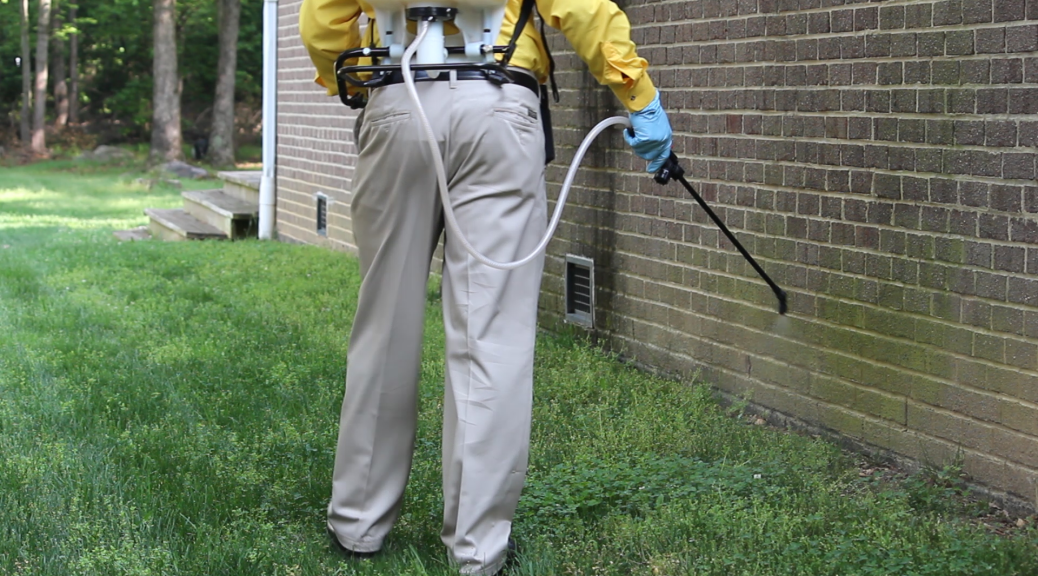
AB 2362 (Chu). Common interest developments: Pesticide application.

Would require the association to provide notice to residents when pesticides are to be applied to the separate interests or common area by unlicensed pest control operators.

Current Status: Chaptered

FindHOALaw Quick Summary:

This bill would add Civil Code § 4777 to require an association to notify the residents of a separate interest, along with the residents of any impacted adjacent separate interests, when pesticides are to be applied to the separate interest or common area by an unlicensed pest control operator.  The notice must contain the pest(s) to be controlled, the name and brand of the pesticide product to be used, the approximate date, time, and frequency with which the pesticide will be applied, in addition to specified verbiage included in the Code.  Notice must be provided at least 48 hours prior to application by posting the notice in a conspicuous location within the common area in which the pesticide is to be applied.  If a posted notice is not practicable, notice shall be provided by individual delivery.  If the pest poses an immediate threat to health and safety, thereby making prior notice unreasonable, notice must be posted as soon as reasonably practicable, but not later than one hour after the pesticide is applied.  A copy of the notice shall be attached to the minutes of the subsequent board meeting immediately following the application.

**UPDATE: AB 2362 was signed by the Governor on September 13, 2016. Its changes to the law will become operative on January 1, 2017. 

View more info on AB 2362
from the California Legislature's website

Related Links

Civil Code Section 1708.8. Invasion of Privacy.

(a) A person is liable for physical invasion of privacy when the person knowingly enters onto the land or into the airspace above the land of another person without permission or otherwise commits a trespass in order to capture any type of visual image, sound recording, or other physical impression of the plaintiff engaging in a private, personal, or familial activity and the invasion occurs in a manner that is offensive to a reasonable person.

(b) A person is liable for constructive invasion of privacy when the person attempts to capture, in a manner that is offensive to a reasonable person, any type of visual image, sound recording, or other physical impression of the plaintiff engaging in a private, personal, or familial activity, through the use of any device, regardless of whether there is a physical trespass, if this image, sound recording, or other physical impression could not have been achieved without a trespass unless the device was used.

(c) An assault or false imprisonment committed with the intent to capture any type of visual image, sound recording, or other physical impression of the plaintiff is subject to subdivisions (d), (e), and (h).

(d) A person who commits any act described in subdivision (a), (b), or (c) is liable for up to three times the amount of any general and special damages that are proximately caused by the violation of this section. This person may also be liable for punitive damages, subject to proof according to Section 3294. If the plaintiff proves that the invasion of privacy was committed for a commercial purpose, the person shall also be subject to disgorgement to the plaintiff of any proceeds or other consideration obtained as a result of the violation of this section. A person who comes within the description of this subdivision is also subject to a civil fine of not less than five thousand dollars ($5,000) and not more than fifty thousand dollars ($50,000).

(e) A person who directs, solicits, actually induces, or actually causes another person, regardless of whether there is an employer-employee relationship, to violate any provision of subdivision (a), (b), or (c) is liable for any general, special, and consequential damages resulting from each said violation. In addition, the person that directs, solicits, actually induces, or actually causes another person, regardless of whether there is an employer-employee relationship, to violate this section shall be liable for punitive damages to the extent that an employer would be subject to punitive damages pursuant to subdivision (b) of Section 3294. A person who comes within the description of this subdivision is also subject to a civil fine of not less than five thousand dollars ($5,000) and not more than fifty thousand dollars ($50,000).

(f)

(1) The transmission, publication, broadcast, sale, offer for sale, or other use of any visual image, sound recording, or other physical impression that was taken or captured in violation of subdivision (a), (b), or (c) shall not constitute a violation of this section unless the person, in the first transaction following the taking or capture of the visual image, sound recording, or other physical impression, publicly transmitted, published, broadcast, sold, or offered for sale the visual image, sound recording, or other physical impression with actual knowledge that it was taken or captured in violation of subdivision (a), (b), or (c), and provided compensation, consideration, or remuneration, monetary or otherwise, for the rights to the unlawfully obtained visual image, sound recording, or other physical impression.

(2) For the purposes of paragraph (1), “actual knowledge” means actual awareness, understanding, and recognition, obtained prior to the time at which the person purchased or acquired the visual image, sound recording, or other physical impression, that the visual image, sound recording, or other physical impression was taken or captured in violation of subdivision (a), (b), or (c). The plaintiff shall establish actual knowledge by clear and convincing evidence.

(3) Any person that publicly transmits, publishes, broadcasts, sells, or offers for sale, in any form, medium, format, or work, a visual image, sound recording, or other physical impression that was previously publicly transmitted, published, broadcast, sold, or offered for sale by another person, is exempt from liability under this section.

(4) If a person’s first public transmission, publication, broadcast, or sale or offer for sale of a visual image, sound recording, or other physical impression that was taken or captured in violation of subdivision (a), (b), or (c) does not constitute a violation of this section, that person’s subsequent public transmission, publication, broadcast, sale, or offer for sale, in any form, medium, format, or work, of the visual image, sound recording, or other physical impression, does not constitute a violation of this section.

(5) This section applies only to a visual image, sound recording, or other physical impression that is captured or taken in California in violation of subdivision (a), (b), or (c) after January 1, 2010, and shall not apply to any visual image, sound recording, or other physical impression taken or captured outside of California.

(6) Nothing in this subdivision shall be construed to impair or limit a special motion to strike pursuant to Section 425.16, 425.17, or 425.18 of the Code of Civil Procedure.

(7) This section shall not be construed to limit all other rights or remedies of the plaintiff in law or equity, including, but not limited to, the publication of private facts.

(g) This section shall not be construed to impair or limit any otherwise lawful activities of law enforcement personnel or employees of governmental agencies or other entities, either public or private, who, in the course and scope of their employment, and supported by an articulable suspicion, attempt to capture any type of visual image, sound recording, or other physical impression of a person during an investigation, surveillance, or monitoring of any conduct to obtain evidence of suspected illegal activity or other misconduct, the suspected violation of any administrative rule or regulation, a suspected fraudulent conduct, or any activity involving a violation of law or business practices or conduct of public officials adversely affecting the public welfare, health, or safety.

(h) In any action pursuant to this section, the court may grant equitable relief, including, but not limited to, an injunction and restraining order against further violations of subdivision (a), (b), or (c).

(i) The rights and remedies provided in this section are cumulative and in addition to any other rights and remedies provided by law.

(j) It is not a defense to a violation of this section that no image, recording, or physical impression was captured or sold.

(k) For the purposes of this section, “for a commercial purpose” means any act done with the expectation of a sale, financial gain, or other consideration. A visual image, sound recording, or other physical impression shall not be found to have been, or intended to have been, captured for a commercial purpose unless it is intended to be, or was in fact, sold, published, or transmitted.

(l)

(1) For the purposes of this section, “private, personal, and familial activity” includes, but is not limited to:

(A) Intimate details of the plaintiff’s personal life under circumstances in which the plaintiff has a reasonable expectation of privacy.

(B) Interaction with the plaintiff’s family or significant others under circumstances in which the plaintiff has a reasonable expectation of privacy.

(C) If and only after the person has been convicted of violating Section 626.8 of the Penal Code, any activity that occurs when minors are present at any location set forth in subdivision (a) of Section 626.8 of the Penal Code.

(D) Any activity that occurs on a residential property under circumstances in which the plaintiff has a reasonable expectation of privacy.

(E) Other aspects of the plaintiff’s private affairs or concerns under circumstances in which the plaintiff has a reasonable expectation of privacy.

(2) “Private, personal, and familial activity” does not include illegal or otherwise criminal activity as delineated in subdivision (g). However, “private, personal, and familial activity” shall include the activities of victims of crime in circumstances under which subdivision (a), (b), or (c) would apply.

(m)

(1) A proceeding to recover the civil fines specified in subdivision (d) or (e) may be brought in any court of competent jurisdiction by a county counsel or city attorney.

(2) Fines collected pursuant to this subdivision shall be allocated, as follows:

(A) One-half shall be allocated to the prosecuting agency.

(B) One-half shall be deposited in the Arts and Entertainment Fund, which is hereby created in the State Treasury.

(3) Funds in the Arts and Entertainment Fund created pursuant to paragraph (2) may be expended by the California Arts Council, upon appropriation by the Legislature, to issue grants pursuant to the Dixon-Zenovich-Maddy California Arts Act of 1975 (Chapter 9 (commencing with Section 8750) of Division 1 of Title 2 of the Government Code).

(4) The rights and remedies provided in this subdivision are cumulative and in addition to any other rights and remedies provided by law.

(n) The provisions of this section are severable. If any provision of this section or its application is held invalid, that invalidity shall not affect other provisions or applications that can be given effect without the invalid provision or application.

(Amended by Stats. 2015, Ch. 521, Sec. 1. Effective January 1, 2016.)

Civil Code Section 1708.83. Drone Restrictions.

(a) A person wrongfully occupies real property and is liable for damages pursuant to Section 3334 if, without express permission of the person or entity with the legal authority to grant access or without legal authority, he or she operates an unmanned aircraft or unmanned aircraft system less than 350 feet above ground level within the airspace overlaying the real property.

(b) For purposes of this section:

(1) “Unmanned aircraft” means an aircraft that is operated without the possibility of direct human intervention from within or on the aircraft.

(2) “Unmanned aircraft system” means an unmanned aircraft and associated elements, including communication links and the components that control the unmanned aircraft, that are required for the pilot in command to operate safely and efficiently in the national airspace system.

(c) This section shall not be construed to impair or limit any otherwise lawful activities of law enforcement personnel or employees of governmental agencies or other public or private entities that may have the right to enter land by operating an unmanned aircraft or unmanned aircraft system within the airspace overlaying the real property of another, including the right to use private lands acquired pursuant to subdivision (d) of Section 1009.

(d) Nothing in this section is intended to limit the rights and defenses available at common law under a claim of liability for wrongful occupation of real property.

(Added by Stats. 2014, Ch. 584, Sec. 3. Effective January 1, 2015.)

Cobb v. Ironwood Country Club

(2015) 233 Cal.App.4th 960

[ADR; Bylaws Amendment] An amendment to the Bylaws by the HOA incorporating an arbitration provision does not bind ongoing disputes and accrued claims.

Green, Bryant & French, Matthew T. Poelstra; Boudreau Williams and Jon R. Williams for Defendant and Appellant.
Robert L. Bouchier for California State Club Association as Amicus Curiae on behalf of Defendant and Appellant.
Slovak Baron Empey Murphy & Pinkney, Thomas S. Slovak and mCharles L. Gallagher for Plaintiffs and Respondents.
Arbogast and Bowen and David M. Arbogast for Consumer Attorneys of California as Amicus Curiae on behalf of Plaintiffs and Respondents.

OPINION

RYLAARSDAM, J.

—Ironwood Country Club (Ironwood or the Club) appeals from an order denying its motion to compel arbitration of the declaratory relief action brought by plaintiffs William S. Cobb, Jr., and Elizabeth Richards, who are former members of Ironwood, and Patrick J. Keeley and Helen Riedstra, who are current members. The motion to compel was based on an arbitration provision Ironwood incorporated into its bylawsfour months after plaintiffs’ complaint was filed. Ironwood argues (1) that its new arbitration provision was fully applicable to this previously filed lawsuit because the lawsuit concerned a dispute which was “ongoing” between the parties, and (2) that its right to amend its bylaws meant that any such amendment would be binding on both current and former members.

The trial court disagreed, reasoning that Ironwood’s subsequent amendment of its bylaws was insufficient to demonstrate that any of these plaintiffs agreed to arbitratethis dispute, and that if Ironwood’s basic premise were [963] accepted, it would render the agreement illusory. We agree with both conclusions and affirm the order.

When one party to a contract retains the unilateral right to amend the agreement governing the parties’ relationship, its exercise of that right is constrained by the covenant of good faith and fair dealing which precludes amendments that operate retroactively to impair accrued rights. Plaintiffs certainly did not agree to any such illegal impairment in this case.

And Ironwood’s basic premise, which is that each member’s agreement to the bylaw provision allowing for future amendments to its bylaws means those members are automatically bound by whatever amendments the Club makes in accordance with that provision—even after the members have resigned their membership—would doom the agreement as illusory if it were correct. Fortunately, it is not.

FACTS

Plaintiffs’ complaint, filed in August 2012, alleges that two of the plaintiffs are current members of Ironwood, and two are former members. In 1999, the Club entered into an agreement with each of its 588 members, whereby each member loaned the club $25,500 to fund the Club’s purchase of additional land. The members were given the option of paying the funds in a lump sum or by making payments over a period of 20 years into a “Land Purchase Account.” In connection with the loans, the Club represented that if any member sold his or her membership before the loan was repaid, the Club would be “absolutely obligated to pay the Selling Member the entire amount then standing in the Member’s Land Purchase Account.” Moreover, any new member would be required to pay, in addition to the regular initiation fee, an amount equal to the hypothetical balance in a Land Purchase Account, as well as the “remaining unamortized portion of the Land Purchase Assessment.” (Italics omitted.)

In reliance on the Club’s representations, the members voted to approve the land purchase and enter into the loan agreements. Three of the plaintiffs paid the lump sum, and one plaintiff elected to make monthly payments into a Land Purchase Account. The Club consistently reported these payments in financial disclosures as a liability owed to each member, payable upon “sale of a member’s certificate” to a new member. (Italics omitted.) In April 2012, Ironwood represented that it had repaid the $25,500 land purchase assessment to 10 resigned members whose memberships were subsequently purchased by new members, since 2003.

However, plaintiffs alleged that despite the Club’s initial description of how the funds would be generated to reimburse resigning members, it [964] “inexplicably failed” to require new members to pay the equivalent of the land purchase assessment when they joined.

More significantly, in January 2012, Ironwood announced that “[a]fter substantial due diligence, [it had] concluded that the practice of repaying the Land Assessment to forfeiting members . . . must cease effective immediately.” (Italics omitted.) Thereafter, Ironwood made various conflicting and confusing statements and unilaterally imposed new rules to justify writing off its previously acknowledged liability to the members.

Based on those described facts, plaintiffs alleged that an actual controversy has arisen between themselves and Ironwood, with respect to the Club’s obligation to repay the land purchase assessment to each plaintiff.

When plaintiffs filed their complaint, Ironwood’s bylaws contained no arbitration provision. However, four months later, in December 2012, the Club’s board of directors notified the membership that it was contemplating amendments to the bylaws, including the adoption of a bylaw mandating arbitration of “any claim, grievance, demand, cause of action, or dispute of any kind whatsoever . . . of or by a Member past or present . . . arising out of, in connection with, or in relation to Club Membership, Club property, Club financial obligations of whatever nature, Club equipment, and/or Club and/or Member’s activity, and involving the Club and/or the Club’s officers, directors or agents.” When it did not receive a sufficient number of objections from members in response to these proposed amendments, Ironwood’s board adopted the arbitration provision into its bylaws effective December 28, 2012.

In January 2013, Ironwood filed a motion to compel plaintiffs to arbitrate their claim against it, based on Ironwood’s “recent bylaw amendment.” The Club asserted, without analysis, that because plaintiffs each agreed to abide by its bylaws when they became members, including a provision which allowed those bylaws to be amended, they were automatically deemed to have “accepted and agreed to” the arbitration amendment subsequently adopted. Plaintiffs opposed the motion, arguing (1) Ironwood’s amendment of its bylaws did not comply with either legal requirements for corporate voting or the bylaw’s own requirements, (2) Ironwood’s amendment of its bylaws did not establish their agreement to arbitrate this dispute, (3) the provision was unconscionable, and (4) Ironwood had waived any right to arbitrate by using the court process to litigate plaintiff’s claim.

The trial court denied the motion to compel arbitration, concluding that Ironwood’s motion represented an improper effort to apply its new arbitration bylaw retroactively to a pending case. The court reasoned that Ironwood’s subsequent amendment of its bylaws did not reflect any agreement by these [965] plaintiffs to arbitrate this already pending dispute. And because arbitration is a matter of agreement, no party can be compelled to a dispute he has not agreed to submit. The court also pointed out that “[t]aken to its logical extreme, [Ironwood’s] argument would allow for an ever shifting playing field. Indeed, [Ironwood] could arguably amend and require arbitration years into a lawsuit, or amend to make conduct that was wrongful when an action was filed allowable.”

DISCUSSION

On appeal, Ironwood makes three points. Its primary contention is that by accepting membership in the Club, plaintiffs agreed to be bound by its bylaws—including the provision for future amendments—and thus they “[n]ecessarily [a]greed” to its subsequent bylaw amendment requiring arbitration of disputes. Ironwood also disputes the idea that its application of the arbitration provision to this dispute qualifies as “retroactive,” because in Ironwood’s view, the dispute is “ongoing.” And third, it claims the trial court’s ruling contravenes the public policy which requires that any doubt as to whether an arbitration agreement governs a particular dispute must be resolved in favor of ordering arbitration. None of these points has merit.

1. Ironwood’s Power to Amend

Ironwood asserts that its bylaws constitute a contract between the Club and each of its members. (See King v. Larsen Realty, Inc. (1981) 121 Cal.App.3d 349, 357 [175 Cal.Rptr. 226].) We agree. However, the Club further contends that because the bylaws include a provision allowing it to amend them, the members—even formermembers—are deemed to have agreed to whatever amendments are made in accordance with that provision. We cannot agree with that further contention.

(1) Indeed, the contract Ironwood describes would qualify as illusory, and be unenforceable. “[W]hen a party to a contract retains the unfettered right to terminate or modify the agreement, the contract is deemed to be illusory.” (Asmus v. Pacific Bell (2000) 23 Cal.4th 1, 15 [96 Cal.Rptr.2d 179, 999 P.2d 71].) On the other hand, while “an unqualified right to modify or terminate the contract is not enforceable[,] the fact that one party reserves the implied power to terminate or modify a unilateral contract is not fatal to its enforcement, if the exercise of the power is subject to limitations, such as fairness and reasonable notice.” (Id. at p. 16.)

And under California law, one very significant restriction on what might otherwise be a party’s unfettered power to amend or terminate the agreement governing the parties’ relationship is the implied covenant of good faith and [966] fair dealing. (Digerati Holdings, LLC v. Young Money Entertainment, LLC (2011) 194 Cal.App.4th 873, 885 [123 Cal.Rptr.3d 736].) The covenant operates “`as a supplement to the express contractual covenants, to prevent a contracting party from engaging in conduct which (while not technically transgressing the express covenants) frustrates the other party’s rights to the benefits of the contract.'” (Racine & Laramie, Ltd. v. Department of Parks & Recreation (1992) 11 Cal.App.4th 1026, 1031-1032 [14 Cal.Rptr.2d 335].) “The covenant of good faith finds particular application in situations where one party is invested with a discretionary power affecting the rights of another. Such power must be exercised in good faith.” (Carma Developers (Cal.), Inc. v. Marathon Development California, Inc. (1992) 2 Cal.4th 342, 372 [6 Cal.Rptr.2d 467, 826 P.2d 710].)

(2) With respect to arbitration provisions specifically, this court has already held that the implied covenant of good faith and fair dealing prohibits a party from “mak[ing] unilateral changes to an arbitration agreement that apply retroactively to `accrued or known’ claims because doing so would unreasonably interfere with the [opposing party’s] expectations regarding how the agreement applied to those claims.” (Avery v. Integrated Healthcare Holdings, Inc. (2013) 218 Cal.App.4th 50, 61 [159 Cal.Rptr.3d 444].) In reaching this conclusion, we join other courts. (See Peng v. First Republic Bank (2013) 219 Cal.App.4th 1462, 1474 [162 Cal.Rptr.3d 545] [“The implied covenant also prevents an employer from modifying an arbitration agreement once a claim has accrued or become known to it.”]; Peleg v. Neiman Marcus Group, Inc. (2012) 204 Cal.App.4th 1425, 1465 [140 Cal.Rptr.3d 38] [“A unilateral modification provision that is silent as to whether contract changes apply to claims, accrued or known, is impliedly restricted by the covenant so that changes do not apply to such claims.”].)

(3) Thus, to the extent Ironwood intended to enact an arbitration bylaw that would govern this dispute—a dispute which had not only accrued, but was already being litigated in court by the time the arbitration bylaw became effective—it violated the covenant of good faith and fair dealing implied into the bylaws, and thus exceeded the proper scope of its amendment power. Consequently, there is no basis to infer that plaintiffs agreed in advance to be bound by such an attempt.

2. Retroactivity

Even if it were otherwise theoretically proper for a party to unilaterally impose an arbitration provision that applied to claims which had already accrued, there is an additional problem with Ironwood’s claim that its bylaw amendment reflected an agreement to arbitrate this dispute: i.e., there is nothing in the language of either the bylaws generally, or this specific [967] amendment, that states it is intended to have such a retroactive effect. (Cf. Peleg v. Neiman Marcus Group, Inc., supra, 204 Cal.App.4th at pp. 1432-1433 [in which the disputed provision actually stated it would apply to all unfiled claims, even those that had already accrued].)

The Club addresses this additional problem by denying that application of this arbitration provision to the instant case would qualify as retroactive. In the Club’s view, because plaintiffs have alleged their claim for declaratory relief reflects an “ongoing” dispute concerning the parties’ rights, duties and obligations under the loan agreements, it is distinguishable from the type of dispute that is “based upon some incident which occurred at some finite period of time in the past.” This distinction is specious.

All pending lawsuits—even those which are based on a specific past incident—reflect ongoing disputes. That is the very nature of a lawsuit. Until a lawsuit is resolved by settlement or judgment, or becomes moot, it necessarily reflects an ongoing dispute. Application of the arbitration bylaw to this case would qualify as retroactive because it would affect plaintiffs’ already accrued legal claims, as well as their already accrued rights to seek redress for those claims in court. (See Buttram v. Owens-Corning Fiberglas Corp. (1997) 16 Cal.4th 520, 528-529 [66 Cal.Rptr.2d 438, 941 P.2d 71] [proposition applies retroactively if it affects causes of action that accrued prior to its effective date].)

The Club also points out that even if this court were to construe this declaratory relief action as what it chooses to call a “pre-agreement dispute,” “the law does not otherwise forbid the arbitration of such a dispute.” We might agree with that point, as far as it goes, but the problem for Ironwood is that it doesn’t go very far. Coon v. Nicola (1993) 17 Cal.App.4th 1225 [21 Cal.Rptr.2d 846] (Coon), the case the Club relies on, provides no support for retroactive application of an arbitration provision in the context of this case.

In Coon, the plaintiff was treated by the defendant physician for injuries suffered in a mining accident. Several days later, the plaintiff visited the doctor in his office and signed an arbitration agreement. The agreement provided for arbitration of all claims arising out of “prospective care,” but also included an optional provision governing “`[r]etroactive [e]ffect.'” (Coon, supra, 17 Cal.App.4th at p. 1230.) That provision stated: “`If patient intends this agreement to cover services rendered before the date it is signed (for example, emergency treatment) patient should initial below: Effective as of date of first medical services.'” (Ibid.) The Coon court noted “[i]t is not disputed that respondent signed the agreement and separately initialed the clause expressly agreeing to arbitrate disputes stemming from the care appellant rendered prior to the office visit.” (Ibid., italics added.)

[968] Thus, Coon provides no authority for enforcing a unilaterally imposed retroactive arbitration agreement on a party who has not expressly consented to that retroactive application—which is what Ironwood is attempting to do here. Consequently, it offers no support for Ironwood’s position. Moreover, in the course of rejecting plaintiff’s contention that the retroactive agreement would be unenforceable even though he had expressly agreed to it, the Coon court makes a point that affirmatively harms Ironwood’s effort to enforce its new bylaw here: The court states that “[m]ost significantly, the present case does not limit appellant’s liability in any way but merely provides for a different forum in which to settle disputes.” (Coon, supra, 17 Cal.App.4th at p. 1237, italics added.) On this point as well, the Coon case is distinguishable from ours. The bylaw at issue before us, which Ironwood is attempting to apply retroactively, also purports to limit Ironwood’s liability, in that it additionally mandates a “waive[r of] all claims, rights and demands for punitive and consequential damages.” Coon provides no support for retroactive application of such a provision.

3. Public Policy

(4) Ironwood also relies on the strong public policy favoring arbitration provisions as the basis for asserting that any “`[d]oubts as to whether an arbitration clause applies to a particular dispute are to be resolved in favor of sending the parties to arbitration.'” (Vianna v. Doctors’ Management Co. (1994) 27 Cal.App.4th 1186, 1189 [33 Cal.Rptr.2d 188].) However, that presumption is of no assistance to Ironwood here, because it is also true that “[a]rbitration is consensual in nature” (County of Contra Costa v. Kaiser Foundation Health Plan, Inc. (1996) 47 Cal.App.4th 237, 244 [54 Cal.Rptr.2d 628]) and “`[t]he right to arbitration depends on a contract'” between the parties (id. at p. 245). Thus, “`the policy favoring arbitration cannot displace the necessity for a voluntary agreement to arbitrate.'” (Victoria v. Superior Court (1985) 40 Cal.3d 734, 739 [222 Cal.Rptr. 1, 710 P.2d 833].)

And as we have already pointed out, Ironwood’s unilateral amendment of its bylaws, to add an arbitration requirement that purports to retroactively compel plaintiffs to arbitrate a dispute which is already pending in court, does not create a legally enforceable agreement to arbitrate that dispute. Stated simply, this case does not present any “doubt” as to whether Ironwood’s new arbitration bylaw might apply to this case.

Finally, we note that Ironwood’s fervent commitment to the arbitration of any claims its members might choose to file against it, stands in marked contrast to its apparent unwillingness to commit its own claims to the same system. The arbitration bylaw the Club seeks to enforce here applies only to “any claim, grievance, demand, [etc.,] of or by a Member past or present, [969] [etc.]” (Italics added.) These disputes brought by members are to be arbitrated before a “mutually agreed to retired Superior Court Judge.” By its terms, then, the provision does not extend to any claims brought by the Club itself. And if that omission were not clear enough, the bylaw goes on to specify that “[t]his arbitration provision shall not apply to any dispute arising out of the Club’s decision to impose any disciplinary action upon Members as set forth in these Bylaws.” And while the bylaw also provides for arbitration of “claims by the Club against a Member for the payment of dues, assessments, fees and/or use charges,”those arbitrations are required “to be administered by a judicial arbitration company or service in Riverside County that is selected by the Club.

(5) Such a one-sided provision, especially when coupled with the purported waiver of any award of “punitive or consequential damages,” could be deemed unconscionable. (Armendariz v. Foundation Health Psychcare Services, Inc. (2000) 24 Cal.4th 83, 118 [99 Cal.Rptr.2d 745, 6 P.3d 669] [“the doctrine of unconscionability limits the extent to which a stronger party may, through a contract of adhesion, impose the arbitration forum on the weaker party without accepting that forum for itself”].)

DISPOSITION

The order is affirmed. Respondents’ request for judicial notice of documents which were lodged, but not filed, in the trial court is denied. Respondents are to recover their costs on appeal.

O’Leary, P. J., and Bedsworth, J., concurred.

Appellant’s petition for review by the Supreme Court was denied April 15, 2015, S224954.

Palm Springs Villas II HOA v. Parth

(2016) 248 Cal.App.4th 268

[Fiduciary Duty; Business Judgment Rule] The Business Judgment Rule does not automatically shield a HOA director from liability that may result from the director’s failure to exercise reasonable diligence or failure to act within the scope of the director’s authority under the HOA’s governing documents.

Epsten Grinnell & Howell, Anne L. Rauch and Joyce J. Kapsal for Cross-complainant and Appellant.
Kulik Gottesman & Siegel, Leonard Siegel, Thomas M. Ware II and Francesca N. Dioguardi for Cross-defendant and Respondent.

OPINION
AARON, J.AARON, J.

I. INTRODUCTION

The Palm Springs Villas II Homeowners Association, Inc. (Association) appeals from a judgment entered in favor of Erna Parth, in connection with actions she took while simultaneously serving as president of the Association and on its Board of Directors (Board). The court granted Parth’s motion for summary judgment as to the Association’s claim for breach of fiduciary duty on the basis of the business judgment rule and an exculpatory provision contained in the Association’s Declaration of Covenants, Conditions, and Restrictions (CC&Rs). The court had previously sustained Parth’s demurrer to the Association’s claim for breach of governing documents without leave to amend, finding that the Association failed to allege a cognizable breach.

On appeal, the Association argues that the trial court erred in its application of the business judgment rule and that there remain material issues of fact in dispute regarding whether Parth exercised reasonable diligence. We agree that the record discloses triable issues of fact that should not have been resolved on summary judgment. We therefore reverse the judgment in favor of Parth. The Association also contends that it stated a claim for breach of the governing documents and that the court erred in sustaining Parth’s demurrer. We conclude that the document cause of action is, at best, duplicative of the fiduciary breach cause and affirm the ruling sustaining the demurrer as to that cause of action without leave to amend.

II. FACTUAL AND PROCEDURAL BACKGROUND[fn. 1]

A. Background on Palm Springs Villas II and its governance

The Association is the governing body for Palm Springs Villas II, a condominium development, and is organized as a nonprofit corporation under California law. The Board, comprised of five homeowners or their agents, governs the Association. The Association’s governing documents include the CC&Rs and its Bylaws. Each homeowner is an Association member and is required to comply with the terms set forth in these documents. [272]

Certain provisions reserve to the Board the authority to take particular actions. Article VI, Section 3, of the CC&Rs provides that the Board “shall have authority to conduct all business affairs of common interest to all Owners.” Article VI, Section 1, of the Bylaws describes the Board’s powers, including to “contract . . . for maintenance, . . . and services” and to “borrow money and incur indebtedness . . . provided, however, that no property of the association shall be encumbered as security for any such debt except under the vote of the majority of the members entitled to vote. . . .”

Other provisions limit the Board’s power and retain authority for the members. Article VI, Section 1, of the Bylaws explains that “[n]otwithstanding the foregoing, the Board shall not, except with the vote or written assent of a majority of the unit owners . . . [e]nter into a contract with a third person wherein the third person will furnish goods or services for the common area or the association for a term longer than one year. . . .” Article XVI, Section 2, of the CC&Rs, provides that “[n]otwithstanding any other provisions of this Declaration or the Bylaws, the prior written approval of at least two-thirds (2/3) of the . . . Owners . . . shall be required” for actions including “the . . . encumbrance, . . . whether by act or omission, of the Common Area. . . .”

The CC&Rs also contain an exculpatory provision. Article VI, Section 16, provides: “No member of the Board . . . shall be personally liable to any Owner, or to any other party, including the Association, for any damage, loss or prejudice of the Association, the Board, the Manager or any other representative or employee of the Association, or any committee, or any officer of the Association, provided that such person has, upon the basis of such information as may be possessed by him, acted in good faith, and without willful or intentional misconduct.”

During the relevant time, Parth was president of the Association, as well as a Board member.

B. Events leading to breach allegations

  1. Roofing repairs

In 2006, the Board hired AWS Roofing and Waterproofing Consultants (AWS) in connection with roofing repairs, with the intention that AWS would vet the companies submitting bids and perform other tasks related to the repairs. According to Parth, AWS prepared a budget estimate for the repairs, the Board submitted a request to the members for a special assessment to offset these costs, and the members voted against the request. Parth then found and retained a roofing company on her own, without consulting either the Board or AWS. [273]

Parth indicated that she tried to contact the roofing company that had previously worked on the roofs, but it was no longer in business, and that she could not find another roofer due to the Association’s financial condition. She obtained the telephone number for a company called Warren Roofing from a contractor that was working on a unit. The record reflects that the person Parth contacted was Gene Layton. At his deposition, Layton stated that he held a contractor’s license for a company called Bonded Roofing and that he had a relationship with Warren Roofing, which held a roofing license. When asked about that relationship, Layton explained that on a large project, he would be the project manager.

At Parth’s deposition, Association counsel asked Parth if she had investigated whether Warren Roofing had a valid license. She replied, “[h]e does and did and bonded and insured.” Counsel clarified “[t]here’s a Bonded Roofing and Warren Roofing. Who did you hire?” Parth responded “One Roofing. That’s all one company, I think.” Counsel then asked if she had “investigate[d] whether Bonded Roofing was licensed,” and Parth answered, “I did not investigate anything.”

According to a June 2007 Board resolution, the Board hired Bonded Roofing to work on a time and materials basis. Layton said that he never met with the Board in a formal meeting or submitted a bid for the work before he started work on the roof. The Association had no records of a written contract with Bonded Roofing or any other roofer.

Warren Roofing submitted invoices and was ultimately paid more than $1.19 million for the work. Many of the checks were signed by Parth. Layton stated that “Bonded Roofing had nothing to do with the money on this job” and that he was paid by Warren Roofing. Board member Tom Thomas indicated that no invoices from Warren Roofing were included in the packets provided to the Board members each month, and Board member Robert Michael likewise did not recall having seen the invoices. Parth explained that she relied on Board member and treasurer Robert ApRoberts, a retired certified public accountant, to review invoices. Larry Gliko, the Association’s contracting expert, opined that the invoices submitted by Warren Roofing were “not at all characteristic” of those typically used in the building industry or submitted to homeowners’ associations, included amounts that Gliko viewed as unnecessary, and charged the Association “almost double” what the work should have cost. Gliko also opined that “the work performed by Warren Roofing [was] deficient,” “fell far below the standard of care,” and “require[d] significant repairs.” [274]

  1. Repaving projects and loans

In April 2007, the Board voted to hire a construction company to repair the walkways. The Board asked the membership to vote on a special assessment to fund this and other repairs. The membership voted to approve the special assessment.

In July 2007, Parth signed promissory notes for $900,000 and $325,000, secured by the Association’s assets and property. She stated that at the time the special assessment was approved, the Board was investigating the possibility of obtaining a loan to raise the capital needed to immediately commence work on the walkway project. Thomas indicated that, as an Association member, he was never asked to approve the debt and did not learn about it until this litigation commenced. The Association had no records indicating that the members were ever informed about, or voted on, the debt.

In April 2010, the Board approved a bid from a paving company to perform repaving work. According to Parth, the Board elected to finance this repaving project with a bank loan, the Board reviewed the loan at the April 2010 meeting, and “unanimously approved” that Parth and/or ApRoberts would sign the loan documents. Parth further stated that at a special Board meeting in May 2010, attended by her, ApRoberts, and Board member Elvira Kitt-Kellam, the Board “resolved that the Association had the power to borrow and pledge collateral” and authorized her and ApRoberts to execute loan documents. Thomas stated that he never received notice of this meeting. In May 2010, Parth and ApRoberts signed a promissory note for $550,000, secured by the Association’s accounts receivable and assets. Thomas indicated that he was never asked to vote on this debt and, again, there were no Association records indicating that the members were notified about or voted on it.

In construction and business loan agreements in connection with the 2007 and 2010 notes, Parth and ApRoberts represented that the agreements were “duly authorized by all necessary action by [the Association]” and did not conflict with the Association’s organizational documents or bylaws. Parth testified at her deposition that she had not reviewed the CC&Rs or Bylaws regarding her authority to execute a promissory note and did not know whether she had such authority under the CC&Rs. In her declaration in support of summary judgment, Parth explained that she believed she “had authority to borrow money and execute loan documents on behalf of the Association in [her] capacity as president,” and was “unaware that a vote of the majority of the members was required in order to pledge the Association’s assets as security for the loan.” She also indicated that “no one advised [her] that she did not have authority to sign the loan documents . . . or that a vote of the membership was required.” [275]

  1. Jesse’s Landscaping

At a December 2010 Board executive meeting attended by Parth, Michael, and Kitt-Kellam, those Board members approved and signed a five-year contract with Jesse’s Landscaping. Thomas indicated that he was not given notice of the meeting. At her deposition, in response to a question regarding whether she had the authority to sign a five-year contract, Parth answered, “I don’t know.” During the same line of questioning, Parth also acknowledged that her “understanding of what [her] authority is under the bylaws” was “[n]one.”

  1. Termination of Personalized Property Management

During the relevant time period, the Association’s management company was Personalized Property Management (PPM). According to Parth, PPM’s owner advised her in or around June or July 2011 that PPM no longer wanted to provide management services for the Association. At a July 9, 2011 Board meeting regarding termination of PPM, the Board tabled any decision to terminate PPM until bids from other companies were obtained and reviewed. Parth proceeded to hire the Lyttleton Company to serve as the Association’s new management company. Thomas stated that he never received written notice of a Board meeting to vote on the hiring of Lyttleton. Parth noticed an executive meeting for July 16, 2011, to discuss termination of PPM and retention of a new company, at which time the Board voted three to two to terminate PPM. Thomas stated that he objected to the vote at the time, based on the Board’s prior decision to table the matter.

  1. Desert Protection Security Services contract

Gary Drawert, doing business as Desert Protection Security Services (Desert Protection), had provided security services for Palm Springs Villas II since 2004. The Association executed a written contract with Desert Protection in December 2003 for one year of security services. Thomas stated that after joining the Board, he learned that Desert Protection and other vendors were providing services pursuant to “oral or month-to-month agreements.” In July 2010, the Board authorized Thomas to obtain bids from security companies to provide security services for 2011.

In January 2011, Parth signed a one-year contract with Desert Protection. Her understanding was that “any contract that was not renewed in writing would . . . be automatically renewed until terminated” and that she was [276] “merely updating the contract, as instructed by management.”[fn. 2] She believed that she had the “authority to sign the contract as the Association’s president.” She further explained that, at the time, the Board had not voted to terminate Desert Protection and discussions regarding a new security company had been tabled.

There were no records indicating that Parth submitted the 2011 Desert Protection agreement to the Board for review or that the Board authorized her to execute it. According to Thomas, Parth did not inform the other Board members that she had signed the agreement. Michael likewise indicated that he had not attended any Board meeting at which the agreement was discussed, and he did not recall the Board having voted on it. Kitt-Kellam stated that the Board never authorized the contract.

In February 2011, the Association’s manager sent Parth and others an e-mail recommending that the Board update certain contracts, including the contract with Desert Protection. Thomas presented the security company bids at a March 2011 Board meeting. The Board tabled the discussion at this meeting and at the subsequent April 2011 meeting. At the July 2011 meeting, the Board approved a proposal from Securitas in a three-to-one vote, with Parth abstaining. According to Thomas, Parth did not disclose at any of these meetings that she had signed a one-year contract with Desert Protection in January 2011. Following the July 2011 Board meeting, Desert Protection was sent a 30-day termination letter, based on the Board’s understanding that the company was operating on a month-to-month basis.

In August 2011, Gary Drawert, the principal of Desert Protection, left a voice mail message for Thomas regarding the Desert Protection agreement. Thomas indicated that prior to this voice mail, he was not aware of the agreement. At the September 2011 Board meeting, Parth produced the Desert Protection agreement. The Board did not ratify it.

C. Desert Protection sues and the Association files a cross-complaint

Drawert sued the Association for breach of contract. The Association cross-complained against Desert Protection and Parth. Following an initial demurrer, the Association filed the operative First Amended Cross-Complaint. The Association settled with Drawert.

With respect to Parth, the Association asserted causes of action for breach of fiduciary duty and breach of governing documents. The cause of action for [277] breach of fiduciary duty alleged that Parth had breached her duties to comply with the governing documents and to avoid causing harm to the Association by, among other things, refusing to submit bids or contracts to the Board, “unilaterally terminating” PPM, and signing the contract with Desert Protection. The breach of governing documents cause of action identified CC&R and Bylaw provisions and identified actions taken by Parth in breach of these provisions, including the termination of PPM and entering into the Desert Protection contract.

Parth demurred to the First Amended Cross-Complaint. With respect to the governing documents claim, she contended that the claim failed to state a cause of action and was uncertain. The court sustained the demurrer without leave to amend as to this cause of action. We discuss this ruling in more detail, post.

Parth moved for summary judgment, contending that the claim of breach of fiduciary duty was barred by the business judgment rule and by the exculpatory provision in the CC&Rs. The trial court granted the motion. In doing so, the court described the business judgment rule (including the requirement that directors “act[] on an informed basis”) and observed that courts will not hold directors liable for errors in judgment, as long as the directors were: “(1) disinterested and independent; (2) acting in good faith; and (3) reasonably diligent in informing themselves of the facts.” The court further noted that the plaintiff has the burden of demonstrating, among other things, that “the decision . . . was made in bad faith (e.g., fraudulently) or without the requisite degree of care and diligence.”[fn. 3]

The court found that Parth had set forth sufficient evidence that she was “disinterested,” and that she had “acted in good faith and without willful or intentional misconduct,” and “upon the basis of such information as she possessed.” The burden shifted to the Association to establish a triable issue of material fact and the court found that the Association failed to satisfy this burden. As to bad faith, the court found that there was a triable issue as to whether Parth had violated the governing documents, but that such a violation would be insufficient to overcome the business judgment rule or the exculpatory provision of the CC&Rs. With respect to diligence, the court found no [278] evidence that Parth “did not use reasonable diligence in ascertaining the facts.” According to the court, the “gravamen of the [Association’s] claims is . . . that Parth repeatedly acted outside the scope of her authority,” and that “[t]he problem with this argument is that Parth believed in her authority to act and the need to act, and the [Association] [fails to] offer any evidence to the contrary, except to say that Parth’s actions violated the . . . CC&Rs.”

The trial court also ruled on the Association’s evidentiary objections; the parties do not indicate whether the court ruled on Parth’s objections. The court entered judgment for Parth and the Association timely appealed.

III. DISCUSSION

A. Motion for summary judgment

The Association claims that the trial court erred in granting Parth’s motion for summary judgment.

  1. Governing law

A defendant moving for summary judgment “bears the burden of persuasion that there is no triable issue of material fact and that [the defendant] is entitled to judgment as a matter of law.” (Aguilar v. Atlantic Richfield Co. (2001) 25 Cal.4th 826, 850 (Aguilar).) To meet this burden, the defendant must show that one or more elements of the cause of action cannot be established, or that there is a complete defense to that cause of action. (Ibid.) Once the defendant satisfies its burden, “`the burden shifts to the plaintiff . . . to show that a triable issue of one or more material facts exists as to that cause of action or a defense thereto.’” (Id. at p. 849.) “Because a summary judgment denies the adversary party a trial, it should be granted with caution.” (Colores v. Board of Trustees (2003) 105 Cal.App.4th 1293, 1305.)

We review a trial court’s grant of summary judgment de novo. (Buss v. Superior Court (1997) 16 Cal.4th 35, 60.) “[W]e must assume the role of the trial court and redetermine the merits of the motion. In doing so, we must strictly scrutinize the moving party’s papers. [Citation.] The declarations of the party opposing summary judgment, however, are liberally construed to determine the existence of triable issues of fact. All doubts as to whether any material, triable issues of fact [279] exist are to be resolved in favor of the party opposing summary judgment.” (Barber v. Marina Sailing, Inc. (1995) 36 Cal.App.4th 558, 562.)[fn, 4]

  1. Application

a. Principles governing decisionmaking by a director

“The common law `business judgment rule’ refers to a judicial policy of deference to the business judgment of corporate directors in the exercise of their broad discretion in making corporate decisions. . . . Under this rule, a director is not liable for a mistake in business judgment which is made in good faith and in what he or she believes to be the best interests of the corporation, where no conflict of interest exists.” (Gaillard v. Natomas Co. (1989) 208 Cal.App.3d 1250, 1263 (Gaillard); see Ritter & Ritter, Inc. Pension & Profit Plan v. The Churchill Condominium Assn. (2008) 166 Cal.App.4th 103, 123 (Ritter) [business judgment rule “sets up a presumption that directors’ decisions are based on sound business judgment”].)

In California, there is a statutory business judgment rule. Corporations Code section 7231 applies to nonprofit corporations and provides that “[a] director shall perform the duties of a director, . . ., in good faith, in a manner such director believes to be in the best interests of the corporation and with such care, including reasonable inquiry, as an ordinarily prudent person in a like position would use under similar circumstances.” (§ 7231, subd. (a); see Ritter, supra, 166 Cal.App.4th at p. 123.) The statute goes on to state that “[a] person who performs the duties of a director in accordance [with the preceding subdivisions] . . . shall have no liability based upon any alleged failure to discharge the person’s obligations as a director. . . .” (§ 7231, subd. (c); see Ritter, at p. 123; see also § 7231.5, subd. (a) [limiting liability on the same grounds for volunteer directors and officers].)[fn. 5]

“Notwithstanding the deference to a director’s business judgment, the rule does not immunize a director from liability in the case of his or her abdication of corporate responsibilities.” (Gaillard, supra, 208 [280] Cal.App.3d at p. 1263.) “`The question is frequently asked, how does the operation of the so-called `business judgment rule’ tie in with the concept of negligence? There is no conflict between the two. When courts say that they will not interfere in matters of business judgment, it is presupposed that judgment—reasonable diligence—has in fact been exercised. A director cannot close his eyes to what is going on about him in the conduct of the business of the corporation and have it said that he is exercising business judgment.’” (Burt v. Irvine Co. (1965) 237 Cal.App.2d 828, 852-853 (Burt);Gaillard, supra, at pp. 1263-1264 [accord].)

Put differently, whether a director exercised reasonable diligence is one of the “factual prerequisites” to application of the business judgment rule. (Affan v. Portofino Cove Homeowners Assn. (2010) 189 Cal.App.4th 930, 941 (Affan)id. at p. 943 [finding a homeowners association “failed to establish the factual prerequisites for applying the rule of judicial deference” at trial, where “there was no evidence the board engaged in `reasonable investigation’ (citation) before choosing to continue its `piecemeal’ approach to sewage backups”]; see §§ 7231, subd. (a), 7231.5, subd. (a); see also Lamden v. La Jolla Shores Clubdominium Homeowners Assn. (1999) 21 Cal.4th 249, 253 (Lamden) [requiring “reasonable investigation” for judicial deference]; Everest Investors 8 v. McNeil Partners (2003) 114 Cal.App.4th 411, 432 (Everest) [accord].)

b. The business judgment rule on summary judgment

The business judgment rule “raises various issues of fact,” including whether “a director acted as an ordinarily prudent person under similar circumstances” and “made a reasonable inquiry as indicated by the circumstances.” (Gaillard, supra, 208 Cal.App.3d at p. 1267.) “Such questions generally should be left to a trier of fact,” but can become questions of law “where the evidence establishes there is no controverted material fact.” (Id. at pp. 1267-1268.) “The function of the trial court in ruling on [a] motion[] for summary judgment [is] merely to determine whether such issues of fact exist, and not to decide the merits of the issues themselves. [Citation.] Our function is the same as that of the trial court.” (Id. at p. 1268; see id. at p. 1271 [identifying a triable issue of fact as to whether it was reasonable for the directors on the compensation committee to rely on outside counsel “with no further inquiry,” and observing that “[a] trier of fact could reasonably find that the circumstances warranted a thorough review of the golden parachute agreements”]; id. at pp. 1271-1272 [noting a “triable issue of fact as to whether some further inquiry” was warranted by the other directors regarding [281] the golden parachutes, under the circumstances, notwithstanding that they were entitled to rely on the recommendation of the compensation committee].)[fn. 6] (Cf. Harvey v. The Landing Homeowners Assn. (2008) 162 Cal.App.4th 809, 822 [affirming summary judgment in dispute over attic space use where undisputed evidence showed the board, upon “reasonable investigation” and in good faith “properly exercised its discretion within the scope of the CC&R’s. . . .”].)

c. The trial court erred in granting summary judgment

The Association raises two challenges to the summary judgment ruling: that the trial court erred by applying the business judgment rule to Parth’s ultra vires acts (or conduct otherwise outside Parth’s authority) and that there are triable issues of material fact as to whether Parth exercised reasonable diligence.

i. Ultra vires conduct

The Association has not established that Parth’s conduct was ultra vires. Ultra vires conduct is conduct that is beyond the power of the corporation, not an individual director. (See McDermott v. Bear Film Co. (1963) 219 Cal.App.2d 607, 610-611 [“In its true sense the phrase ultra vires describes action which is beyond the purpose or power of the corporation.”]; Sammis v. Stafford (1996) 48 Cal.App.4th 1935, 1942 [“If, however, the director’s act was within the corporate powers, but was performed without authority or in an unauthorized manner, the act is not ultra vires.”].) The Association does not distinguish these authorities, nor does it identify conduct by Parth that went beyond the power of the Association.

However, the Association does cite cases suggesting that noncompliance with governing documents may fall outside the scope of the business judgment rule, at least in certain circumstances. (See Nahrstedt v. Lakeside Village Condominium Assn. (1994) 8 Cal.4th 361, 374 [282] (Nahrstedt) [finding “courts will uphold decisions made by the governing board of an owners association,” where among other things, they “are consistent with the development’s governing documents”]; Lamden, supra,21 Cal.4th at p. 253 [requiring that association board “exercise[] discretion within the scope of its authority under relevant statutes, covenants and restrictions” in order to merit judicial deference]; Dolan-King v. Rancho Santa Fe Assn. (2000) 81 Cal.App.4th 965, 979 [accord]; Scheenstra v. California Dairies, Inc. (2013) 213 Cal.App.4th 370, 388 [finding a “board’s decision is not scrutinized under the business judgment rule . . . until after the court determines that the action . . . falls with the discretionary range of action authorized by the contract”].) See also Ekstrom v. Marquesa at Monarch Beach Homeowners Assn. (2008) 168 Cal.App.4th 1111, 1123 (“Even if the Board was acting in good faith . . ., its policy . . . was not in accord with the CC&Rs. . . . The Board’s interpretation of the CC&Rs was inconsistent with the plain meaning of the document and thus not entitled to judicial deference.”).

Parth contends that the business judgment rule protects a director who violates governing documents, as long as the director believes that the actions are in the best interests of the corporation. She relies on Biren v. Equality Emergency Medical Group, Inc. (2002) 102 Cal.App.4th 125 (Biren). Biren, which involved a dispute between a company and a former director, held that the “business judgment rule may protect a director who acts in a mistaken but good faith belief on behalf of the corporation without obtaining the requisite shareholder approval.” The Biren court determined that the director in question was protected by the rule, even though she violated the shareholder agreement. (Id. at pp. 131-132.) However, the court did not suggest that such conduct would always be protected. Rather, the court concluded that the violation “did not by itself make the business judgment rule inapplicable,” explaining that the company failed to prove that the director had “intentionally usurped her authority” or that “her actions were anything more than an honest mistake.” (Id. at p. 137.) The court also noted the trial court’s “finding that [the director] `reasonably relied’ on information she believed to be correct,” observing that this was “tantamount to a finding she acted in good faith.” (Id. at p. 136.) In other words, Biren held that the director’s violation of the governing documents did not render the business judgment rule inapplicable under the circumstances; namely, where the remainder of the business judgment rule requirements were satisfied.

Here, the trial court agreed that there was a triable issue of material fact as to whether Parth breached the governing documents, but concluded that even if she had, this was insufficient to overcome the protection of the business judgment rule. However, the case law is clear that conduct contrary to [283] governing documents may fall outside the business judgment rule. (See, e.g., Nahrstedt, supra, 8 Cal.4th at p. 374.) Even if Biren establishes an exception to this principle where the director has satisfied the remaining elements of the business judgment rule, in this case, triable issues of material fact exist as to other elements of the rule and renderBireninapplicable, at least at this stage. The trial court erred in assuming that the business judgment rule would apply to Parth’s actions that violated the governing documents.

ii. Material issues of fact

Although the trial court properly recognized that a director must act on an informed basis, be reasonably diligent, and exercise care in order to rely on the business judgment rule, the court erred in concluding that the Association failed to demonstrate triable issues of fact with respect to these matters. (See Gaillard, supra, 208 Cal.App.3d at pp. 1271-1272, 1274 [reversing summary judgment due to material issues of fact as to whether further inquiry was warranted].) We conclude that material issues of fact exist as to whether Parth exercised reasonable diligence in connection with the actions at issue.

First, with respect to the roofing repairs, Parth explained how she found Warren Roofing and testified at her deposition that Warren Roofing was licensed. However, during the same line of questioning, she displayed ignorance of the relationship between Warren Roofing and Bonded Roofing and admitted that she had not “investigate[d] anything” pertaining to whether Bonded Roofing was licensed. The Association also established that Parth retained a roofing contractor without any formal bid or contract, that the Board retained Bonded Roofing but paid Warren Roofing, that Warren Roofing may have significantly overcharged the Association for the work performed, and that this work was defective and required repair.[7] This evidence is sufficient to raise an issue as to Parth’s diligence in investigating, retaining, and paying the roofers. (See Affan, supra, 189 Cal.App.4th at pp. 941, 943 [business judgment rule did not apply where, among other things, there was no evidence of a reasonable investigation into sewage work].)[fn. 8] Parth’s reliance on ApRoberts to review invoices does not resolve these issues. (See Gaillard, supra,208 Cal.App.3d at p. 1271 [although the directors could rely upon the recommendations of outside counsel and the [284] compensation committee, triable issues existed as to whether further inquiry was still required under the circumstances].)

Second, the 2007 and 2010 promissory notes, secured by Association assets, similarly raise issues as to whether Parth proceeded on an informed basis. She relies on her belief that she had the authority to take out the loans, her lack of awareness that a member vote was required to encumber the assets of the Association, and that no one advised her that she lacked the authority or that membership approval was required. She also states in her declaration that she and two other Board members authorized her and ApRoberts to sign the 2010 note. However, as the Association points out, the governing documents require member approval for such debt and there is no record of such approval. Parth’s deposition testimony also reflects that she did not know whether she had the authority under the governing documents to sign the loans, and that she made no effort to determine whether she had such authority. Whether Parth exercised sufficient diligence to inform herself of the Association’s requirements pertaining to the loans at issue is a question for the trier of fact. (See Gaillard, supra, 208 Cal.App.3d at p. 1267; id. at p. 1271 [noting triable issue as to whether the “circumstances warranted a thorough review of the . . . agreements”].) Parth “cannot close [her] eyes” to matters as basic as the provisions of the CC&Rs and Bylaws of the Association and at the same time claim that she “exercis[ed] business judgment.” (Id. at p. 1263.)

Third, as to Jesse’s Landscaping, Parth indicated that three Board members, including herself, approved a five-year contract in 2010. However, the Association provided evidence that the governing documents require that a contract with a third party exceeding one year be approved by member vote. In addition, Parth acknowledged at her deposition that she did not know whether she had the authority to sign a five-year contract, and that she had no understanding of what her authority was under the Bylaws. This evidence suggests that Parth may not have understood, nor made any effort to understand, whether the Board was permitted to authorize the Jesse’s Landscaping contract without member approval. As with the loans, Parth’s admitted lack of effort to inform herself of the extent of her authority in this regard is sufficient to establish a triable issue. (See Gaillard, supra, 208 Cal.App.3d at pp. 1263, 1267, 1271.)

Fourth, regarding the PPM termination, Parth explained that PPM’s owner did not want PPM to be the management company for the Association any [285] longer and that the Board subsequently voted to terminate PPM on July 16, 2011. However, the Association’s evidence reflects that the Board had tabled the issue of the termination of PPM on July 9 and that Parth met with and hired Lyttleton Company, apparently without calling a Board meeting to vote on the matter. The timeline of these events is somewhat unclear, including whether Parth hired Lyttleton before the Board voted to terminate PPM, but we will not attempt to resolve such factual issues on summary judgment. Regardless of the timing, the evidence presented as to the matter raises questions as to whether Parth proceeded with reasonable diligence. (See Gaillard, supra, 208 Cal.App.3d at pp. 1271-1272; Affan, supra, 189 Cal.App.4th at pp. 941, 943.)

Finally, the Desert Security contract similarly calls into question Parth’s diligence. Parth offered several explanations for her execution of the contract with Desert Security in January 2011, despite the Board’s decision to consider bids from other companies for security services. Some of her explanations were inconsistent,[fn.9]and the Association’s evidence cast doubt on all of them. With respect to Parth’s stated belief that she had the authority to sign the contract, the Association provided evidence in other contexts (e.g., the promissory notes) that Parth failed to understand the scope of her authority; this same evidence suggests that she made no effort to ascertain what authority she did possess to conduct the business of the Association. The business judgment rule would not extend to such willful ignorance. (See Gaillard, supra, 208 Cal.App.3d at p. 1263.) Parth also indicated that at the time she signed the contract, the Board had tabled the security discussion and had not yet terminated Desert Protection. However, the Association provided evidence that Parth failed to bring the new contract to the attention of the Board or alert the Board to its existence, even after the security discussion had been reopened, thus calling into question Parth’s explanations. This conduct raises serious questions as to Parth’s diligence, particularly given the timing of the relevant events. (Id. at p. 1271 [noting the “nature” and “timing” of the agreements at issue].)

Although the trial court declined to address much of the Association’s evidence, it did discuss the Desert Protection situation. The court stated that the Association disputed the basis for Parth’s belief in her authority to sign the Desert Protection contract by citing the Bylaws, and concluded that this evidence did not controvert Parth’s professed belief. While the Bylaws may [286] not undermine Parth’s belief, together with the Association’s other evidence, they do demonstrate the existence of a triable issue of material fact as to whether Parth’s proceeding on such belief—without keeping the Board informed—showed reasonable diligence under the circumstances.

In sum, the Association produced evidence establishing the existence of triable issues of material fact as to whether Parth acted on an informed basis and with reasonable diligence, precluding summary judgment based on the business judgment rule. The trial court’s erroneous conclusion that “there [was] no evidence that Parth did not use reasonable diligence” reflects a misapplication of the business judgment rule, summary judgment standards, or both. To the extent that the court viewed the Association’s evidence regarding Parth’s diligence as irrelevant, in light of her “belief[] in [her] authority to act and the need to act,” the court failed to apply the reasonable diligence requirement in any meaningful way. Permitting directors to remain ignorant and to rely on their uninformed beliefs to obtain summary judgment would gut the reasonable diligence element of the rule and, quite possibly, incentivize directors to remain ignorant. To the extent that the trial court did consider the Association’s evidence, but found it insufficient to establish a lack of diligence, the court improperly stepped into the role of fact finder and decided the merits of the issue.

In addition, the Association contends that courts treat diligence and good faith as intertwined, citing Biren’s description of the trial court’s finding that the director reasonably relied on information she believed to be correct as “tantamount” to a finding of good faith. (See Biren, supra, 102 Cal.App.4th at p. 136.) Our own research reveals that other courts similarly have considered diligence as part of the good faith inquiry. (See, e.g., Affan, supra, 189 Cal.App.4th at p. 943 [“Nor was there evidence the Association acted `in good faith . . ., because no one testified about the board’sdecisionmaking process. . . . [¶] [I]n Lamden, ample evidence demonstrated the association board engaged in the sort of reasoned decisionmaking that merits judicial deference. There is no such showing in the case before us.”]; see also Desaigoudar v. Meyercord (2003) 108 Cal.App.4th 173, 189 [“[T]he court must look into the procedures employed and determine whether they were adequate or whether they were so inadequate as to suggest fraud or bad faith. That is, `[p]roof . . . that the investigation has been so restricted in scope, so shallow in execution, or otherwise so pro forma or halfhearted as to constitute a pretext or sham, consistent with the principles underlying the application of the business judgment doctrine, would raise questions of good faith or conceivably fraud which would never be shielded by that doctrine.’”].) In light of these [287] authorities, we recognize that there may be a triable issue of material fact as to Parth’s good faith, as well.[fn. 10]

iii. Parth’s contentions

As a preliminary matter, Parth contends that “[v]irtually all of the evidence proffered in opposition to the motion for summary judgment was inadmissible,” but cites only her own evidentiary objections, rather than any ruling by the trial court. She also does not offer any argument regarding the evidence itself, other than to state generally that evidence without foundation is inadmissible (and, with one exception not relevant here, does not identify any specific evidence). We conclude that Parth has forfeited these objections. (Stanley, supra, 10 Cal.4th at p. 793; Del Real v. City of Riverside(2002) 95 Cal.App.4th 761, 768 [“[I]t is counsel’s duty to point out portions of the record that support the position taken on appeal. . . .”]; ibid. [“[A]ny point raised that lacks citation may, in this court’s discretion, be deemed waived.”].)

Turning to Parth’s substantive arguments, we first address her contention that she displayed no bad faith. She relies on cases characterizing bad faith as intentional misconduct, encompassing fraud, conflicts of interest, and intent to serve an outside purpose. (See, e.g., Barnes v. State Farm Mut. Auto. Ins. Co. (1993) 16 Cal.App.4th 365, 379.) However, the Association’s appeal focuses on Parth’s failure to exercise reasonable diligence, so establishing an absence of evidence of intentional misconduct unrelated to diligence does not undermine the Association’s arguments.

Next, Parth suggests that the Association’s concerns with respect to her lack of diligence in securing a roofing contractor sound in negligence, contending that “a director’s conduct or decisions are not judged according to a negligence standard.” (Boldface omitted.) However, as the authorities [288] discussed ante make clear, there is “no conflict” between the business judgment rule and negligence, and application of that rule “presuppose[s] that . . . reasonable diligence [] has in fact been exercised.” (Gaillard, supra, 208 Cal.App.3d at pp. 1263-1264, quoting Burt, supra, 237 Cal.App.2d at pp. 852-853; Affan, supra, 189 Cal.App.4th at p. 941.)

Parth’s reliance on the exculpatory clause of the Association’s CC&Rs is similarly unpersuasive. She contends that even if she exceeded her authority, the “only condition for the stated contractual immunity is that the board members perform their duties in `good faith, and without willful or intentional misconduct.’” However, she fails to address the immediately preceding clause, which requires that the director act “upon the basis of such information as may be possessed by [her].” This language is arguably analogous to the business judgment rule’s reasonable diligence requirement. (Gaillard, supra, 208 Cal.App.3d at pp. 1263-1264.) At minimum, even if the exculpatory provision did not obligate Parth to obtain additional information regarding particular undertakings, it surely contemplated that she would familiarize herself with information already in her possession—such as the governing documents of the Association. Further, both the business judgment rule and the exculpatory clause of the CC&Rs require good faith and, as discussed ante, an absence of diligence may reflect a lack of good faith. Given this overlap, we conclude that at least some of the triable issues of material fact that bar summary judgment with respect to the business judgment rule similarly preclude it as to the exculpatory clause.[fn. 11]

Finally, we address Parth’s contention that the Association’s claim is time barred to the extent that it concerns events that occurred prior to May 22, 2008. Parth contends that there is a four-year statute of limitations for a breach of fiduciary duty claim and that admissible evidence is required to support the claim, but does not explain how these principles would permit her to obtain summary judgment as to a portion of a cause of action. We agree with the Association both that Parth’s attempt to apply the statute of limitations to obtain judgment on a part of its breach of fiduciary duty claim is improper and that the existence of material questions of fact preclude resolution of statute of limitations issues at this juncture. (See McCaskey v. California State Automobile Assn. (2010) 189 Cal.App.4th 947, 975 [“there can be no summary adjudication of less than an entire cause of action. . . . If a cause of action is not shown to be barred in its entirety, no order for summary judgment—or adjudication—can be entered.” [289]]; Jolly v. Eli Lilly & Co. (1988) 44 Cal.3d 1103, 1112[“resolution of the statute of limitations issue is normally a question of fact”].)

B. Demurrer

The Association contends that the trial court erroneously granted Parth’s demurrer to its cause of action for breach of governing documents, without leave to amend.

  1. Governing law

We review a ruling sustaining a demurrer de novo, exercising independent judgment as to whether the complaint states a cause of action as a matter of law. (Desai v. Farmers Ins. Exchange (1996) 47 Cal.App.4th 1110, 1115.) “We affirm the judgment if it is correct on any ground stated in the demurrer, regardless of the trial court’s stated reasons.” (Fremont Indemnity Co. v. Fremont General Corp. (2007) 148 Cal.App.4th 97, 111.) Further, “`[i]f another proper ground for sustaining the demurrer exists, this court will still affirm the demurrer[ ]. . . .’” (Jocer Enterprises, Inc. v. Price(2010) 183 Cal.App.4th 559, 566.)

When a demurrer is sustained without leave to amend, “we decide whether there is a reasonable possibility that the defect can be cured by amendment: if it can be, the trial court has abused its discretion and we reverse; if not, there has been no abuse of discretion and we affirm. [Citations.] The burden of proving such reasonable possibility is squarely on the plaintiff.” (Blank v. Kirwan (1985) 39 Cal.3d 311, 318 (Blank).)

  1. Application

With respect to the Association’s cause of action for breach of governing documents, the trial court ruled: “The HOA has not alleged that Parth breached any covenant. The only sections of the governing documents referred to in the cross-complaint are bylaws that deal with the Boards [sic] transaction of the Associations [sic] business affairs 7-11. These sections describe how the Board acts. It . . . does not appear that they are covenants between the HOA and individual members that the HOA may sue to enforce.”

First, the Association does not cite only the Bylaws; it also cites the CC&R provision reserving authority over the Association’s affairs to the Board. In any event, we see no reason why the governing document provisions would be unenforceable as to Parth, an owner and Association member who was [290] serving as president and was a member of the Board. (See Civ. Code, § 5975, subd. (a) [“The covenants and restrictions in the declaration shall be enforceable equitable servitudes . . . and bind all owners” and generally “may be enforced by . . . the association”], subd. (b) [“A governing document other than the declaration may be enforced by the association against an owner”]; see also, e.g., Biren, supra, 102 Cal.App.4th at p. 141 [affirming judgment against director for breach of shareholder agreement];Briano v. Rubio(1996) 46 Cal.App.4th 1167, 1172, 1180 [affirming judgment against directors for violation of articles of incorporation].)

Regardless, as Parth argues, the cause of action for breach of governing documents appears to be duplicative of the cause of action for breach of fiduciary duty. This court has recognized this as a basis for sustaining a demurrer. (See Rodrigues v. Campbell Industries (1978) 87 Cal.App.3d 494, 501 [finding demurrer was properly sustained without leave to amend as to cause of action that contained allegations of other causes and “thus add[ed] nothing to the complaint by way of fact or theory of recovery”]; see also Award Metals, Inc. v. Superior Court (1991) 228 Cal.App.3d 1128, 1135 [Second Appellate District, Division Four; demurrer should have been sustained as to duplicative causes of action].)[fn. 12] The Association does not address Parth’s argument or explain how its document claim differs from the fiduciary breach claim. We conclude that the trial court properly sustained the demurrer.

Second, the burden is on the Association to articulate how it could amend its pleading to render it sufficient. (Blank, supra, 39 Cal.3d at p. 318; Goodman v. Kennedy(1976) 18 Cal.3d 335, 349 [“Plaintiff must show in what manner he can amend his complaint and how that amendment will change the legal effect of his pleading.”].) The Association offers no argument on this point and we therefore conclude that it has forfeited the issue. (Stanley, supra, 10 Cal.4th at p. 793.)

IV. DISPOSITION

The order granting summary judgment and judgment are reversed. The ruling sustaining the demurrer to the breach of governing documents cause of [291] action without leave to amend is affirmed. The parties shall bear their own costs on appeal.

HUFFMAN, Acting P. J. and PRAGER, J.,[fn. *] concurs.


[FN. 1] We rely on the facts that the parties set forth in their separate statements in the trial court and the evidence cited therein, as well as other evidence submitted with the parties’ papers below. (Sandell v. Taylor-Listug, Inc. (2010) 188 Cal.App.4th 297, 303, fn. 1.) However, we do not rely on evidence to which objections were sustained. (Wall Street Network, Ltd. v. New York Times Co. (2008) 164 Cal.App.4th 1171, 1176.)

[FN. 2] Although Parth’s statement that she believed that she had been instructed by management to enter into the contract with Desert Protection is in the record, the trial court sustained an objection to her declaration statement that she was told that the contract “needed to be updated and was ready to be signed.”

[FN. 3] The trial court also stated that the “business judgment rule standard is one of gross negligence—i.e., failure to exercise even slight care,” citing Katz v. Chevron (1994) 22 Cal.App.4th 1352. The court did not explain how this standard relates to the components of the business judgment rule. The parties likewise cite the concept without such analysis. Given that Katz relies on Delaware law for this standard and the issues before us can be resolved according to the standard of reasonable diligence under California law, we will not focus on gross negligence in our analysis. However, the facts that raise a triable issue as to Parth’s diligence, discussed post, would also raise an issue as to whether she exercised “even slight care.”

[FN. 4] Contrary to Parth’s claim, a summary judgment is not “entitled to a presumption of correctness.” The cases on which she relies simply confirm the general principle that an appellant must establish error on appeal. (See, e.g., Denham v. The Superior Court of Los Angeles County (Marsh & Kidder) (1970) 2 Cal.3d 557, 564 [“[E]rror must be affirmatively shown.”]; Reyes v. Kosha (1998) 65 Cal.App.4th 451, 466, fn. 6 [“Although our review of a summary judgment is de novo, it is limited to issues which have been adequately raised and supported in [appellants’] brief.”].)

[FN. 5] All further statutory references are to the Corporations Code unless otherwise indicated.

[FN. 6] (See Everest, supra, 114 Cal.App.4th at p. 430 [finding that triable issues of fact as to the existence of improper motives and a conflict of interest “preclude[d] summary judgment based on the business judgment rule”]; Will v. Engebretson & Co. (1989) 213 Cal.App.3d 1033, 1044 [“Will submitted evidence that . . . the committee members never reviewed the complaint, the financial records of the corporation, or made any investigation into the matter at all. Company, of course, disputes these allegations. But it is precisely because the issues are disputed that it was error for the trial court to resolve the issues. . . .”].)

[FN. 7] There also was no evidence of a written warranty for the roofing work. Layton testified at deposition that he provided a warranty, but did not indicate that it was written, and Parth contends only that she obtained a verbal warranty.

[FN. 8] The Association contends that both Warren Roofing and Bonded Roofing were unlicensed at the time the roofing work was done, while Parth maintains that Warren Roofing was licensed. We need not address this dispute. Although the existence of facts that the exercise of proper diligence might have disclosed (such as license status) may be relevant to whether Parth exhibited reasonable diligence (see Berg & Berg Enterprises, LLC v. Boyle (2009) 178 Cal.App.4th 1020, 1046), we conclude that her admission that she “did not investigate anything,” in the context of a major repair project, is sufficient to raise a triable issue.

[FN. 9] For example, Parth indicated both that she believed nonwritten contracts would be automatically renewed and that she was “merely updating” the contract, without explaining why a new or updated contract would be necessary if the existing contract would automatically be renewed.

[FN. 10] The Association also appears to challenge several other actions on the part of Parth, but fails to support its challenge with argument and/or specific authority. These actions include Parth’s execution of the Board member Code of Conduct, certain purported violations of the Common Interest Open Meeting Act and Davis-Stirling Common Interest Development Act, and various facts pertaining to bad faith. We deem these matters forfeited. (People v. Stanley (1995) 10 Cal.4th 764, 793 (Stanley) [it is not the reviewing court’s role to “construct a theory” for appellant: “[E]very brief should contain a legal argument with citation of authorities on the points made. If none is furnished on a particular point, the court may treat it as waived. . . .”].) In addition, because we conclude that the Association has established the existence of triable issues of material fact as to both the business judgment rule and the exculpatory provision of the CC&Rs, see discussion post, we need not reach its arguments under section 5047.5 and Civil Code section 5800 or its argument that Parth is estopped from claiming ignorance of the governing documents.

[FN. 11] We reject Parth’s claim that the Association waived the exculpatory clause issue. Although the Association did not address the issue until its reply brief, it takes the position on reply that the exculpatory clause is “a recitation of the business judgment rule.” Parth, meanwhile, relied on the same undisputed facts to support both issues. Under the circumstances, we see no reason to preclude the Association from relying on its business judgment rule arguments and evidence for the exculpatory clause issue.

[FN. 12] But see Blickman Turkus, LP v. MF Downtown Sunnyvale, LLC (2008) 162 Cal.App.4th 858, 890(Sixth Appellate District) (finding that duplication is not grounds for demurrer and that a motion to strike is the proper way to address duplicative material).

[FN. *] Judge of the San Diego Superior Court, assigned by the Chief Justice pursuant to article VI, section 6 of the California Constitution.

Related Links

Business Judgment Rule Does Not Protect the Willfully Ignorant” – Published on HOA Lawyer Blog (08/16)

SB 814 (Hill). Drought: Excessive Water Use: Urban Retail Suppliers.

Would prohibit excessive water use by a residential customer during a state of drought emergency. Would require urban retail water suppliers to establish a method to identify and discourage excessive water use.

Current Status: Chaptered

FindHOALaw Quick Summary:

Existing law requires the Department of Water Resources (DWR) and the State Water Resources Control Board (SWRCB) to take appropriate actions to prevent unreasonable uses or wasting of water. Existing law authorizes a public entity that supplies water to adopt and enforce water conservation programs to reduce water usage and conserve water.

SB 814 (Hill) would add Section 1 to Chapter 3.3 of Division 1 of the Water Code to prohibit excessive water use by a residential customer during a drought. It would require “urban water suppliers” to establish methods to identify and restrict excessive water use (i.e., the establishment of a rate structure using block tiers, water budgets, penalties for prohibited uses, or rate surcharges). The Bill will also authorize the establishment of excessive use water ordinances and make violations of such ordinances punishable by a fine of at least $500 per 100 cubic feet of water above established thresholds. SB 814 would also specify that the State is not required to reimburse local agencies or school districts for any costs they incur in adopting and/or complying with State-mandated water conservation measures. SB 814’s changes to the law would apply only during periods of government-declared droughts.

**UPDATE: SB 814 was signed by the Governor on August 30, 2016. It’s changes to the law will become operative on January 1, 2017. 

View more info on SB 814
from the California Legislature's website

Related Links

Governor Brown Declares the End of the Drought - Published on HOA Lawyer Blog (April 20, 2017) SB 814: Penalties for Excessive Water Use - Published on HOA Lawyer Blog (January 17, 2017) Governor Lifts 25% Mandatory Water Reduction & Directs Local Water Suppliers to Regulate Water ConservationPublished on HOA Lawyer Blog (May 19, 2016) AB 786 Signed! Clarifying when HOAs May Fine Homeowners for Brown Lawns - Published on HOA Lawyer Blog (October 28, 2015) Expanded Emergency Regulation: Prohibited Irrigation Activities - Published on HOA Lawyer Blog (March 18, 2015)