Would permit an owner to install a rooftop solar system on a common area roof without a vote of the membership.
Current Status: Chaptered
FindHOALaw Quick Summary:
Existing law prohibits any provision of the governing documents from effectively prohibiting or restricting the installation or use of a solar energy system. However, associations may impose reasonable restrictions that do not significantly increase the cost of the system, or significantly decrease its performance. Whenever approval is required for the installation of a solar energy system, the application must be processed and approved in the same manner as an architectural modification. The approval or denial of the application must be in writing, and if not denied in writing within 45 days of its receipt, the application must be deemed approved.
This bill would add Civil Code Section 4746 to require that the approval process to install solar panels on a common area roof include a requirement that an applicant notify each owner of units within the building on which the solar panels are to be installed of the application, and a requirement that the owner and each successive owner annually provide evidence of liability insurance. This bill would amend Civil Code Section 714.1 to specify that an association may not prohibit the installation of a solar energy system on the common area roof of the building in which the owner resides, or an exclusive use garage or carport adjacent to the unit. This bill would also amend Civil Code Section 4600 to provide that an association may not require approval of the membership to grant exclusive use of the common area to a member for the installation of a solar energy system.
**UPDATE: AB 634 was signed by the Governor on October 16, 2017. Its changes to the law will become operative on January 1, 2018.
If an architectural application for rooftop solar installation requires a vote of the membership for approval, only the percentage of the votes submitted shall be counted. Failure to submit a vote shall not be counted as a “no” vote.
Current Status: Dead
FindHOALaw Quick Summary:
Existing law prohibits any provision of the governing documents from effectively prohibiting or restricting the installation or use of a solar energy system. However, associations may impose reasonable restrictions that do not significantly increase the cost of the system, or significantly decrease its performance. Whenever approval is required for the installation of a solar energy system, the application must be processed and approved in the same manner as an architectural modification.
This bill would amend Civil Code Section 714 to require that, if the approval of the architectural modification requires a membership vote, only the percentage of the votes cast shall be counted to determine approval.
**UPDATE: On September 12, 2017, the proposed text of SB 522 was gutted and amended to become a special statute for the West Contra Costa Health Care District. This bill no longer applies to common interest developments:
The Legislature finds and declares that a special statute is necessary and that a general statute cannot be made applicable within the meaning of Section 16 of Article IV of the California Constitution because of the special circumstances related to the operation and fiscal status of the West Contra Costa Healthcare District in the County of Contra Costa.
To read the current text of SB 522, click here to the view the bill’s page on the California Legislature’s website. FindHOALaw will continue to track SB 522 as it progresses through the Legislature.
[Attorney’s Fees; Prevailing Party] The court found the Association to be the prevailing party and awarded its attorney fees after homeowners filed a request for dismissal of complaint.
Peter M. Parrott and Lane P. Parrott, in pro. per., for Plaintiffs and Appellants.
Swedelson & Gottlieb, Los Angeles, David C. Swedelson and Melanie J. Bingham for Defendant and Respondent.
DOI TODD, J.
Peter M. Parrott and Lane P. Parrott appeal the award of attorney fees to respondent [*118]The Mooring Townhomes Association, Inc. (the Association) after appellants voluntarily dismissed their complaint seeking injunctive and declaratory relief against the Association. Appellants contend (1) the trial court was without jurisdiction to award attorney fees after the dismissal of the complaint, and (2) attorney fees are barred by Civil Code section 1717, subdivision (b)(2). We affirm.
FACTUAL AND PROCEDURAL BACKGROUND
The Association is comprised of owners of town homes located in a common interest development in Hermosa Beach, California. Appellants are members of the Association by virtue of their ownership of one of the town homes. On April 3, 2002, association members were notified that a vote was to be conducted on April 13, 2002 to consider approval of an assessment of $1,372,500, or $18,300, on each of the 75 owners, to replace all of the exterior siding of the town homes with stucco. Counsel for the Association informed the members that this “special assessment” required a vote of 51 percent of a quorum for approval. Appellants objected, asserting that the vote required a “super majority” of 75 percent, i.e., 57 members, pursuant to Section 7.01 of the Association’s Declaration of Covenants, Conditions and Restrictions (CC & R’s), as a “Restoration,” or a 66-2/3 percent vote, i.e., 50 members, to change the “exterior appearance” of the town homes, pursuant to section 9.01(d)(3) of the CC & R’s. At the meeting, a simple majority of 43 of the members approved the proposal.
On April 17, 2002, appellants filed suit against the Association for injunctive and declaratory relief to invalidate the vote approving the special assessment to replace the siding with stucco. On May 13, 2002, appellants sought a temporary restraining order and preliminary injunction, seeking to enforce the “super majority” rule. The court granted a preliminary restraining order to maintain the status quo, but on May 31, 2002, denied a preliminary injunction and dissolved the restraining order.
On June 14, 2002, the Association filed an answer to the complaint. On June 18, 2000, appellants filed a request for dismissal of their complaint without prejudice, which was entered by the clerk the same day.
Pursuant to Civil Code section 1354, subdivision (f), the Association then moved to be determined the prevailing party and for recovery of attorney fees incurred in defending the action. The court found the Association to be the prevailing party and awarded it $9,000 in fees. This appeal followed.
DISCUSSION
The Court Had Jurisdiction to Award Attorney Fees to Respondent
Appellants contend that the trial court “was ousted from subject matter jurisdiction” by their dismissal of the lawsuit under Code of Civil Procedure section 581, subdivision (b). Appellants argue that under Harris v. Billings (1993) 16 Cal.App.4th 1396, 1405, 20 Cal.Rptr.2d 718, a trial court is without jurisdiction to take further action after the plaintiff has voluntarily dismissed the lawsuit.[FN.1]
[*119] Appellants filed this lawsuit pursuant to Civil Code section 1354, subdivision (a), which provides that an owner of a separate interest in a common interest development may enforce covenants and restrictions as set forth in a recorded declaration which is intended to be an enforceable equitable servitude.
Subdivision (f) of Civil Code section 1354, pursuant to which the Association sought recovery of its fees, provides as follows: “In any action specified in subdivision (a) to enforce the governing documents, the prevailing party shall be awarded reasonable attorney’s fees and costs. Upon motion by any party for attorney’s fees and costs to be awarded to the prevailing party in these actions, the court, in determining the amount of the award, may consider a party’s refusal to participate in alternative dispute resolution prior to the filing of the action.”
Relying on Harris v. Billings, supra, 16 Cal.App.4th at page 1405, 20 Cal.Rptr.2d 718, appellants contend that because the statute does not define who is a “prevailing party,” the trial court was required to make this “substantive determination” after the lawsuit had been dismissed and the court had lost subject matter jurisdiction. But as the Association points out, appellants rely on an incomplete statement of the rule set forth in Harris, which provides in full: “Following entry of a dismissal of an action by a plaintiff under Code of Civil Procedure section 581, a `trial court is without jurisdiction to act further in the action [citations] except for the limited purpose of awarding costs and statutory attorney’s fees.‘” (Id. at p. 1405, 20 Cal.Rptr.2d 718, italics added; quoting Associated Convalescent Enterprises v. Carl Marks & Co., Inc. (1973) 33 Cal.App.3d 116, 120, 108 Cal.Rptr. 782.)
Appellants assert that Associated Convalescent Enterprises “held that a trial court cannot make a substantive, prevailing party determination in a case after a voluntary dismissal of the action has been entered by the clerk.” But appellants misstate the holding of the case. The court in Associated Convalescent Enterprises held that the defendants, against whom a lawsuit had been voluntarily dismissed by the plaintiff, could not be considered prevailing parties under the then language of Civil Code section 1717 because no final judgment was rendered. (Associated Convalescent Enterprises v. Carl Marks & Co., Inc., supra, 33 Cal.App.3d at p. 121, 108 Cal.Rptr. 782.) But the appellate court never stated that the trial court was without authority to make this determination after the dismissal had been filed. To the contrary, the appellate court specifically stated that because the prevailing party had a statutory right to recover fees under section 1717, “such issue required a judicial determination.” (Associated Convalescent Enterprises, at p. 120, 108 Cal.Rptr. 782.) Nor do any of the other authorities cited by appellants state that a trial court may not make a determination of “prevailing party” status for the purpose of awarding statutory attorney fees after the action has been voluntarily dismissed.
Appellants attempt to distinguish the case of Heather Farms Homeowners Ass’n. v. Robinson (1994) 21 Cal.App.4th 1568, 26 Cal.Rptr.2d 758, but we find this case to be persuasive. In Heather Farms, a homeowners’ association dismissed its suit without prejudice against an association owner in a dispute to enforce the association’s CC & R’s after the parties had settled the action. The settlement judge made a finding that there were no prevailing parties with respect to the dismissal. [*120] (Id. at p. 1571, 26 Cal.Rptr.2d 758.) Following the dismissal, the homeowner sought recovery of his attorney fees as a “prevailing party” under Civil Code section 1354. The trial court denied the request, agreeing with the settlement judge that there was no prevailing party within the meaning of section 1354. (Heather Farms, at p. 1571, 26 Cal.Rptr.2d 758.) The appellate court affirmed: “[W]e hold that a trial court has the authority to determine the identity of the `prevailing party’ in litigation, within the meaning of Civil Code section 1354, for purposes of awarding attorney fees.” (Id. at p. 1570, 26 Cal.Rptr.2d 758.) The court clarified that such an analysis should be made by determining who prevailed on a “practical level.” (Id. at p. 1574, 26 Cal.Rptr.2d 758.)
Accordingly, under Harris and Heather Farms, we conclude that the trial court had jurisdiction to determine who was a prevailing party under section Civil Code section 1354, subdivision (f), for the purposes of awarding attorney fees after appellants’ voluntary dismissal.[FN.2]
Civil Code Section 1717(b)(2) Does Not Apply
Appellants also contend that the award of attorney fees was barred by Civil Code section 1717, subdivision (b)(2).[FN.3] Under section 1717(b)(2), attorney fees shall be awarded to a prevailing party in an action on a contract that contains an attorney fee provision, except “[w]here an action has been voluntarily dismissed or dismissed pursuant to a settlement of the case, there shall be no prevailing party for purposes of this section.” Appellants assert that since they were seeking to enforce voting provisions in the CC & R’s, which other cases have determined constitute contracts,[FN.4] and because the CC & R’s contain an attorney fee provision (§ 6.24), their voluntary dismissal of the action brings into play the bar of section 1717(b)(2). The Association counters that section 1717(b)(2) has no application where, as here, attorney fees were not sought under a contract, but pursuant to statute (Civ.Code, § 1354, subd. (f)). We agree.
To support their position, appellants rely primarily on the case of Santisas v. Goodin (1998) 17 Cal.4th 599, 71 Cal.Rptr.2d 830, 951 P.2d 399. But Santisas does not advance appellants’ cause. In Santisas, the plaintiffs, who were buyers of a residence, sued the sellers under a real estate purchase agreement with an attorney fee clause. When the buyers dismissed their action with prejudice before trial, the sellers sought to recover their fees under the agreement. Our Supreme Court held that section 1717(b)(2) barred the recovery of attorney fees on the contract claim. (Santisas, at p. 617, 71 Cal.Rptr.2d 830, 951 P.2d 399.) But unlike the situation here, the defendants in Santisas were not seeking to recover their attorney fees under an independent statute. Indeed, the Santisas court itself specifically noted this distinction, stating, “The seller defendants do not contend that their claim for attorney fees [*121]has a legal basis that is both independent of the cost statutes and grounded in a statute or other noncontractual source of law.” (Id. at pp. 606-607, 71 Cal.Rptr.2d 830, 951 P.2d 399.)
In Damian v. Tamondong (1998) 65 Cal.App.4th 1115, 77 Cal.Rptr.2d 262, upon which the Association relies, the court also distinguished Santisas from the situation before it, which is far more analogous to the case at hand. In Damian, the lender under an automobile sales contract, which contained an attorney fee clause, sued the buyer to collect a deficiency judgment after the vehicle had been repossessed. (Id. at p. 1118, 77 Cal.Rptr.2d 262.) Prior to trial, the lender voluntarily dismissed the action. The buyer then sought to recover its attorney fees pursuant to Civil Code section 2983.4 of the Rees-Levering Automobile Sales Finance Act.[FN.5] Like appellants here, the lender opposed the fee request on the ground that section 1717(b)(2) barred the award. The lower court agreed, but the appellate court reversed. The appellate court held that section 1717(b)(2) does not bar a fee award where, as here, the prevailing party’s right to recover fees arises under a fee-shifting statute. In so holding, the court observed that “numerous California courts have held that section 1717 does not control upon dismissal of an `action on a contract’ where a fee-shifting statute, as opposed to a contract, authorizes an award of attorney fees.”[FN.6] (Damian, at p. 1124, 77 Cal.Rptr.2d 262, fn. omitted.) Thus, the court rejected the lender’s contention that even though attorney fees were being sought pursuant to statute, the mere existence of an attorney fee provision in the parties’ contract brings the case within section 1717.
Appellants criticize Damian for not following the proposition in Exxess Electronixx v. Heger Realty Corp. (1998) 64 Cal.App.4th 698, 75 Cal.Rptr.2d 376, Jackson v. Homeowners Assn. Monte Vista Estates-East (2001) 93 Cal.App.4th 773, 113 Cal.Rptr.2d 363 and Wong v. Thrifty Corp. (2002) 97 Cal.App.4th 261, 118 Cal.Rptr.2d 276 that application of section 1717(b)(2) is mandatory in contract cases. But these cases are not applicable because in each case the parties were moving to recover attorney fees pursuant to a contract and not, as here, a fee-shifting statute.
Appellants also argue that applying Civil Code section 1354, subdivision (f), but not section 1717(b)(2), violates the rule that statutes which relate to the same subject matter should be harmonized to give effect to both. We disagree. Section 1717(b)(2) deals only with attorney fee provisions in contracts and limits the “prevailing party” specifically “for purposes of this section.” But here, the Association was not seeking [*122] to enforce a contractual attorney fee provision. To the contrary, it was seeking recovery of its fees under an independent fee-shifting statute, and a prevailing party would be entitled to its fees under this statute even without a contractual fee provision. (See, e.g.,Heather Farms Homeowners Ass’n. v. Robinson, supra, 21 Cal.App.4th at p. 1572, 26 Cal.Rptr.2d 758.) As the court in Damian v. Tamondong, supra, 65 Cal.App.4th at page 1124, 77 Cal.Rptr.2d 262 noted, the Legislature could have made the attorney fee statutes uniform, but chose not do to so.
We conclude that because the Association sought to recover its attorney fees pursuant to a fee-shifting statute, and not pursuant to a contract, section 1717(b)(2) did not bar an attorney fee award.
DISPOSITION
The order awarding attorney fees is affirmed. Respondent to recover its costs and attorney fees on appeal.
We concur: BOREN, P.J., and NOTT, J.
[*] George, C.J., did not participate therein.
[FN.1] The Association asserts that appellants waived this jurisdictional issue by failing to assert it below. But appellants did raise this issue before the trial court in their pleading entitled “Notice of Objection to Entry of Proposed Judgment Due to the Court’s Lack of Subject Matter Jurisdiction.” In any event, a court’s lack of subject matter jurisdiction is never waived and can be raised for the first time on appeal. (Ash v. Hertz Corp. (1997) 53 Cal.App.4th 1107, 1110-1112, 62 Cal.Rptr.2d 192; Weil & Brown, Cal. Practice Guide: Civil Procedure Before Trial (The Rutter Group 2003) ¶¶ 3:126, 3:128, p. 3-38.)
[FN.2] Because appellants do not otherwise challenge the trial court’s particular finding that the Association was the prevailing party or the reasonableness of the amount of attorney fees awarded, we do not address those issues here.
[FN.3] For convenience, we will hereafter refer to Civil Code section 1717, subdivision (b)(2) as “section 1717(b)(2).
[FN.4] See, e.g., MacKinder v. OSCA Development Co. (1984) 151 Cal.App.3d 728, 738-739, 198 Cal.Rptr. 864; Huntington Landmark Adult Community Assn. v. Ross (1989) 213 Cal.App.3d 1012, 1023-1024, 261 Cal.Rptr. 875.
[FN.5] Civil Code section 2983.4 provides: “Reasonable attorney’s fees and costs shall be awarded to the prevailing party in any action on a contract or purchase order subject to the provisions of this chapter….”
[FN.6] The Damian court also cited to Weil & Brown, Cal. Practice Guide: Civil Procedure Before Trial (The Rutter Group 1997) ¶¶ 11:39.20 to 11:39.22, pp. 11-23 to 11-24 for the proposition that “section 1717(b)(2) does not apply where fees are awardable by statute to the `prevailing party’; in such cases, the trial court must determine which party prevailed on a practical level.” (Damian v. Tamondong, supra, 65 Cal.App.4th at p. 1125, 77 Cal.Rptr.2d 262.) Appellants note that in Wegner, Fairbank & Epstein, Cal. Practice Guide: Civil Trials and Evidence (The Rutter Group 2002) ¶ 17:153.1, p. 17-71, the authors state “Statutory provisions authorizing attorney fees to the `prevailing party’ are not subject to the definition of `prevailing party’ in … Civ[il Code section] 1717.” In their reply brief, appellants ask to correct this misstatement in a published opinion. We decline to so because we find it to be a correct statement of the law.
Related Links
The court found the Association to be the prevailing party and awarded its attorneys fees after homeowners filed a request for dismissal of complaint
[FDCPA; Collection Notice] Homeowner successfully alleged that HOA law firm violated FDCPA because pre-lien notice payment demand timeline was inconsistent with the right under the FDCPA to dispute the debt within 30 days of receipt of letter.
Asil Marhiri (argued), Mashiri Law Firm, San Diego, California, for Plaintiff-Appellant. Anne Lorentzen Rauch (argued), Mandy D. Hexom, and Rian W. Jones, Epsten Grinnell & Howell APC, San Diego, California, for Defendants-Appellees.
OPINION
[985] PAEZ, Circuit Judge:
Zakia Mashiri (“Mashiri”) appeals the dismissal of her complaint alleging that the [986] law firm of Epsten Grinnell & Howell and attorney Debora M. Zumwalt (collectively, “Epsten”) committed unlawful debt collection practices in violation of the Fair Debt Collection Practices Act (“FDCPA”), 15 U.S.C. §§ 1692 et seq., the Rosenthal Fair Debt Collection Practices Act (“Rosenthal Act”), Cal. Civ. Code §§ 1788 et seq., and the California Unfair Competition Law, Cal. Bus. & Prof. Code §§ 17200, et seq. Mashiri alleges that Epsten sent her a debt collection letter in May 2013 demanding payment of an assessment fee from her homeowners’ association. She alleges that the letter contained language that overshadowed and conflicted with her FDCPA right to thirty days in which to dispute the debt. On a motion to dismiss under Federal Rule of Civil Procedure 12(b)(6), the district court dismissed Mashiri’s FDCPA claims, concluding that the collection letter satisfactorily explained her right to dispute the debt and therefore did not improperly threaten to record a lien. Because Mashiri’s state law claims were dependant on her FDCPA claims, the court also dismissed Mashiri’s Rosenthal Act and Unfair Competition Law claims.
We hold that the district court erred. Mashiri has alleged a plausible claim for relief because the collection letter contains language that overshadows and conflicts with her FDCPA debt validation rights when reviewed under the “least sophisticated debtor” standard. We also reject Epsten’s argument, raised for the first time on appeal, that in sending the collection letter, it merely sought to perfect a security interest and is therefore subject only to the limitations in § 1692f(6). We hold that Epsten is subject to the full scope of the FDCPA. We reverse and remand for further proceedings consistent with this Opinion.
I.
Mashiri alleges that she owns a home in San Diego, California and is a member of the Westwood Club homeowners’ association (“HOA”).1 As a member, Mashiri incurs annual assessment fees. Mashiri failed to pay in a timely manner the $385 fee assessed in July 2012.
In a collection letter dated May 1, 2013 (the “May Notice”), Epsten, on behalf of the HOA, sought to collect Mashiri’s overdue assessment fee, as well as corresponding late, administrative, and legal fees. The May Notice also included a warning that failure to pay the assessment fee would result in the HOA recording a lienagainst Mashiri’s property. This notice is required by section 5660 of the Davis-Stirling Common Interest Development Act, Cal. Civ. Code §§ 4000 et seq., which governs the collection of overdue homeowners’ association assessments.2 The May Notice stated, in pertinent part:
This letter is to advise you that $598.00 is currently owing on your Association assessment account. Failure to pay your assessment account in full within thirty-five (35) days from the date of this letter will result in a lien being recorded against your property upon authorization of the Board of Directors. All [987] collection costs incurred will be charged to your account.
Unless you notify this office within 30 days of receiving this notice that you dispute the validity of the debt or any portion thereof, this office will assume this debt is valid. If you notify this office in writing within thirty (30) days of receiving this notice that the debt, or any portion thereof, is disputed, we will obtain verification of the debt or a copy of the judgment against you (if applicable) and a copy of [] such verification or judgment will be mailed to you.
. . . .
You have the right to inspect the association records pursuant to Corporations Code Section 8333. You may submit a writtenrequest to meet with the Board to discuss a payment plan for this debt. You shall not be liable to pay the charges, interest and costs of collection if it is determined the assessment was paid on time to the Association. You have the right to dispute the assessment debt by submitting a written request for dispute resolution to the association pursuant to the association’s “meet and confer” program required in Civil Code Section [5900] et seq., and the Board offers to participate in dispute resolution. You have the right to request alternative dispute resolution with a neutral third party pursuant to Civil Code Section [5925] et seq. before the association may initiate foreclosure against your separate interest, except that binding arbitration shall not be available if the association intends to initiate a judicial foreclosure.
. . . .
IMPORTANT NOTICE: IF YOUR SEPARATE INTEREST IS PLACED IN FORECLOSURE BECAUSE YOU ARE BEHIND IN YOUR ASSESSMENTS, IT MAY BE SOLD WITHOUT COURT ACTION.
. . . .
This is a communication from a debt collector attempting to collect a debt and any information obtained will be used for that purpose.
Accompanying the May Notice, Epsten included copies of Mashiri’s account statement and theHOA’s assessment collection policy.
On or about May 20, 2013, in a letter to Epsten, Mashiri disputed the debt and requested that Epsten validate it. Mashiri also stated that she never received a bill for the July 2012 assessment fee. Approximately two weeks later, on June 5, Epsten responded with another copy of Mashiri’s account statement.
On June 18, 2013, Epsten, on behalf of the HOA, recorded a lien on Mashiri’s property in the amount of $928, reflecting the $598 she previously owed and $330 in additional legal fees. Three days later, on June 21, Mashiri sent the HOA a check for $385. In a letter accompanying the check, Mashiri disputed the balance of the debt. As required by the Davis-Stirling Act, on June 24, Epsten notified Mashiri of the lien. Cal. Civ. Code § 5675(e).
Mashiri ultimately filed her complaint alleging violations of the FDCPA, the Rosenthal Act, and the Unfair Competition Law based on the contents of the May Notice. Epsten subsequently moved to dismiss the complaint pursuant to Federal Rule of Civil Procedure 12(b)(6) for failure to state a claim. The district court granted Epsten’s motion to dismiss, concluding, inter alia, that the May Notice “complied with the clarity and accuracy requirements” of the FDCPA and therefore“did not threaten to take action that could not legally be taken” as prohibited by the FDCPA. The district court dismissed Mashiri’s state law claims as dependant on [988] her FDCPA claims. Mashiri timely appealed.
II.
We review de novo a dismissal under Rule 12(b)(6). Ariz. Students’ Ass’n v. Ariz. Bd. of Regents, 824 F.3d 858, 864 (9th Cir. 2016). For purposes of our review, we accept the complaint’s well-pleaded factual allegations as true and construe all inferences in favor of Mashiri. Id. The “complaint must contain sufficient factual matter, accepted as true, to state a claim to relief that is plausible on its face.” Ashcroft v. Iqbal, 556 U.S. 662, 678, 129 S. Ct. 1937, 173 L. Ed. 2d 868 (2009) (internal quotation marks omitted). “The plausibility standard is not akin to a ‘probability requirement,’ but it asks for more than a sheer possibility that a defendant has acted unlawfully.” Id. (quoting Bell Atl. Corp. v. Twombly, 550 U.S. 544, 556, 127 S. Ct. 1955, 167 L. Ed. 2d 929 (2007)).
III.
Congress enacted the FDCPA “to eliminate abusive debt collection practices by debt collectors, to insure that those debt collectors who refrain from using abusive debt collection practices are not competitively disadvantaged, and to promote consistent State action to protect consumers against debt collection abuses.” 15 U.S.C. § 1692(e). In furtherance of these stated goals, “[t]he FDCPA subjects ‘debt collectors’ to civil damages for engaging in certain abusive practices while attempting to collect debts.” Ho v. ReconTrust Co., NA, 840 F.3d 618, 620 (9th Cir. 2016).
Mashiri challenges the district court’s ruling that she did not allege a plausible violation of § 1692g of the FDCPA, and its corresponding dismissal of the § 1692e(5) and state law claims that depended on her § 1692g claim. See 15 U.S.C. § 1692g. She argues that the May Notice violated § 1692g for two reasons. First, she contends that the May Notice demanded payment sooner than the expiration of the debtor’s thirty-day dispute period. Second, she claims that by threatening to record a lien within thirty-five days, irrespective of whether she disputed the debt, Epsten failed to explain effectively a debtor’s right to dispute the debt. Epsten counters that it was not attempting to collect a debt and therefore the May Notice needed to comply only with the obligations in § 1692f(6) of the FDCPA relating to enforcement of security interests. Epsten further argues that even if it is subject to § 1692g, it complied with the statutory requirements. We turn first to whether Epsten is subject solely to § 1692f(6), and then discuss whether Mashiri has sufficiently alleged a violation of § 1692g and related claims.
A.
For the first time in its answering brief, Epsten argues that it is subject only to § 1692f(6)3 because it sent the May Notice to perfect the HOA’s right to record an assessment lien against Mashiri’s property under California Civil Code section 5660. “Ordinarily, we decline to consider arguments raised for the first time on appeal.” Dream Palace v. Cty. of Maricopa, 384 F.3d 990, 1005 (9th Cir. 2003). [989] We have, however, recognized an exception where “the issue presented is purely one of law and either does not depend on the factual record developed below, or the pertinent record has been fully developed.” Cold Mountain v. Garber, 375 F.3d 884, 891 (9th Cir. 2004) (quoting Bolker v. Commissioner, 760 F.2d 1039, 1042 (9th Cir. 1985)). Here, Epsten presents a legal issue concerning the applicability of FDCPA provisions when a debt collector seeks, in part, to perfect a security interest and preserve the creditor’s right to record a lien. The pertinent facts, including the communications between Epsten and Mashiri, are not disputed. In addition, Mashiri responded to Epsten’s argument in her reply brief and therefore suffers no prejudice if we consider the argument. See Dream Palace, 384 F.3d at 1005. Accordingly, we address the issue.
TheFDCPA defines “debt” as “any obligation or alleged obligation of a consumer to pay money arising out of a transaction in which the money, property, insurance, or services which are the subject of the transaction are primarily for personal, family, or household purposes, whether or not such obligation has been reduced to judgment.” 15 U.S.C. § 1692a(5) (emphasis supplied); see also Ho, 840 F.3d at 621 (“For the purposes of the FDCPA, the word ‘debt’ is synonymous with ‘money.'”). “The FDCPA imposes liability only when an entity is attempting to collect debt.” Ho, 840 F.3d at 621.
The contents of the May Notice plainly belie Epsten’s contention that it did not attempt to collect a debt. The May Notice requested payment of Mashiri’s homeowner’s assessment fee, stating: “This letter is to advise you that $598.00 is currently owing on your Association assessment account. Failure to pay your assessment account in full within thirty-five (35) days from the date of this letter will result in a lien being recorded against your property.” See supra at 5 (emphasis added). Mashiri’s obligation to pay the assessment fee relates to her household and arises from her membership in the HOA. The overdue assessment fee is a debt under § 1692a(5).
Epsten nonetheless argues that,based on the definition of a “debt collector” under § 1692a(6),4 entities engaged in the enforcement of security interests are subject only to § 1692f(6). There was, however, no existing security interest for Epsten to enforce at the time it sent the May Notice because a lien had yet to be recorded against Mashiri’s property. Rather than seeking to enforce an existing security interest or lien, the May Notice sought to collect Mashiri’s overdue assessment fee and to make necessary disclosures that would perfect the HOA’s security interest and permit it to record a lien at a later date. See Cal. Civ. Code § 5660 (providing that “[a]t least 30 days prior to recording a lien upon the separate interest of the owner of record to collect a debt that is past due under Section 5650, the association shall notify the owner of record in writing by certified mail” of specified information).5
[990] In addition, Epsten’s interpretation of § 1692a(6) is incorrect. As we recently observed in Ho, “[i]f entities that enforce security interests engage in activities that constitute debt collection, they are debt collectors.” 840 F.3d at 622. Ho addressed whether a trustee’s communications—limited solely to pursuing non-judicial foreclosure—were debt collection activities for purposes of the FDCPA. Id. at 619-20, 623. In contrast to this case, the trustee sought to enforce a secured loan and sent a notice of default that did not request payment but instead “merely informed Ho that the foreclosure process had begun, explained the foreclosure timeline, apprised her of her rights and stated that she could contact [the lender] (not [the trustee]) if she wished to make a payment.” Id. at 623. We held that where an entity is engaged solely in the enforcement of a security interest and not in debt collection, like the trustee and unlike Epsten, it is subject only to § 1692f(6) rather than the full scope of the FDCPA. See id. at 622 (“We do not hold that the FDCPA intended to exclude allentities whose principal purpose is to enforce security interests. . . . We hold only that the enforcement of security interests is not always debt collection.”).
Because Epsten sent the May Notice as a debt collector attempting to collect payment of a debt—irrespective of whether it also sought to perfect the HOA’s security interest and preserve its right to record a lien in the future—it is subject to the full scope of the FDCPA, including § 1692g and § 1692e. See id. Epsten’s attempt to escape liability under § 1692g and § 1692e therefore fails.
B.
As noted above, Mashiri argues that she alleged a violation of § 1692g on two grounds. First, she argues that the May Notice requested payment by a date that was inconsistent with a debtor’s right to dispute the debt within thirty days from receipt of the notice. Second, she argues that Epsten’s threat to record a lien within thirty-five days of the date of the letter overshadowed her right to dispute the debt. We address each of these arguments below, and hold that Mashiri has alleged a plausible § 1692g violation on both grounds.
The FDCPA requires a debt collector to send the debtor a written notice that informs the debtor of the amount of the debt, to whom the debt is owed, herright to dispute the debt within thirty days of receipt of the letter, and her right to obtain verification of the debt.6 Because the [991] notice must inform the debtor of her right to obtain verification of the debt, the notice is commonly referred to as a “validation” notice. However, “[t]he statute is not satisfied merely by inclusion of the required debt validation notice; the notice Congress required must be conveyed effectively to the debtor.” Swanson v. S. Or. Credit Serv., Inc., 869 F.2d 1222, 1225 (9th Cir. 1988).
Importantly, notice of the debtor’s right to dispute the debt and to request the name of the original creditor must not be overshadowed or inconsistent with other messages appearing in the communication.7 15 U.S.C. § 1692g(b). Overshadowing or inconsistency may exist where language in the notice would “confuse a least sophisticated debtor” as to her validation rights. Terran v. Kaplan, 109 F.3d 1428, 1432 (9th Cir. 1997). In other words, “[u]nder the law of this circuit, whether the initial communication violates the FDCPA depends on whether it is likely to deceive or mislead a hypothetical ‘least sophisticated debtor.'” Id. at 1431 (internal quotation marks omitted).
1.
Turning to Mashiri’s first basis for a § 1692g violation, Mashiri claims that the May Notice did not provide a debtor thirty days in which to dispute the debt. We have previously observed that a § 1692g violation would result if a debt collector demanded payment prior to the expiration of the thirty-day dispute period to which debtors are entitled. As we explained in Terran:
A demand for payment within less than the thirty-day timeframe necessarily requires the debtor to [forgo] the statutory right tochallenge the debt in writing within thirty days, or suffer the consequences. For this reason, requiring a payment that would eliminate the debt before the debtor can challenge the validity of that debt directly conflicts with the protections for debtors set forth in section 1692g.
Id. at 1434.
In this case, the May Notice demanded payment within thirty-five days of the date of the letter, which is inconsistent with a debtor’s right to dispute a debt within thirty days of receipt of the letter. By the time a debtor receives such a letter, there may be fewer than thirty days before payment is due.8 Moreover, even if the debtor received the letter promptly, in order for the payment to be received within thirty-five days of the date of the letter, the debtor would likely need to mail the payment prior to the thirtieth day of the dispute period. See Chauncey v. JDR Recovery Corp., 118 F.3d 516, 519 (7th Cir. 1997). The least sophisticated debtor, when [992] confronted with such a notice, would reasonably forgo her right to thirty days in which to dispute the debt and seek verification. The infringement of the debtor’s right to thirty days in which to dispute the debt plausibly violates § 1692g. See Terran, 109 F.3d at 1434.
2.
Mashiri alleged a plausible § 1692g violation for the additional reason that the least sophisticated debtor may not understand, on the basis of the May Notice, that upon notifying Epsten of a dispute, debt collection activities would “cease . . . until the debt collector obtains verification of the debt . . . and a copy of such verification . . . is mailed to the consumer by the debt collector.” 15 U.S.C. § 1692g(b). Rather, the May Notice stated that a lien “will” be recorded if Mashiri “fail[ed] to pay.” The least sophisticated debtor would likely (and incorrectly) believe that even if she disputed the debt and Epsten had not yet mailed verification of the debt to her, Epsten would record a lien on the thirty-fifth day after the date of the letter. “In this manner, the letter effectively overshadows the disclosed right to dispute by conveying an inaccurate message that exercise of the right does not have an effect that the statute itself says it has.” Pollard v. Law Office of Mandy L. Spaulding, 766 F.3d 98, 105 (1st Cir. 2014).
Epsten relies on Shimek v. Weissman, Nowack, Curry & Wilco, P.C., 374 F.3d 1011 (11th Cir. 2004) (per curiam) for the proposition that, upon receipt of a request for debt verification, the FDCPA does not require a debt collector to take affirmative action to stop the recording of a lien that had already been filed. That case, however, correctly recognizes that “sending a lien to the clerk of the court [for filing] after averification of the debt was requested is clearly contrary to § 1692g(b)’s requirement that a debt collector shall ‘cease collection of the debt’ once the verification is requested.” Id. at 1014. In addition, Shimek is factually inapposite because “[u]nder Georgia law, the filing of a lien by a creditor is a necessary step for securing payment of a debt,” and the Eleventh Circuit “assum[ed] the propriety of filing the lien with the Court Clerk contemporaneously with the demand letter.” Id. at 1013-14. In California, pursuant to the Davis-Stirling Act, a homeowners’ association may not record a lien with a county recorder’s office contemporaneously with mailing the demand letter, but instead must provide notice of the debt at least thirty days prior to recording a lien, during which time a debtor-homeowner may dispute the debt. Cal. Civ. Code § 5660.
The obligations imposed on the HOA pursuant to the FDCPA, including the provision requiring suspension of debt collection activities pending debt verification, are thus consistent with the requirements the HOA must satisfy pursuant to the Davis-Stirling Act. The HOA’s right to record a lien thirty days after providing notice under section 5660 is not absolute, but instead is dependent on whether the homeowner disputes thedebt. Indeed, pursuant to the Davis-Stirling Act, if the homeowner disputes the debt and requests an informal dispute resolution proceeding, the HOA must participate in dispute resolution “prior to recording a lien.” Cal. Civ. Code § 5670.
In this context, the threat of recording of a lien is a debt collection activity, which under the FDCPA must cease if the debtor-homeowner disputes the debt and the debt collector has not yet mailed verification of the debt to the debtor-homeowner. The Davis-Stirling Act does not mandate otherwise. Epsten was obligated to explain such debt validation rights in an effective manner. See Swanson, 869 F.2d at 1225. In [993] failing to do so, the threat of filing a lien overshadowed Mashiri’s right to dispute the debt, in violation of § 1692g. Because Mashiri has plausibly alleged a violation of § 1692g on the basis of inconsistency and overshadowing, we reverse the district court’s dismissal of that claim.
IV. Conclusion
We hold that Mashiri has plausibly alleged a claim under § 1692g, and we reverse the district court’s dismissal of that claim. Because we reverse the district court’s dismissal of Mashiri’s § 1692g claim, we reverse the district court’s dismissal of Mashiri’s claims that depended on § 1692g and arose under § 1692e(5), the RosenthalAct, and the Unfair Competition Law.9
REVERSED and REMANDED.
1 The facts are derived from the complaint and its accompanying exhibits, as well as documents that the district court judicially noticed.
2 The Davis-Stirling Act “consolidated the statutory law governing condominiums and other common interest developments.” Berryman v. Merit Prop. Mgmt., Inc., 152 Cal. App. 4th 1544, 62 Cal. Rptr. 3d 177, 183 (Cal. Ct. App. 2007) (internal quotation marks omitted). In enacting the Davis-Stirling Act, the California legislature “intended to protect homeowners from being foreclosed upon for small sums of delinquent assessments.” Huntington Cont’l Town House Ass’n v. Miner, 222 Cal. App. 4th Supp. 13, 167 Cal. Rptr. 3d 609, 612 (Cal. App. Dep’t Super. Ct. 2014).
The term “debt collector” means any person who uses any instrumentality of interstate commerce or the mails in any business the principal purpose of which is the collection of any debts, or who regularly collects or attempts to collect, directly or indirectly, debts owed or due or asserted to be owed or due another. . . . For the purpose of section 1692f(6) of this title, such termalso includes any person who uses any instrumentality of interstate commerce or the mails in any business the principal purpose of which is the enforcement of security interests.
5 We also note that the Rosenthal Act, which functions as “the state analogue of the FDCPA,” does not exempt homeowners’ associations attempting to collect overdue assessment fees pursuant to California Civil Code § 5660. See Ho v. ReconTrust Co., NA, 840 F.3d 618, 623 n.8 (9th Cir. 2016).
6 Section 1692g(a) provides that the debt collector must notify the debtor of the following:
(1) the amount of the debt;
(2) the name of the creditor to whom the debt is owed;
(3) a statement that unless the consumer, within thirty days after receipt of the notice, disputes the validity of the debt, or any portion thereof, the debt will be assumed to be valid by the debt collector;
(4) a statement that if the consumer notifies the debt collector in writing within the thirty-day period that the debt, or any portion thereof, is disputed, the debt collector will obtain verification of the debt or a copy of a judgment against the consumer and a copy of such verification or judgment will be mailed to the consumer by the debt collector; and
(5) a statement that, upon the consumer’s written request within the thirty-day period, the debt collector willprovide the consumer with the name and address of the original creditor, if different from the current creditor.
7 The terms “overshadowing” and “inconsistent” are often used interchangeably. See, e.g., Pollard v. Law Office of Mandy L. Spaulding, 766 F.3d 98, 104 (1st Cir. 2014) (“We note at the outset that, in the section 1692g milieu, courts do not always distinguish between violations based on the overshadowing of a validation notice and violations based on inconsistencies.”).
8 Although Epsten asks us to take judicial notice of a certified mail receipt showing that Mashiri received the May Notice on May 2, 2013, the district court did not consider the certified mail receipt, and we decline to do so as well. The date on which Mashiri received the May Notice is irrelevant because we undertake an “objective analysis that takes into account whether the least sophisticated debtor would likely be misled by a communication.” Evon v. Law Offices of Sidney Mickell, 688 F.3d 1015, 1017 (9th Cir. 2012) (emphasis added and internal quotation marks omitted).
9 To the extent Mashiri asserted claims under § 1692e, the Rosenthal Act, or the Unfair Competition Law on grounds unrelated to her § 1692g claim, Mashiri does not challenge the district court’s dismissal of those claims.
Charcoal burners and other open-flame cooking devices shall not be operated on combustible balconies or within 10 feet (3048 mm) of combustible construction.
Exceptions:
One and two-family dwellings.
Where buildings, balconies and decks are protected by an automatic sprinkler system.
LP-gas cooking devices having LP-gas container with a water capacity not greater than 2 1/2 pounds [nominal 1 pound (0.454 kg) LP-gas capacity].
An association’s “Declaration of Covenants, Conditions and Restrictions” (“declaration” or “CC&Rs”) is a recorded document setting forth the majority of the powers, rights and responsibilities of the association and its members. A developer creates and records CC&Rs as “equitable servitudes” against each of the separate interests within the association’s development. Equitable servitudes are essentially contractual restrictions on the use of land which are legally binding on current and future property owners. (Civ. Code § 5975.) The restrictions contained in CC&Rs are “clothed with a very strong presumption of validity which arises from the fact that each individual unit owner purchases his unit knowing of and accepting the restrictions to be imposed.” (Villa de Las Palmas HOA v. Terifaj (2004) 33 Cal.4th 73, 90.)
Even where an owner’s deed to his lot or unit within the association’s development does not contain a specific statement that the owner’s property is subject to the CC&Rs, the owner may nevertheless be bound by the CC&Rs and obligated to comply with the restrictions contained therein. Some relevant California case law addressing this issue includes the following:
A nonspecific reference in a deed (subject to “all restrictions of record”) was held sufficient to create mutually enforceable equitable servitudes and the deeds need not contain a statement that they are subject to a “common plan” as long as the restrictions demonstrate the existence of such a plan. (Fig Garden Park No. 1 Homeowners Ass’n. v. Assemi Corp. (1991) 233 Cal. 3d 1704.)
The California Supreme Court has held that a prior recorded declaration bound the lots encumbered by the declaration, even though the deeds to the encumbered lots did not refer to the declaration. (Citizens for Covenant Compliance v. Anderson (1995) 12 Cal. 4th 345.)
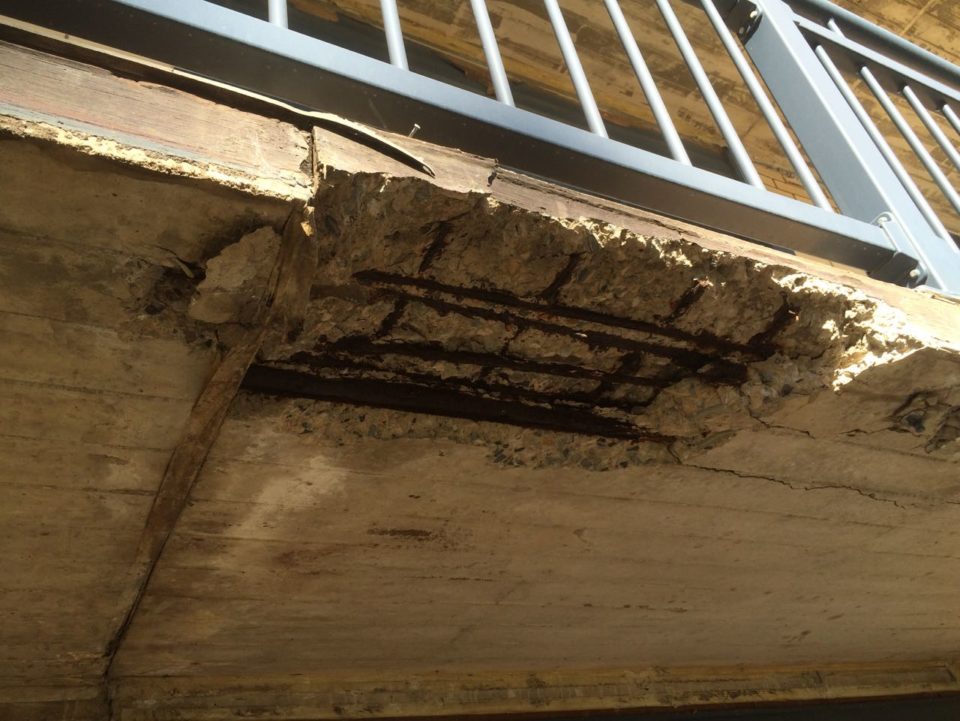
Would require the inspection of any load-bearing components and associated waterproofing elements of the buildings by a licensed inspector. The bill would require the inspections and any repairs to be completed by January 1, 2022, along with subsequent inspections every 5 years. On July 3, 2018, the proposed text of SB 721 was amended to exclude CIDs.
Current Status: Dead
FindHOALaw Quick Summary:
This bill would add Business and Professions Code Section 7071.20Article 2.2 (commencing with Section 17973) to Chapter 5 of Part 1.5 of Division 13 of the Health & Safety Code to require a property owner to conduct an inspectionof decks, balconies, and elevated walkways more than six feet above ground level in a building containing three or more multifamily units by a licensed general contractor, structural pest control licensee,licensed architect, licensed engineer, a certified construction inspector, or building official, or other licensee as approved by the Department of Consumer Affairs. The purpose of the inspection is to verify that all of the balconies and other elevated walking surfaces are in generally safe condition, adequate working order, and free from any hazardous dry rot, fungus, deterioration, decay, or improper alteration to the extent that the life, limb, health, property, safety, or welfare of the public or the occupants is not endangered. The bill would require the inspections and any necessary repairs to be completed by January 1, 2024, and would require subsequent inspections every 5 years.
The bill would require a copy of the initial inspection report that states the condition of the building features and recommendations for repair, along with the final report indicating that all of the required repairs have been completed, to be filed with the county recorder.
Building elements, including the walking surface, structural frame and connector hardware, weatherproofing, landings, stairway systems, guardrails, handrails, and any other elements critical to the safety of the balcony or elevated walking surface, found to be in need of repair or replacement, hazardous, structurally deficient, or noncompliant shall, upon determination by the licensed professional, be immediately corrected by the property owner or individual person or company responsible for management or operation of the building. The property owner must apply for any permits within 60 days of receipt of the inspection report, andthe repairs must be completed within 90 days of obtaining the permits.The continued and ongoing maintenance of balconies and elevated walking surfaces and parts thereof,in a safe, and sanitary condition, shall be the responsibility of the property owner or the owner’s designated agent.
The repairs made under these provisions would be required to comply with the latest edition of the California Building Standards Code and all local jurisdictional requirements. The bill would authorize local enforcing agencies to recover enforcement costs associated with these requirements.
Multifamily buildings of three units or more for which a building permit application has been submitted on or after January 1, 2019, are exempt from the inspection certification requirements for a period of five years following issuance of a certificate of occupancy from the local jurisdiction.
**UPDATE: On June 20, 2018, the proposed text of SB 721 was amended to remove Civil Code Section 4776 pertaining to common interest developments.
SEC. 2.Section 4776 is added to the Civil Code, to read:
**UPDATE: On July 3, 2018, the proposed text of SB 721 was amended to exclude CIDs from the proposed Health & Safety Code.
(m) This section shall not apply to a common interest development, as defined in Section 4100 of the Civil Code.
To read the current text of SB 721, click here to the view the bill’s page on the California Legislature’s website. FindHOALaw will continue to track SB 721 as it progresses through the Legislature.
If a prospective or current tenant requests a disability-related reasonable accommodation to keep an animal on the property and the disability or disability-related need is not readily apparent, this bill would authorize a person renting, leasing, or otherwise providing real property for compensation to request that a third party provide verification of the disability and disability-related need for the animal.
Current Status: Dead
FindHOALaw Quick Summary:
The Unruh Civil Rights Act generally prohibits discrimination on the basis of various personal characteristics, including disability. Individuals with disabilities are entitled to full and equal access to all housing accommodations offered for rent, lease, or compensation, and prohibits a person renting, leasing, or otherwise providing real property for compensation from refusing to make reasonable accommodations for an individual with a disability. This bill would amend Civil Code Section 54.1 to authorize a person renting, leasing, or otherwise providing real property for compensation to request that a third party provide verification of the disability and disability-related need need for an animal, if a prospective or current tenant requests a disability-related reasonable accommodation to keep an animal on the property and the disability is not readily apparent or the disability-related need for an animal is not apparent.
The bill would require that the third party be located in the United States and have specific knowledge of the requester’s medical condition based on an individualized examination, which shall include an in-person meeting. The third party may not operate primarily as a business to provide certifications for persons requesting verification of animals requested as reasonable accommodations.
The bill would specify that certain types of documentation would not be in and of themselves sufficient third-party verification, including an identification card or certificate for a registered service animal, an emotional support animal prescription letter, any certificate, letter of prescription, or doctor’s note obtained from an online source, or documentation that does not indicate that the provider of the documentation ever met with the requester or performed an individualized examination. The person providing real property for compensation would be authorized to request additional third-party verification from a reliable source if the requester only presents any of those types of documentation.
The bill would exclude guide dogs, signal dogs, service dogs, and service animals, as defined in Health and Safety Code Section 113903.
**UPDATE: On March 23, 2017, the proposed text of AB 1569 was amended to allow a person providing real property for compensation to request that a prospective or current tenant provide both reliable verification of the disability and reliable third-party verification of the disability-related need for the animal:
(C) (i) A person renting, leasing, or otherwise providing real property for compensation may, if a prospective or current tenant requests a disability-related reasonable accommodation to keep an animal on the real property and the disability is not readily apparent or the disability-related need for an animal is not apparent, request that a third party provide verification of the disability and disability-related need for the animal from the prospective or current tenant. prospective or current tenant provide both (I) reliable third-party verification or other reliable verification of the disability and (II) reliable third-party verification of the disability-related need for the animal. The third party verifying the disability and the disability-related need for the animal shall be located in the United States and have specific knowledge of the prospective or current tenant’s medical condition based on an individualized examination. That examination shall include an in-person meeting with the prospective or current tenant. The third party shall not be operating primarily as a business to provide certifications for persons requesting verification of animals requested as reasonable accommodations. The third-party verification shall include the third party’s name, address, and telephone number or email address.
(ii) The following types of documentation shall not be in and of themselves sufficient or reliable third-party verification that a prospective or current tenant requires an animal as a reasonable accommodation, and the person renting, leasing, or otherwise providing real property for compensation may request additional third-party verification from a reliable source if the prospective or current tenant only presents any of those types of documentation:
(I) An identification card or certificate for a registered service animal. card, registration, or certificate for an animal presented without additional third-party verification from a reliable source.
(II)An emotional support animal prescription letter.
(II) Any certificate, registration, emotional support animal letter, letter of prescription, doctor’s or any other kind of note or letter obtained from an online source.
To read the current text of AB 1569, click here to the view the bill’s page on the California Legislature’s website. FindHOALaw will continue to track AB 1569 as it progresses through the Legislature.
Would require a notice describing potential prohibitions on federal financing (e.g. FHA loans) for properties encumbered by deed-based transfer fees.
Current Status: Chaptered
FindHOALaw Quick Summary:
Existing law requires the receiver of a deed-based transfer fee (e.g. association recreation fees), on and after January 1, 2009, to record specified information in the chain of title. Existing law also specifies that when a transfer fee is imposed upon real property on or after January 1, 2008, the person or entity imposing the transfer fee, as a condition of payment of the fee, must record a separate document meeting specified requirements. Among other things, that document must contain the title “Payment of Transfer Fee Required” in at least 14-point boldface type and include names of all current owners of the real property subject to the fee, and the legal description and assessor’s parcel number for the affected property, and the fee amount.
This bill would require that document, for private transfer fees created on or after February 8, 2011, to contain a notice in at least 14-point boldface type disclosing certain information, including that federal housing agencies (e.g. FHA) are prohibited from dealing in mortgages on properties encumbered by deed-based transfer fees that do not provide a direct benefit to the real property encumbered, and that if a person purchases such a property, that person may have difficulty obtaining financing.
**UPDATE: AB 1139 was signed by the Governor on July 31, 2017. Its changes to the law will become operative on January 1, 2018.
Would change the time requirements for distribution of the annual policy statement to be within 31 to 91 days before the fiscal year end.
Current Status: Dead
FindHOALaw Quick Summary:
Existing law requires the association to distribute an annual policy statement, containing specified information, to the members within 30 to 90 days before the fiscal year end. This bill would amend Civil Code Section 5310 to change the time requirements for distribution to be within 31 to 91 days before the fiscal year end.
To read the current text of AB 1079, click here to the view the bill’s page on the California Legislature’s website. FindHOALaw will continue to track AB 10179 as it progresses through the Legislature.